
AMD Stock Soars 5%: Reports Say It's Raising GPU and CPU Prices

 Prefer us on Google


AMD stock jumped roughly 5% to 7% this week, extending a three session semiconductor sector rebound, after supply chain reports surfaced suggesting the company plans to raise chip prices by approximately 10% starting in the fourth quarter of 2026.
AMD stock's reaction reflects a straightforward piece of market logic: a company raising prices on products already in high demand typically signals pricing power, and pricing power tends to translate directly into margin expansion. Understanding exactly what's being reported, and what still hasn't been confirmed, matters for reading AMD stock's move accurately rather than reacting to headlines alone.
What The Reports Actually Say
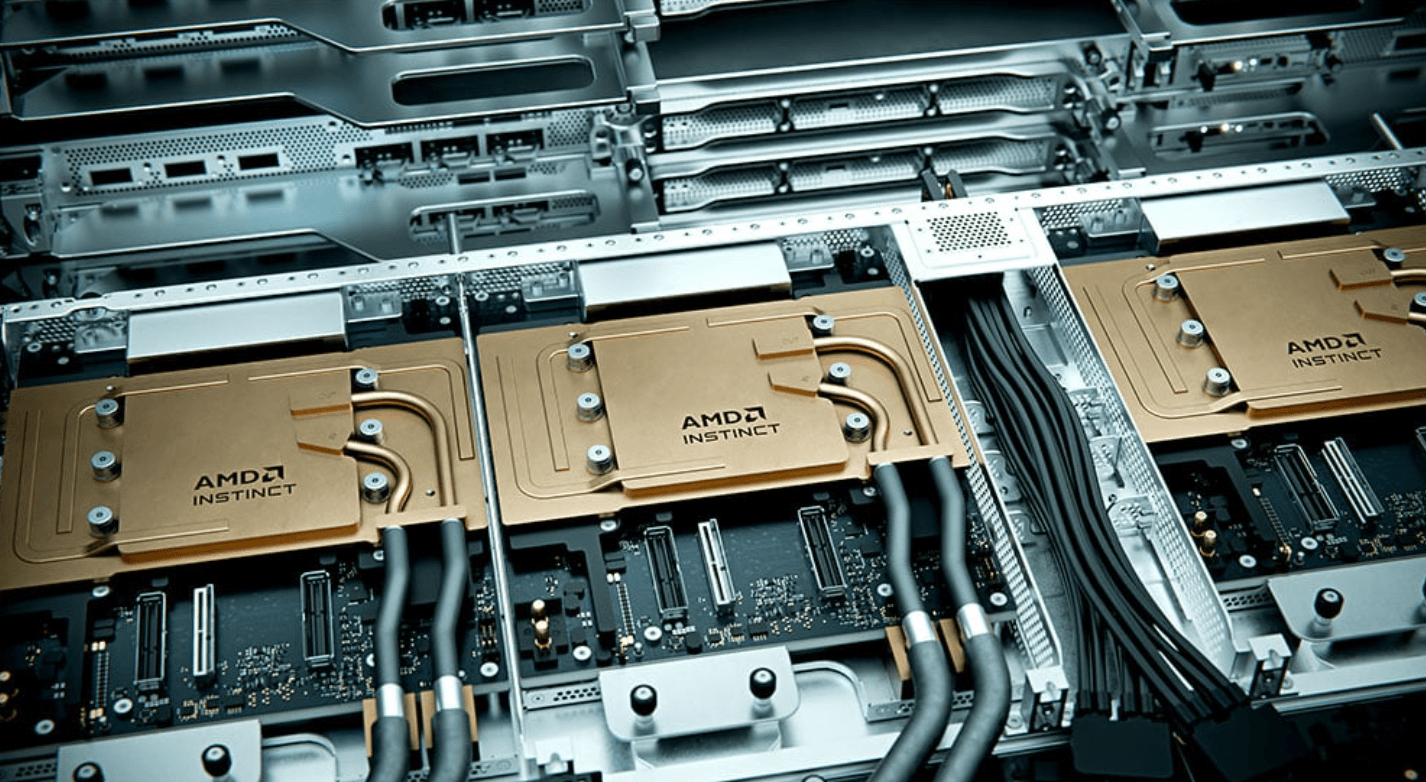
The specific claim traces back to a report published by Wccftech on September 17, corroborated within hours by several other outlets including Club386 and Tweaktown, all citing the same underlying supply chain sourcing: a leak attributed to ChannelGate, a WeChat account known for sharing semiconductor supply chain information. According to that reporting, AMD has notified partners to expect a roughly 10% increase in chip prices beginning in the fourth quarter, with the hike specifically named as covering AI accelerators, consumer Radeon graphics processors, and motherboard chipsets.
One detail stands out as genuinely new within this specific reporting cycle: chipset pricing being affected would mark the first time AMD's chipsets have been included in a price increase, according to PlayGround.ru's coverage, distinguishing this round from prior GPU focused hikes earlier in the year. The reported increase is tied directly to rising wafer costs at Taiwan Semiconductor Manufacturing Company, AMD's key foundry partner, with AMD reportedly informing partners it will not absorb the additional manufacturing costs itself, instead passing them down the supply chain toward board partners and, eventually, consumers.
Why Ryzen CPUs Are Conspicuously Missing From The List
This is the detail worth being precise about, since aggregated coverage has already started blurring it. Every original report on this specific hike explicitly names AI accelerators, Radeon GPUs, and motherboard chipsets as affected product lines, while consistently noting that Ryzen desktop and laptop CPU pricing has not been confirmed as part of the increase. Shattered.io's tracking of how this story spread noted that by September 18, some aggregator and syndication sites had already compressed that nuance into headlines suggesting "Ryzen prices may rise," a framing the original reporting doesn't actually support.
That distinction carries real business logic behind it. AMD's client CPU business has spent 2026 actively clawing back market share from Intel, and a surprise Ryzen price increase heading directly into the holiday buying season would risk undermining that momentum with builders and OEM partners right when competitive positioning matters most. Higher TSMC wafer costs do create underlying pressure that could eventually reach Ryzen pricing, since AMD's client processors are manufactured using the same foundry technology, but as of the most recent reporting, that pressure hadn't yet translated into a confirmed decision.
Why This Isn't AMD's First Price Increase This Year
This reported hike follows an established pattern rather than representing an isolated event. According to TrendForce's coverage, AMD implemented a GPU kit price increase back in July 2026, tied at the time to what industry reporting described as an ongoing global shortage of GDDR memory. That July increase came with a firmer confirmed floor, at least 10%, through a formal notice AMD issued at the end of July, even though the company still hasn't published a public retail price sheet reflecting it.
Nvidia has faced a similar dynamic over the same stretch, though with less precise public figures. Capital and Compute's tracking of board-partner costs estimated Nvidia's kit pricing had climbed roughly 32% to 49% by August 2026 compared to January of the same year, driven by the same underlying memory cost pressure affecting the entire GPU market. Memory now accounts for close to 80% of a GPU's total manufacturing cost in some industry estimates, a structural pressure that's been building across the sector for months rather than emerging suddenly with this specific report.
-- Price
How This Connects To The Broader Sector Rebound
AMD's price reaction to these reports didn't happen in isolation. The stock's rise coincided with what 24/7 Wall St described as a semiconductor sector rebound reaching its third consecutive session, with Broadcom and Nvidia posting gains alongside AMD during the same window. AMD stock's premarket move specifically extended that broader three-session run, according to Stocktwits' reporting, with shares rising further amid the still-unverified pricing reports on top of already-improving sector sentiment.
That broader context is worth holding onto directly: the pricing report is a specific, additive catalyst layered on top of a sector already recovering, not the sole reason AMD stock has moved this week. Separately, AI cloud provider Nebius announced its own price increases for select GPU, CPU, and memory cloud services effective October 1, with Nvidia GPU rates rising roughly 17% to 21% and memory offerings increasing by about 41%, according to the same reporting. That parallel increase from a cloud compute provider reinforces the same underlying story: rising costs tied to AI infrastructure demand are working their way through the entire hardware and compute supply chain simultaneously, not just at AMD specifically.

What Would Actually Confirm This Story
None of the reported pricing changes have been officially confirmed by AMD itself as of this writing. ThinkComputers.org's coverage was direct about this distinction: until AMD issues its own confirmation, the alleged 10% increase should be treated as an industry report rather than a finalized MSRP change, and retailers may not apply any eventual increase uniformly, with existing inventory potentially remaining at current pricing for some time after any policy actually takes effect.
That uncertainty matters for reading AMD stock's reaction appropriately. A stock moving on an unconfirmed supply chain report carries different risk than one moving on a company's own official guidance, since the specific magnitude, timing, and product scope could all still shift once AMD addresses the reports directly, whether through an official statement, a partner communication that eventually becomes public, or simply through actual pricing showing up at retail in the fourth quarter.
Trading AMD Through the Chip Cycle
Whether this specific pricing report holds up exactly as reported, or gets revised once AMD's actual fourth quarter pricing reaches the market, AMD's stock price will keep reacting to exactly this kind of supply-chain signal well before any official confirmation arrives.
WEEX is a global multi-asset trading platform serving 10M+ users across 170+ countries and regions, offering access to 1,700+ trading pairs, deep liquidity, low fees, and fast execution, with asset protection backed by a 1,000 BTC Protection Fund. For traders tracking a stock this sensitive to unverified supply chain leaks and fast moving sector sentiment, having a single account that covers crypto, futures, and selected traditional markets means not needing to juggle separate platforms while a story like this one continues to develop day by day.
Conclusion
AMD stock's 5% to 7% jump this week reflects supply chain reports of a roughly 10% price increase on AI accelerators, Radeon GPUs, and motherboard chipsets starting in the fourth quarter, tied to rising TSMC wafer costs the company is reportedly passing down its supply chain rather than absorbing. Ryzen CPU pricing remains conspicuously unconfirmed despite some aggregated coverage blurring that distinction, and AMD itself hasn't officially verified any part of the report. The move also coincides with a broader three-session semiconductor sector rebound and a parallel round of AI compute pricing increases from cloud provider Nebius, suggesting rising costs tied to AI infrastructure demand are moving through the hardware supply chain more broadly rather than reflecting an AMD-specific story alone.
FAQ
1. Has AMD officially confirmed the reported price increases?
No. The reports trace back to supply-chain sourcing via Wccftech and a WeChat account called ChannelGate, and AMD has not issued its own public confirmation or retail price sheet as of this writing.
2. Are Ryzen CPU prices actually increasing?
Not confirmed. Every original report explicitly names AI accelerators, Radeon GPUs, and motherboard chipsets as affected, while stating Ryzen pricing remains unconfirmed, though some aggregated headlines have blurred this distinction.
3. Why is AMD reportedly raising prices?
The increase is tied to rising wafer costs at TSMC, AMD's key manufacturing partner, with AMD reportedly telling partners it won't absorb the additional costs itself.
4. Has AMD raised chip prices before this year?
Yes. AMD implemented a GPU kit price increase in July 2026 tied to a global GDDR memory shortage, with a confirmed floor of at least 10% through a formal partner notice.
5. Is this move specific to AMD, or part of a broader trend?
It's part of a broader pattern. AI cloud provider Nebius separately announced price increases for GPU, CPU, and memory cloud services effective October 1, and Nvidia has faced similar cost pressure tied to memory shortages across the same period.
This content is provided for general informational purposes only and doesn't constitute financial, investment, legal, or tax advice. Any events, rewards, online promotions, or related information mentioned herein should not be considered a recommendation, solicitation, or invitation to purchase, sell, trade, or otherwise deal in any crypto assets. Crypto assets are highly volatile and may result in loss. The availability of WEEX services, products, and related events may vary by region. You are responsible for ensuring that your participation is in accordance with applicable local laws and regulations.
You may also like

Strategy spends nearly 9 times as much on STRC as Bitcoin

Can Bitcoin Mining Help Rebuild Ukraine

UNI Burn on Robinhood Chain Drops to 4000

Bitmine Increases Holdings of 12,500 ETH to 6.03 Million, Holding Crypto Assets Worth Approximately $16.2 Billion

China Announces National Blockchain Project, Without Opening to Bitcoin

Nobel Prize Week 2026: Five Nobel Laureates Gather in Singapore to Discuss Whether AI Can Accelerate the Next Scientific Revolution

DeFi: Sui Aims for $500 Million in Bitcoin and an Entire AI Blockchain

USDD Circulation Exceeds 1.81 Billion, TVL Surpasses 2.51 Billion USD

LUMIA Whipsaws Between $0.10 and $0.18: Is Leverage Behind the Rally?
Bankless Discusses Layer 2: Starknet Leaves Ethereum, Who Will Foot the Bill for Independent L1 Security?

RLC Crypto Near $1: Open Interest Up 1,760%, Volume at 2.5 Times Market Cap and What Traders Should Watch Next

Ledger Wallets Drained of an Estimated $86 Million: Is Your Ledger Safe After the CryptoBilis Thefts?
Ledger confirmed an unauthorized hardware implant in a device sold through the reseller CryptoBilis, after on-chain analysts traced an estimated $72 million to $93 million in thefts. Ledger says its own systems and direct sales were not compromised. Whether a Ledger is safe depends mainly on where it was bought.

a16z Talks with Stanford Professor: Can AI Really Break Cryptography? Unpacking the Truth Behind the Panic

Citrini's 79-Page Report: Will Agency Finance Reshape Crypto and Leave Mainstream Coins Behind?

STRK Price Tops $0.12 as Layer 2 Tokens Surge: Is This a Sector Rotation or a One-Token Squeeze?
STRK price briefly broke above $0.12 on October 12, 2026, while PLUME, LUMIA and other Layer 2 tokens also rose. Only STRK has a clear catalyst, and the total crypto market barely moved. The evidence points to a one-token squeeze that lifted its neighbors, not a confirmed sector rotation.

From Liquidation to Building Protocols: A Founder’s Account of How I Reset My Trading Mindset

Celestia vs Avail: A Comparison of Data Availability Tokens

The United States Lost $16 Billion in Bitcoin Without Selling a Single Coin

Bond Sell-off Reshapes Rate Expectations, High Yields Shift Tightening Pressure to Central Banks

Agents Overstep, Platforms Redefine Power | Rewire News Briefing

How to Safeguard Your Tokens in the AI Era?
How far can PaperTrade's 1000x leverage experiment go, even if it means queuing to lose money?

Is Ethereum Losing Its Moat? 10 Reasons to Counter ETH Bearish Arguments
The Fed Reveals Its Cards and Long-Term Rates Begin to Calm

Predictive Market Trading Hits Record $22.2 Billion Amid NFL Football Craze, Sparking Regulatory Clash Over Sports Betting

Clarity Can Accelerate Crypto Innovations, but Protect Existing Players
Cryptocurrency in Divorce: How Spouses Divide Bitcoins, Stablecoins, and Other Tokens

Bitcoin and Funding: 1 in 4 Payments Cost Money Instead of Earning It
Bitcoin hedge funds face a liquidation trap when their collateral is split across markets

Ledger, Coldcard... Are hardware wallets still safe in 2026?
Strategy spends nearly 9 times as much on STRC as Bitcoin
Can Bitcoin Mining Help Rebuild Ukraine
UNI Burn on Robinhood Chain Drops to 4000
Bitmine Increases Holdings of 12,500 ETH to 6.03 Million, Holding Crypto Assets Worth Approximately $16.2 Billion
China Announces National Blockchain Project, Without Opening to Bitcoin
Nobel Prize Week 2026: Five Nobel Laureates Gather in Singapore to Discuss Whether AI Can Accelerate the Next Scientific Revolution


