
Stablecoins Move Towards Real Payments: Three Technical Advantages of TBC

 Prefer us on Google



Written by: utxo_compiler
On the same day, three announcements pushed stablecoins towards real commerce. On October 29, Polygon announced payment tool support for Solana, Movantis announced integration with Stellar, and Airtm and BVNK unveiled a wallet payment collaboration aimed at emerging markets.
For TuringBitChain (TBC), these changes present a more concrete opportunity: to integrate Bitcoin-style UTXO architecture with smart contracts into the daily payment, receipt, and fund management processes of enterprises.
1. Money Can Be Transferred, But It Must Be Used Effectively
A blockchain transfer does not mean a commercial payment is complete. Enterprises need to know which order the funds belong to, who has the authority to pay, whether the recipient can exchange it, and if the finance department can match the transaction with business records. While blockchain speed addresses part of this, a complete payment experience requires all links to connect.
Movantis announced that its existing network processes over 200 million transactions annually, a scale that belongs to its existing business and is not a new achievement from this Stellar integration. It plans to start with USDC settlements from the U.S. to El Salvador, with local partners handling exchanges and payments. The new network must serve real users and connect with these existing business relationships.
Polygon connects bank deposits, accounts, routing, and withdrawals into a service; Airtm and BVNK plan to connect wallets to participating merchants, with collaboration set to launch in the fourth quarter. Together, these three announcements reveal a demand: enterprises want to integrate fund flows into their products, and users want the money they receive to be usable directly.
If fund permissions still rely on verbal agreements from back-office personnel and reconciliation depends on manually piecing together spreadsheets, even with low transfer fees, business may stall at the handover point. For project teams, what truly impacts growth is whether each payment can be executed, verified, and continuously serviced correctly.
2. TBC Makes Fund Rules Part of the Product
The competition in payment networks is extending from transaction processing to how funds are organized. Developers need to express asset permissions, maintain traceable transaction records, and have tools that can be called directly. The closer a product is to real operations, the more valuable these capabilities become.
TBC provides a path for UTXO applications. It adopts the Bitcoin-style transaction model and SHA256 PoW, developing Layer 1 smart contracts through TuringContract. It is an independent network; the continuation of the Bitcoin technology route is reflected in asset structure and design choices, but does not mean applications run directly on the Bitcoin mainnet.
UTXO records funds as outputs that can be spent individually. Projects can organize outputs around orders, batches, or different funding purposes, then design corresponding spending conditions. This way, who approves the funds and under what rules they are transferred can be linked to the transaction itself. For applications that need to manage multiple funds, this is a clear starting point for development.
This also gives a new expression to Bitcoin's electronic cash concept: funds maintain traceable inputs and outputs, contracts add business conditions for circulation, and applications are responsible for presenting operations to users. The account model can also build conditional payments, but TBC's feature lies in organizing states around independent outputs, allowing teams to choose implementations that better fit their processes.
3. Three Capabilities Support Payment Application Development
First, fund control can enter on-chain rules. By combining UTXO and contracts, developers can create fund transfer methods that require multiple approvals, reducing reliance on a single back-office account. Public node code and multi-signature tools provide an entry point for checking implementations and testing permissions. For enterprises, the value lies in being able to verify the authorization process; specific security still depends on key management, contract implementation, and permission configuration.
There are also practical engineering trade-offs. Independent outputs facilitate the separation of fund organization, but transactions that repeatedly contend for the same output still need coordination, and wallets must handle output selection and merging. Choosing TBC does not require avoiding these details; teams can test around their order structures in advance, turning asset models into manageable business processes.
Second, stable assets have clear management tools. The TBC20 Stablecoin SDK covers operations such as issuance, minting, and bulk transfers, with examples separating administrator co-signatures from ordinary transfers by holders. This gives project teams a concrete reference for designing financial divisions and payment products, allowing them to start building prototypes from existing interfaces.
The same tool also provides freezing and unfreezing functions. Therefore, the management permissions of stable assets need to be publicly stated, and cannot simply promise that assets will never be restricted based on "non-custodial" claims. The SDK is responsible for on-chain operations, while reserves, redemptions, and banking services are handled by the respective entities. Clearly stating these responsibilities allows partners to accurately understand the product.
Third, the development process has public tools to follow. The TBC Contract SDK covers querying, obtaining UTXO, constructing transactions, signing, and broadcasting, with public APIs providing access to the mainnet and testnet. Teams can first verify payments and receipts, then link transaction records to orders and accounts, gradually forming a demonstrable product.
On-chain records can help verify the flow of funds, but whether goods are delivered and reserves are real still requires off-chain evidence. Compared to solutions connected to banks and local payment networks, TBC's appeal lies in programmable UTXO and open development foundations; payment channels and commercial partners need to continue building according to specific markets.
For teams with existing order systems, this division of labor facilitates gradual integration: first retaining familiar business interfaces, using the testnet to verify fund rules, and then assessing the production environment. Public code and interfaces allow technical choices to advance based on actual results, making it easier for partners to jointly check fund management methods.
-- Price
4. Accumulating Advantages from a Real Business
For teams with users or commercial scenarios, the reason to study TBC is straightforward: it allows for product construction around clear needs, rather than stopping at the stage of "issuing an asset." Batch payments after merchants receive funds, community-managed funds, and settlement triggered by order conditions can all become directions for design and validation.
These directions require coordination between product development and operations. A compelling starting point is to select a business, run through authorization, payment, and queries on the testnet, and then validate exception handling. The criteria for judgment should also be close to the users: can payments be executed correctly, can records correspond to orders, and can the reasons for failures be identified?
When a set of processes is repeatedly used by real users, the project accumulates interface experience, fund management rules, and cooperative relationships. TBC's UTXO, TuringContract, and development tools provide the foundation for this process, while commercial teams bring foundational capabilities into specific markets. The opportunity for early builders comes from being the first to turn runnable technology into a service that people continue to use.
The news on October 29 made the next step for stablecoin payments clearer: funds need to connect with commerce. TBC's opportunity is to bring programmable UTXO into real orders and daily settlements. For teams preparing to build payment applications, today they can start validating from public documents and the testnet.
Sources:
Polygon Supports Solana Announcement
Movantis and Stellar Announcement
Airtm and BVNK Announcement
TBC20 Stablecoin SDK
TBC Contract SDK
TBC API
TBC Node Code
This content is provided for general informational purposes only and doesn't constitute financial, investment, legal, or tax advice. Any events, rewards, online promotions, or related information mentioned herein should not be considered a recommendation, solicitation, or invitation to purchase, sell, trade, or otherwise deal in any crypto assets. Crypto assets are highly volatile and may result in loss. The availability of WEEX services, products, and related events may vary by region. You are responsible for ensuring that your participation is in accordance with applicable local laws and regulations.
You may also like

Ethereum: AI Becomes a More Urgent Threat than Quantum

OPEC+ to Finalize 2027 Production Policy Amid Intensified Uncertainty from Iran War and Internal Disputes

The Battle of Personal Agents: Ambition and Restraint

Payment Giant Stripe Negotiates Acquisition Offer Valued Over $200 Billion, Launches Stablecoin Spending Card with Deel

Ansem and Satoshi Nakamoto: Living Under the Same 'Stolen' Roof
Quickben22 Rechecks 2018 Bitcoin Dormant Address List: Nearly 10,000 Dormant Addresses Restart Transfers After Eight Years, Transferring a Total of 245,000 BTC

Flop Labs Led by Arthur Hayes Launches FLOP Testnet, Initial Airdrop Scoring Not Yet Started

Bank of America Releases 2027 Investment Outlook: Global Stock Markets Could Rise 4%-8%! Improved Financial Environment Allows for Cryptocurrency Investments
Bitcoin developers propose fix for transaction verification gap affecting Lightning wallets

UBS Downgrades Aixtron to Sell, Expects AI Optical Communication Equipment Demand to Slow by 2028, Shares Plunge Over 10%

Unitree Stock Hits 20% Limit-Up: What Drove the November 23 Surge
Unitree Robotics (688836) hit its 20% limit-up at ¥708 on Nov 23, 2026. See the price data, the reported catalysts, the valuation context and what is unconfirmed.
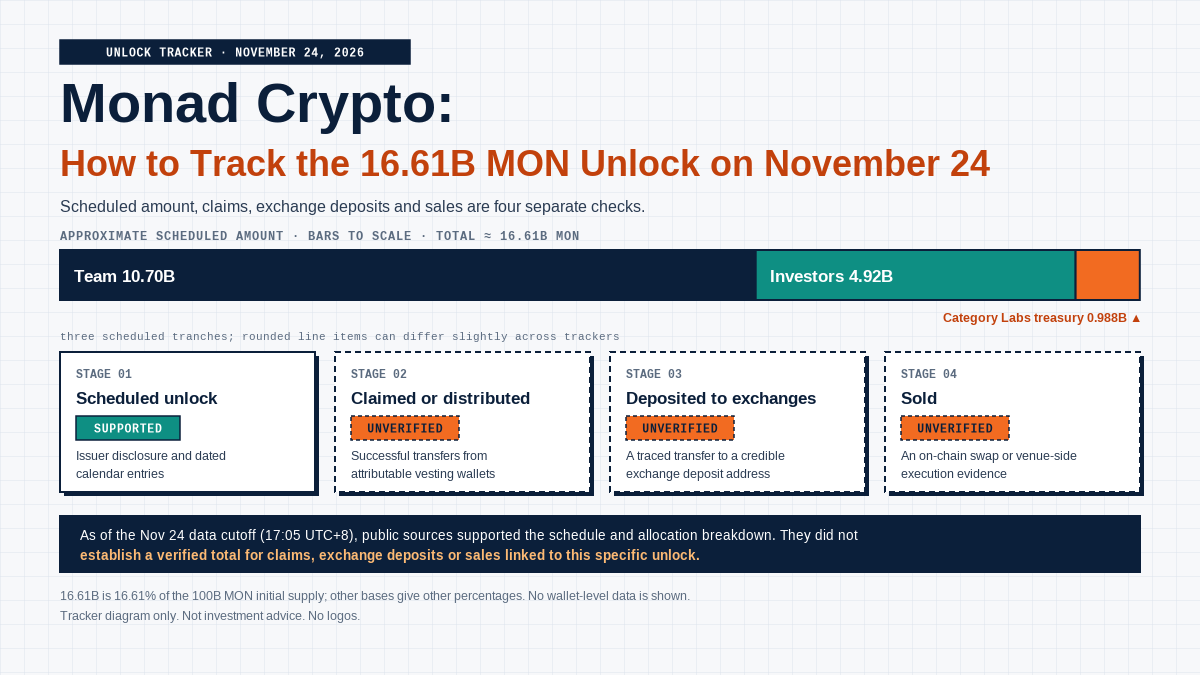
Monad Crypto: How to Track the 16.61B MON Unlock on November 24
Track Monad’s 16.61B MON unlock on November 24. See the team, investor, and treasury allocations, and learn how to verify claims and exchange deposits.

China Launches AI Standardization Pilot in Five Free Trade Zones
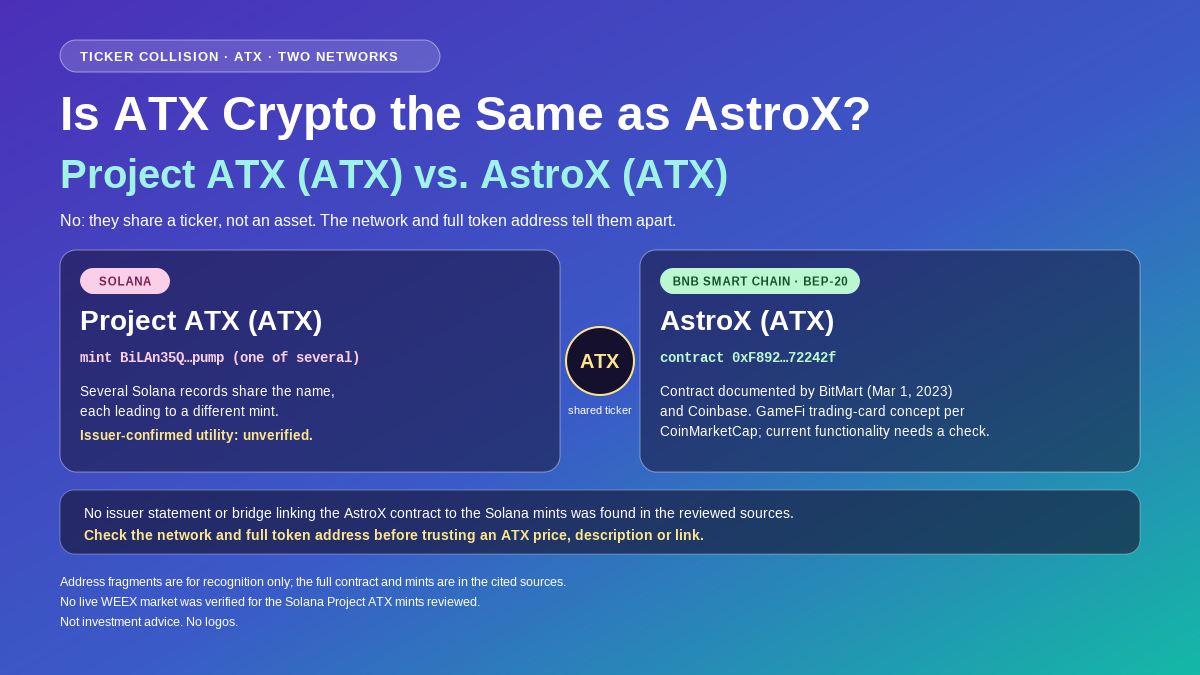
Is ATX Crypto the Same as AstroX? Project ATX (ATX) vs. AstroX (ATX)
Compare Project ATX on Solana with AstroX on BNB Smart Chain. Learn how to verify each token address before trusting an ATX price or buying guide.

Bayer Signals Future Pharmaceutical Deals May Target Mid-Stage Clinical Assets

Ethereum ETF: $96 million in net inflows stop the November bleeding
AI Agents in Payments: Cards Dominate, Yet Stablecoins Fill the 'Gap'|a16z Frontier

Grayscale Claims Bitcoin and Major Assets Are Oversold, Market Outlook Affected by AI Risks

Jensen Huang's "Miraculous Return" Forces Investment Banks to Rewrite Reports Overnight

Applied Digital Stock Surged 20% on a Hyperscaler Deal. What to Know About Its $41 Billion in Leases

Hewlett Packard Enterprise Q4 Earnings Exceed Market Expectations, Board Approves $5 Billion Stock Buyback Plan

Nvidia vs. SpaceX: The AI Revolution Is Big Enough for Both. Here's the Better Buy.

Bitcoin’s supply squeeze narrative faces scrutiny after 11,000 BTC moves to Kraken

Reactions Prove 167-Year-Old Riemann Hypothesis with Help from Claude; Are We Close to Superintelligence?

3 Unstoppable AI Stocks to Buy Hand Over Fist Before the End of 2026

Texas Pacific Land Company Acquires EagleRock Land in $3 Billion All-Stock Deal

Central Bank Anti-Money Laundering Bureau Emphasizes Need for Enhanced Cooperation Against Cross-Border Money Laundering Networks
Sandisk Just Split Its Stock 8-for-1. Is It Time to Buy?

XRP Ledger lending upgrade just 5 votes away from approval

Media: Jensen Huang and His Wife Have Accumulated Vast Wealth
Ethereum: AI Becomes a More Urgent Threat than Quantum
OPEC+ to Finalize 2027 Production Policy Amid Intensified Uncertainty from Iran War and Internal Disputes
The Battle of Personal Agents: Ambition and Restraint
Payment Giant Stripe Negotiates Acquisition Offer Valued Over $200 Billion, Launches Stablecoin Spending Card with Deel
Ansem and Satoshi Nakamoto: Living Under the Same 'Stolen' Roof
Quickben22 Rechecks 2018 Bitcoin Dormant Address List: Nearly 10,000 Dormant Addresses Restart Transfers After Eight Years, Transferring a Total of 245,000 BTC
Latest articles


Latest coin listings on WEEX


