
Web3 August Security Report: 29 Major Security Incidents Resulting in Over $68.29 Million in Losses

 Prefer us on Google


In August 2026, the major cause of significant security incidents was contract vulnerabilities, with 18 incidents due to contract/network vulnerabilities and 2 incidents due to private key leaks. Smart contract security and private key management remain weak points in Web3 security.
Written by: Beosin
According to monitoring data from the Beosin Alert platform, in August 2026, the total loss from various security incidents amounted to approximately $76.15 million, with a total of 29 major security incidents occurring, primarily due to contract vulnerabilities. Among these, there were 18 incidents due to contract/network vulnerabilities and 2 incidents due to private key leaks. Smart contract security and private key management continue to be weak points in Web3 security.
Top 10 Losses in August
On August 13, a personal user address 0x13e3....179e lost WBTC, cbBTC, LDO, USDS, CRV, and other crypto assets due to a private key leak, with a total loss of approximately $25.6 million, making it the incident with the highest actual loss. On August 30, the lending protocol Tectonic on the Cronos network suffered a hacker attack due to a contract vulnerability, with an estimated loss of about $74 million. This attack led the Cronos network to take emergency measures, pausing the network and rolling back transactions. The hacker ultimately transferred approximately $6 million to the Ethereum network through cross-chain transactions.
Additionally, the Harmony public chain had approximately 4 billion ONE tokens minted due to a vulnerability, with a nominal loss exceeding $4 million, but the status of the forged tokens was cleared through transaction rollback, so it is not counted as a loss.
Types of Attacked Projects and Losses by Chain
This month, the attacked targets included various types such as public chains, lending protocols, wallet applications, token contracts, cross-chain bridges, and individual users. Among them, DeFi projects suffered the most significant losses, totaling up to $33.09 million; while personal addresses lost approximately $28.4 million due to private key leaks or phishing. Token contracts were attacked the most frequently, with a total of 10 attacks; DeFi contracts were attacked 9 times, ranking second.
The chain with the highest loss in May was Ethereum, with losses exceeding $48.58 million and a total of 15 security incidents. Currently, most DeFi protocols and phishing attacks targeting whales are still primarily on Ethereum. The second most frequent chain for security incidents is BNB Chain, but the attack targets are mainly token contracts, resulting in smaller losses. Additionally, security incidents occurred on public chains such as Cronos, Base, Harmony, Bitcoin, and Solana, showing a multi-chain attack trend.
Analysis of Major Security Incidents
1. Tectonic and Moonwell: Price Manipulation
Tectonic and Moonwell are on-chain lending protocols, and the reason for the attacks was the manipulation of the prices of certain illiquid token collateral, allowing attackers to borrow excessive assets at inflated asset values for profit. In the Tectonic attack, the attacker inflated the price of Tectonic's governance token $TONIC by 100 times, obtaining a borrowing limit of approximately $74 million, and then borrowed assets such as USDT. After the incident, the Cronos network urgently paused the entire chain from block production, and the attacker transferred approximately $6 million to Ethereum before the network was paused. Subsequently, the Cronos network rolled back to recover losses.
The hacker's Ethereum profit address: 0xc404160B79BD8905061a1cAecBeCa2EEab3f72DD and the flow of stolen funds:
Currently, approximately 2659 ETH remains in 0xc4041, and 140.1 ETH was transferred to 0x6df89c42f0abdfaa2b5b77edcdafbc945ed6ee6c and then further dispersed to multiple newly created addresses.
Moonwell was attacked because the attacker manipulated the price of the illiquid MAMO token to borrow cbBTC, resulting in a loss of approximately $8.7 million:
These two attacks were not based on smart contract vulnerabilities but were due to the protocol itself mispricing collateral from weak spot liquidity, incorrectly calculating the value of the collateral. To prevent such attacks, protocols can obtain data from multiple oracles to get data from different sources and make additional judgments in the case of drastic price fluctuations.
2. Harmony: Replay Attack
Harmony is a Layer 1 that supports sharding, running four shards and transferring assets between them through a receipt-based asynchronous cross-shard mechanism. The source shard generates a cryptographic receipt for outbound transactions, while the target shard is responsible for verifying whether the receipt and its Merkle proof match the signed source block header before recording the transaction, and each receipt can only be used once.
The vulnerability in this attack existed in the legacy part of the Harmony sharding system. Previously, Harmony checked whether the shard receipt had been used by looking at two fields, CXMerkleProof.ShardID and BlockNum,
Since these two fields are outside the signed block header, attackers could modify them without breaking any existing functionality. In this attack, the attacker obtained a cross-shard receipt and modified its ShardID and BlockNum, causing the verifier to recognize it as a brand new receipt. The target shard accepted the modified receipt and recorded it again, while the original shard did not deduct the corresponding assets.
This is a very typical replay attack. For any fields used for "one-time use tokens," they must be part of the signed header certification. When verifying receipts, shard ID and block number should be read directly from the signed block header, rather than trusting unverified fields in the proof structure.
3. Term Finance: Governance Attack
Term Finance is a DeFi fixed-rate lending protocol, with each vault being an ERC-4626 Vault based on Yearn V3 code. The governance of Term Finance's vaults is not based on approval voting but on veto voting. When curators propose parameter change proposals, the governors open a window for LP token holders to raise objections. However, there are serious vulnerabilities in the governance voting threshold settings:
● Lack of absolute vote count or capital minimum: The conditions for proposal approval, isSupportThresholdReached() and isMinParticipationReached(), only check relative proportions rather than absolute vote counts. This means that as long as a relative majority is met, the proposal can pass, regardless of the total number of voters or total capital.
● Extremely low participation: Almost no depositors wrapped their vault shares (tmvETH) into governance tokens (gtmvETH) to participate in voting. This resulted in an extremely low total supply of governance tokens for the relevant vaults.
Attackers exploited the above design flaws to achieve governance attacks on the vaults at a very low cost:
(1) Obtaining voting rights: The attacker exchanged approximately 0.5 ETH for about 0.485 tmvETH vault shares and wrapped them 1:1 into 0.485 gtmvETH governance tokens, obtaining voting rights.
(2) Initiating malicious proposals: When the attacker created the proposal, the contract recorded that the total supply of governance tokens at that time was only 0.535 gtmvETH. This meant that the 0.485 gtmvETH held by the attacker accounted for 90.66% of the total.
(3) Voting and execution: The attacker cast a vote in favor as the only voter. Since there were no opposing votes, the support rate far exceeded the 50% threshold; at the same time, their personal voting power also exceeded the minimum participation threshold (minVotingPower) calculated based on the extremely low total supply.
(4) Withdrawing assets: After the proposal passed, malicious operations were executed to withdraw assets (WETH) from the vault.
The attacker used the same method to breach 6 vaults of Term Finance, causing a loss of approximately $8.5 million.
This attack is also a very typical on-chain protocol governance attack. For on-chain governance, project parties should set the following checkpoints for prevention:
● Set absolute vote count or capital minimum: Governance proposals should not rely solely on relative proportions for approval. A hard threshold based on absolute numbers must be set, such as requiring that the amount of supporting votes must reach a certain amount (e.g., $1 million) or a number of independent addresses.
● Equip time locks with guardians or cancellation paths: Although governance execution usually has delays, this only retains a certain reaction time. Project parties must equip effective guardian mechanisms or proposal cancellation paths for the execution delay period. If malicious proposals are discovered during the delay period, guardians can immediately intervene and cancel them.
● Monitor governance participation: Protocols should establish real-time monitoring of governance participation in each vault. When a vault's total supply of governance tokens or voting participation rate is found to be abnormally low, timely alerts should be issued, and even automatic protective measures should be triggered.
-- Price
Web3 Security Threat Trends
The deepest trend in Web3 security in 2026 is the systemic expansion of attack surfaces. Vulnerabilities are emerging simultaneously at the code level, daily operations, and interactive operations, and relying solely on several security audits or tools cannot cover operational security, on-chain governance, business operation logic vulnerabilities, and other aspects. This poses new challenges for Web3 project parties in building security defense systems.
Additionally, attacks targeting DeFi contracts and individual users are frequent. Contract vulnerabilities or authorizations are easily exploited by attackers, and contract developers or operators should review the security of contracts. For contracts handling core business, multiple and multi-party security audits should be conducted. For individual users, it is advisable to regularly use blockchain explorers or revocation authorization tools to check and cancel unused contract authorizations, and to stay informed about common and new phishing techniques to enhance security awareness.
This content is provided for general informational purposes only and doesn't constitute financial, investment, legal, or tax advice. Any events, rewards, online promotions, or related information mentioned herein should not be considered a recommendation, solicitation, or invitation to purchase, sell, trade, or otherwise deal in any crypto assets. Crypto assets are highly volatile and may result in loss. The availability of WEEX services, products, and related events may vary by region. You are responsible for ensuring that your participation is in accordance with applicable local laws and regulations.
You may also like

Where can Bitcoin count toward a US exchange’s operating reserves?

Why Is the ATX Crypto Price Different Across Platforms? Project ATX (ATX) Explained
See why the ATX crypto price varies across platforms. Compare Project ATX mint addresses, PumpSwap pools, and swap quotes for the same trade size.

Interpretation of South Korea's Digital Asset Law Proposal: ICO Ban Lifted, Banks to Lead Stablecoin

Tiger International's Q3 Customer Assets Surpass $64.8 Billion, Setting New Records in Hong Kong Market Net Inflows of Nearly $1 Billion

Ethereum ETF: $96 million in net inflows stop the November bleeding

Jito Proposal Allocates New Revenue Stream to Foundation Before Sharing with DAO After Reaching $20 Million

Aave’s USDC loans surge 36% to $2.6 billion as liquid collateral share plunges

TBV Connects with AAVE: Borrowing Money Without Giving Up Bitcoin, But Only 20 Coins Can Be Initially Accommodated
XRP borrowers face a $207,500 tipping point as one vault dominates an $8 million market

Wells Fargo Upgrades U.S. Large-Cap Stocks to 'Most Preferred' Rating, Last Week's Plunge Provides Buying Opportunity

LlamaRisk Proposes to Lower Collateral Rates for Coinbase Tokenized Stocks on Aave V4

Bonding Curve and LP Incentives: Key Modules and Evolution Trends of New Token Liquidity Mechanisms
India's Central Bank Proposes 'Trusted Person' Confirmation for Electronic Transfers

PAXG puts gold in a wallet. Getting the bullion out is another matter

XRP Ledger lending upgrade just 5 votes away from approval
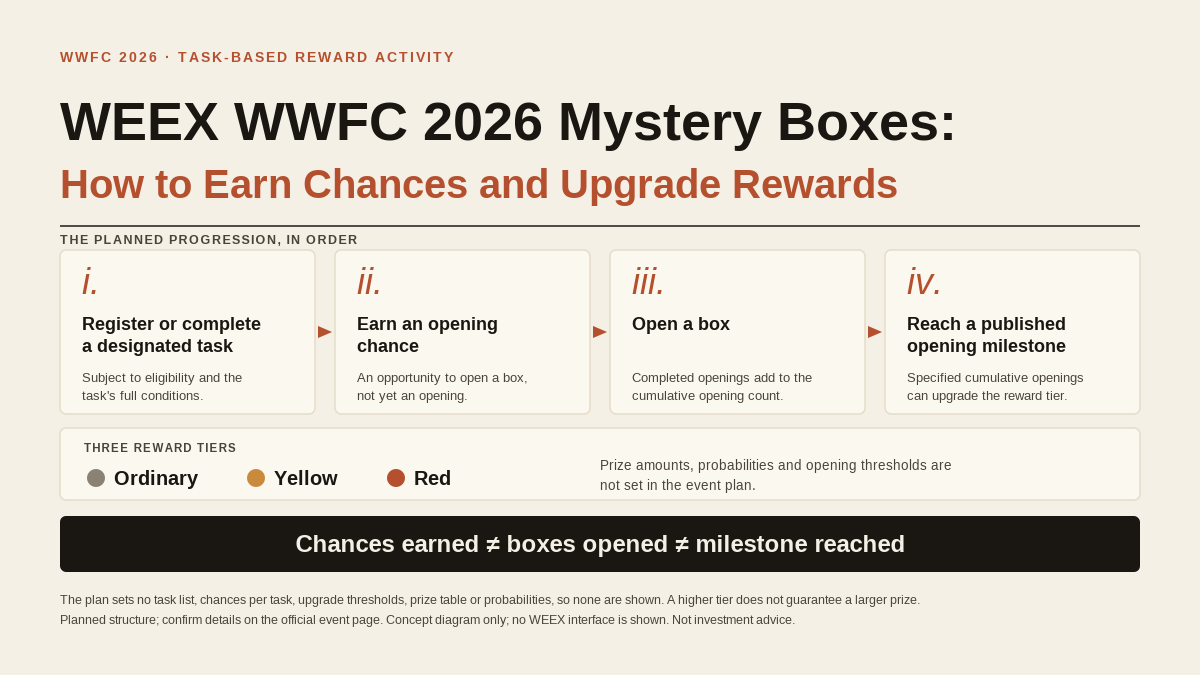
WEEX WWFC 2026 Mystery Boxes: How to Earn Chances and Upgrade Rewards
Explore WEEX WWFC 2026 mystery boxes: how to earn opening chances, understand three reward tiers, and track cumulative openings toward reward upgrades.
Crypto PNL vs Trading Volume: How WEEX WWFC 2026 Leaderboards Work
Compare crypto PNL, trading volume, and ROI with worked examples, and learn how to read the four planned WEEX WWFC 2026 leaderboards accurately.

Cardano’s $5M event budget faces 5 times more opposition

Repaying a Bitcoin-backed loan on Sui can leave you waiting to withdraw native BTC
Why Bitcoin’s quantum security upgrade may take years
Cysic CEO: Over 6 Million BTC Public Keys Exposed, Accounting for 31.2% of Circulation

Penetrating Social Trading Ledgers: Who is Really Making Profits Amidst the Traffic Noise?

Nearly two-thirds of Square Bitcoin payments were under $20

India Plans to Ease Disclosure Requirements for Foreign Investment Funds
Overview of 6 New AI Mining Projects: Perhaps the Most Noteworthy Track After Privacy Narratives
Bitcoin buyers face a trading issue as stablecoins just suffer their biggest supply drop since 2022
Will the Market Rebound After Thanksgiving? Bank of America: Likely Short-Term, Major Trends Require Three Conditions

XRPL Credit Updates Approaching 29 Vote Threshold
NEAR is cutting inflation. Who pays the cost of fewer new tokens?

What Does the New Bitcoin Price Event Contract Filing Actually Specify?
Where can Bitcoin count toward a US exchange’s operating reserves?
Why Is the ATX Crypto Price Different Across Platforms? Project ATX (ATX) Explained
See why the ATX crypto price varies across platforms. Compare Project ATX mint addresses, PumpSwap pools, and swap quotes for the same trade size.
Interpretation of South Korea's Digital Asset Law Proposal: ICO Ban Lifted, Banks to Lead Stablecoin
Tiger International's Q3 Customer Assets Surpass $64.8 Billion, Setting New Records in Hong Kong Market Net Inflows of Nearly $1 Billion
Ethereum ETF: $96 million in net inflows stop the November bleeding
Jito Proposal Allocates New Revenue Stream to Foundation Before Sharing with DAO After Reaching $20 Million
Latest articles



Latest coin listings on WEEX


