
Jameson Lopp warns Bitcoin holders against giving up self custody

 Prefer us on Google


Casa chief security officer Jameson Lopp has urged Bitcoin holders not to abandon self custody in favor of ETFs and third party custodians following a series of cryptocurrency wallet security incidents.
Summary
- Jameson Lopp has urged Bitcoin holders not to abandon self custody despite.
- Lopp warned that Bitcoin ETFs and third party custodians do not eliminate security risks but leave investors dependent on institutions to safeguard their holdings.
- Recent incidents have raised questions about the safety of managing Bitcoin independently.
- Lopp recommended multisig wallets and distributing private keys across different locations and hardware suppliers to reduce the risk of losing funds.
- Bitcoin holders are advised to review their security arrangements and prepare for situations where they may no longer be able to access their funds.
In an October 22 open letter addressed to Casa clients and the Bitcoin community, Lopp argued that recent attacks had raised genuine concerns about managing private keys but did not justify giving up direct control of Bitcoin holdings.
An open letter to the Bitcoin ecosystem: pic.twitter.com/nTt9iZBFrN --- Jameson Lopp (@lopp) October 22, 2026
Lopp pointed to recent incidents involving hackers using AI to find security flaws, compromised hardware wallet supply chains, drained cold wallets and more sophisticated scams, which have left many Bitcoin holders questioning whether they can safely manage their own funds.
According to him, many of the attacks making headlines today were already known to security professionals, although their emergence in actual incidents had made the risks more difficult for ordinary holders to ignore.
Lopp warns Bitcoin ETFs do not eliminate custody risks
Lopp took particular issue with the idea that moving Bitcoin into exchange traded funds or other managed custody arrangements offered a straightforward solution to recent security problems.
He acknowledged that investors could feel more comfortable relying on financial institutions after hearing about wallet compromises, but argued that transferring control of private keys merely placed responsibility with another party.
In his view, Bitcoin ETFs provide investors with exposure to the cryptocurrency's price without giving them direct control over the underlying coins.
The arrangement requires investors to depend on the fund, its custodian and other parties responsible for safeguarding the assets. Lopp warned that holders could have little influence over decisions affecting their Bitcoin, including situations involving freezes or seizures by authorities.
He maintained that Bitcoin's defining properties came from its fixed supply, publicly verifiable rules and the ability of users to access their holdings without obtaining permission from an intermediary.
Although investors could benefit financially from Bitcoin without holding private keys, Lopp argued that they would not enjoy the same degree of control available through direct ownership.
The warning followed reports that some Bitcoin holders had moved assets toward centralized platforms after recent wallet compromises.
In August, crypto.news reported record OKX inflows following the Coldcard hardware wallet exploit, with the exchange saying that customers were increasingly turning toward managed custody.
Recent Bitcoin wallet exploits have raised security concerns
The concerns outlined in Lopp's letter followed several incidents involving weaknesses in wallet software, hardware distribution and private key generation.
One of the most significant cases involved Coldcard hardware wallets, where a firmware configuration error dating back to March 2021 caused affected devices to generate recovery seeds using a weaker source of randomness.
An August 3 report on the Coldcard security exploit detailed suspected Bitcoin thefts worth nearly $90 million at the time and calls from Kraken chief security officer Nick Percoco for independent testing of wallet seed generation.
The flaw allowed attackers to reconstruct vulnerable private keys without physically accessing the devices or obtaining their recovery phrases.
Coldcard subsequently released corrected firmware, although previously generated vulnerable seeds required users to create new wallets and transfer their holdings.
More recently, an October 13 investigation into compromised Ledger hardware wallets detailed cases involving devices distributed through Southeast Asian reseller CryptoBilis.
Ledger confirmed that an unauthorized hardware implant had been identified in one affected device, while the investigation had not established that its own systems or direct sales channels were compromised.
Security problems involving weak recovery seeds have affected other cryptocurrency networks as well.
On October 18, Qubic disclosed a wallet security breach involving approximately 2.94 trillion QU tokens worth $1.4 million stolen from 1,404 wallets.
Developers traced the incident to insufficient randomness in certain wallet recovery seeds and subsequently corrected the affected software.
Multisig security remains central
Against this background, Lopp argued that the response to failed security controls should involve improving wallet protection instead of abandoning self custody altogether.
Drawing on more than 15 years of security incidents across the cryptocurrency industry, he said effective custody arrangements needed to account for human mistakes and the possibility that individual safeguards could fail.
His preferred approach involved multisignature wallets, which distribute transaction authorization across multiple private keys and can prevent a single compromised key from providing complete access to funds.
Lopp cautioned that multisig was not a complete solution by itself, although he maintained that carefully designed arrangements could provide stronger protection than conventional custody systems.
He encouraged Bitcoin holders to review their existing setups and distribute keys across different geographic locations and hardware supply chains to reduce their dependence on any single device or location.
The letter addressed inheritance planning as another important consideration, particularly what would happen to someone's Bitcoin if they became unable to access or manage their holdings.
Casa, which provides assisted self custody services, positions its role around helping customers manage these arrangements without taking possession of their private keys.
Lopp closed by warning that both malicious actors and well intentioned intermediaries could ultimately gain control over someone else's Bitcoin, leaving holders responsible for deciding how much control they were prepared to surrender.
-- Price
This content is provided for general informational purposes only and doesn't constitute financial, investment, legal, or tax advice. Any events, rewards, online promotions, or related information mentioned herein should not be considered a recommendation, solicitation, or invitation to purchase, sell, trade, or otherwise deal in any crypto assets. Crypto assets are highly volatile and may result in loss. The availability of WEEX services, products, and related events may vary by region. You are responsible for ensuring that your participation is in accordance with applicable local laws and regulations.
You may also like

Cryptocurrency Security Checklist: Four Lessons from Phemex Safety Hub Vol. 05–08

Keplr halts Google, Apple logins as $6M wallet drain hits Cosmos

Qubic’s recovery rules require ownership checks even for unstolen funds in vulnerable wallets

TUM Blockchain Conference: Information and Speakers

The Qubic network is back in operation after the hacking of users

SlowMist discovers Qubic wallet vulnerability exposing private keys

Qubic Loses 1,404 Wallets, $1.3 Million in QU Stolen and Network Suspended

Top 5 Crypto Projects That Delivered in Q3 2026

TOP Crypto AI 2026: Why Comparing Qubic, TAO, Render, FET and NEAR by Price No Longer Makes Sense

The Best Decentralized AI Platforms in 2026

Qubic GitHub Account Compromised, Wallet Users Must Migrate Immediately
Ripple and SBI Team Up for RLUSD Stablecoin Launch in Japan by Early 2026
Latest Crypto Market Snapshot as of August 22, 2025 BTC Soars to $115,250.00 ETH Hits $4,450.75 XRP Climbs…
Compass Group Plans to Relocate Main Listing to the U.S.

SBI Chairman Kitao Proposes Separate Taxation and Acceleration of Cryptocurrency ETFs
The Perpetual Futures Market Is Booming. That Might Not Be as Bullish for Hyperliquid as Some Investors Think.

Anthropic's IPO Sparks ETF Issuance Surge: 16 US ETFs Offer Leveraged Long, Inverse Short, and Options Income Strategies

Xiaomi Reports Q3 Revenue of 107.2 Billion Yuan, Adjusted Net Profit Plummets 56.8%, Automotive and AI Business Operates at a Loss of 3.4 Billion Yuan
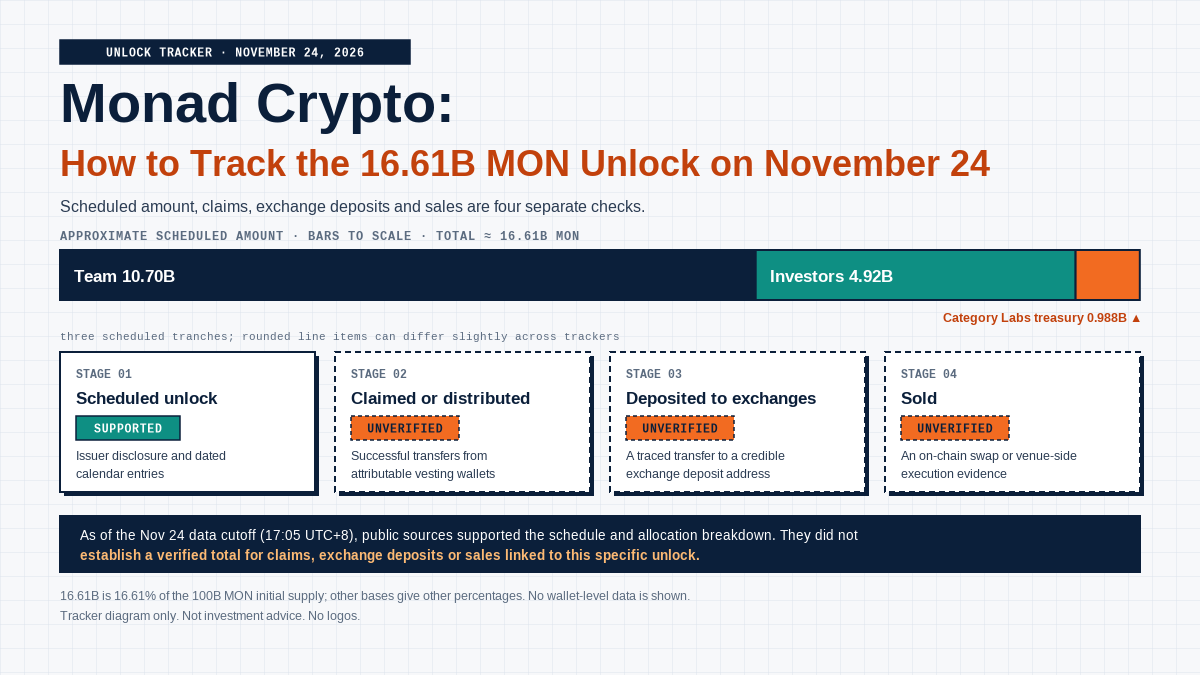
Monad Crypto: How to Track the 16.61B MON Unlock on November 24
Track Monad’s 16.61B MON unlock on November 24. See the team, investor, and treasury allocations, and learn how to verify claims and exchange deposits.

CFTC Allows Bitcoin and Ethereum as Operating Reserves: Will It Boost Crypto Markets?

Why France Faces Recession Risks and What Factors Could Help It Avoid a Downturn
Signal Partners with United Airlines and Several Banks to Limit AI Agents Due to Customer Risk Issues

Prediction: Alphabet Will Be the World's Most Valuable Company by 2031

Bitcoin’s next crash may come from holders, not leverage, as $10.7 billion gets liquidated
0G Foundation pledges disclosure review after Upbit trading warning
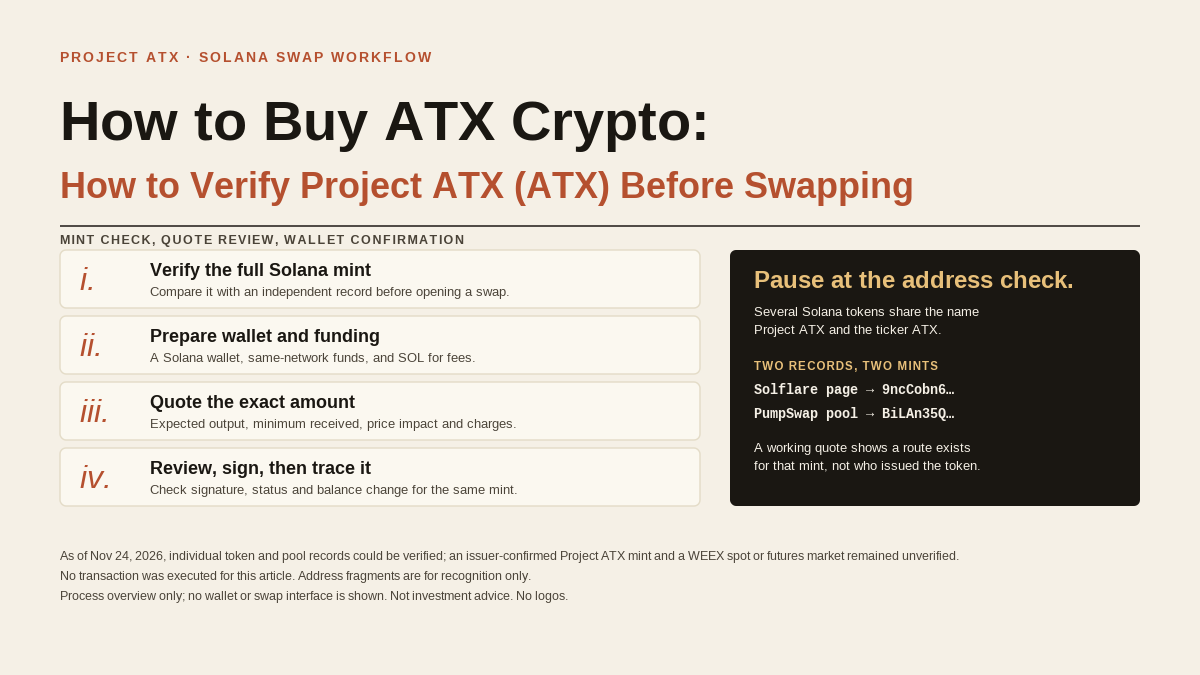
How to Buy ATX Crypto: How to Verify Project ATX (ATX) Before Swapping
Learn how to buy ATX crypto on Solana. Verify the Project ATX mint, review swap quotes and fees, and confirm the exact token you receive on-chain.

Why Is the ATX Crypto Price Different Across Platforms? Project ATX (ATX) Explained
See why the ATX crypto price varies across platforms. Compare Project ATX mint addresses, PumpSwap pools, and swap quotes for the same trade size.

Interpretation of South Korea's Digital Asset Law Proposal: ICO Ban Lifted, Banks to Lead Stablecoin
Tiger International's Q3 Customer Assets Surpass $64.8 Billion, Setting New Records in Hong Kong Market Net Inflows of Nearly $1 Billion
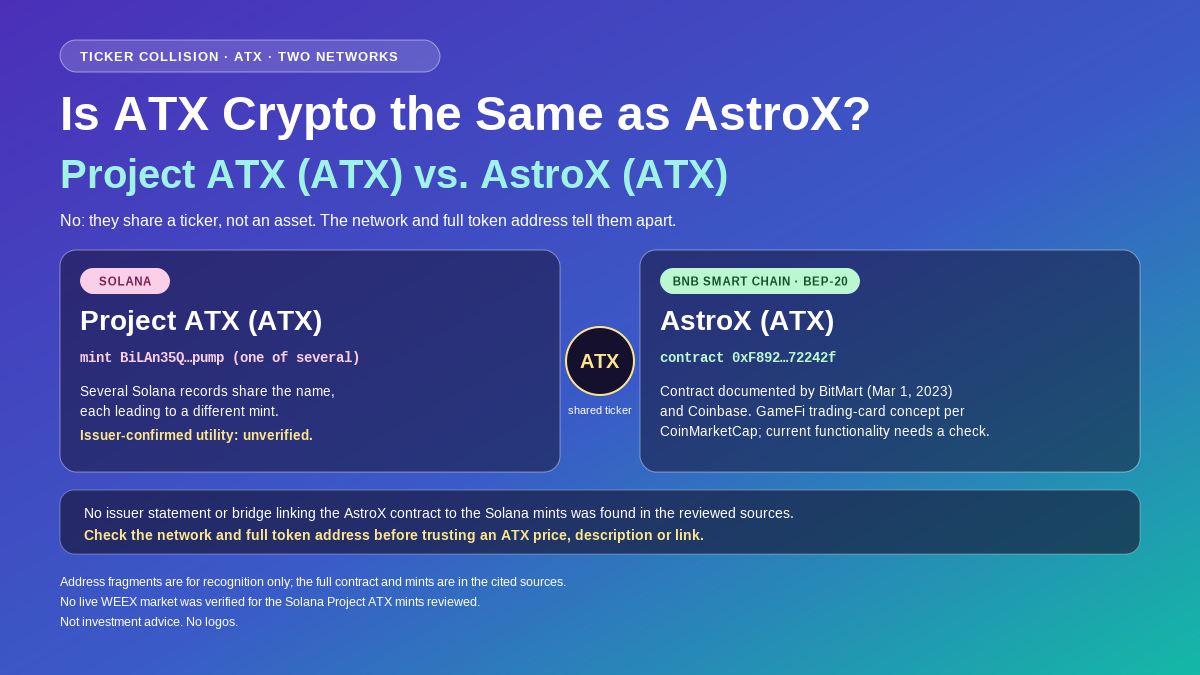
Is ATX Crypto the Same as AstroX? Project ATX (ATX) vs. AstroX (ATX)
Compare Project ATX on Solana with AstroX on BNB Smart Chain. Learn how to verify each token address before trusting an ATX price or buying guide.

Binance to suspend crypto withdrawals across all networks on Nov. 25
Cryptocurrency Security Checklist: Four Lessons from Phemex Safety Hub Vol. 05–08
Keplr halts Google, Apple logins as $6M wallet drain hits Cosmos
Qubic’s recovery rules require ownership checks even for unstolen funds in vulnerable wallets
TUM Blockchain Conference: Information and Speakers
The Qubic network is back in operation after the hacking of users
SlowMist discovers Qubic wallet vulnerability exposing private keys
Latest articles


Latest coin listings on WEEX


