
SpaceX AI + Space Boom: Can SPCX Rally Toward $230?

 Prefer us on Google

SpaceX has become one of the most closely watched names at the intersection of aerospace and artificial intelligence. SPCX recently traded around the high-$160s to low-$170s after reaching a local high near $176.40, while Goldman Sachs reportedly raised its 12-month SpaceX price target from $220 to $230.
At the same time, SpaceX is reportedly seeking around $40 billion in financing to purchase Nvidia AI chips, adding a new AI infrastructure angle to its traditional Starship, launch, and Starlink businesses. The combination has strengthened the “AI + space” investment narrative, but higher capital spending, electricity demand, financing costs, and execution risk remain important considerations.
So, can SPCX extend its rally toward $230?
Why Is SPCX Rising?
SPCX has gained momentum after breaking higher from its previous trading range. Recent WEEX market data showed SPCX around $169–$170, with a weekly gain of roughly 13% and a recent high near $176.40.
The rally appears to reflect several overlapping catalysts rather than one headline alone. These include renewed optimism around SpaceX’s launch economics, Starship development, Starlink expansion, and growing expectations that AI computing infrastructure could become another meaningful business driver.
Broader strength in AI-related equities has also helped support sentiment toward companies associated with data centers, chips, power infrastructure, and advanced computing.
Why Did Goldman Sachs Raise Its SpaceX Target to $230?
Goldman Sachs reportedly increased its 12-month SpaceX price target from $220 to $230, giving the market a new valuation reference.
One part of the bullish thesis is SpaceX’s potential expansion into large-scale AI computing. Analyst projections cited in recent coverage point to possible computing capacity of around:
| Year | Projected Compute Capacity |
|---|---|
| End-2026 | ~2.4 GW |
| End-2027 | ~7.0 GW |
| End-2028 | ~10.6 GW |
These figures are analyst estimates, not already deployed capacity.
The second part of the thesis remains SpaceX’s core aerospace business. Higher launch frequency, improved rocket reusability, Starlink growth, and continued Starship development could improve long-term operating economics if execution remains on track.
Goldman Sachs’ $230 target is an analyst valuation scenario, not a guaranteed future trading price.
SpaceX’s $40B Nvidia Chip Plan Adds an AI Catalyst
Another major catalyst came from reports that SpaceX is seeking approximately $40 billion in financing to acquire Nvidia AI chips.
The proposed structure reportedly includes about $10 billion in bank loans and $30 billion in investment-grade debt, with the financing expected to support large-scale AI infrastructure.
This strengthens the argument that SpaceX is increasingly being valued as more than a launch and satellite company. AI compute could potentially become an additional source of revenue and infrastructure demand.
However, the scale of the financing also highlights the risks. Purchasing chips is only one part of AI infrastructure. Large data centers also require enormous amounts of electricity, cooling capacity, networking equipment, physical facilities, and long-term capital.
The financing plan therefore supports the AI growth narrative while simultaneously increasing questions around capital intensity and execution.
-- Price
AI + Space: SpaceX’s Two Growth Engines
The current SPCX story can be divided into two major themes.
| Growth Engine | Main Drivers | Key Risks |
|---|---|---|
| AI Infrastructure | Nvidia chips, compute capacity, data centers | Capex, debt, power supply |
| Space & Launch | Starship, reusable rockets, launch cadence | Delays, technical risk |
| Starlink | Broadband and connectivity growth | Competition, capital intensity |
| Future Orbital Compute | Space-based computing concepts | Early-stage, highly uncertain |
The attraction of the “AI + space” thesis is that SpaceX may have multiple potential growth channels. But these businesses are at different stages of development.
Starlink and launch services are already established operating businesses. Large-scale AI infrastructure is still developing, while ideas such as orbital data centers remain much more speculative.
Why Starship Still Matters to the SPCX Valuation
Even with the growing AI narrative, Starship remains central to the longer-term SpaceX story.
More frequent and reusable launches could reduce average launch costs and increase payload capacity. That could support faster Starlink deployment while also expanding SpaceX’s ability to launch larger satellites, infrastructure, and future commercial payloads.
A successful Starship program could therefore affect several parts of the SpaceX ecosystem at once.
Still, improved launch technology does not automatically translate into higher SPCX prices. Investors also need to consider development costs, launch delays, regulatory requirements, and technical risk.
AI Needs Power: Could Electricity Become a Bottleneck?
AI infrastructure growth is increasingly becoming an energy story as much as a semiconductor story.
Google recently entered a long-term power agreement with Constellation Energy covering roughly 3.59 GW of electricity supply, including about 890 MW of nuclear generation.
That agreement is not directly related to SpaceX, but it demonstrates the scale of power required by modern AI infrastructure.
For SpaceX, a major expansion in AI compute would require more than Nvidia chips. It would also depend on reliable electricity, cooling, networking, and data-center capacity.
This creates an important counterpoint to the bullish AI narrative: stronger compute ambitions may increase revenue opportunities, but they can also create larger infrastructure and financing requirements.
SPCX Stock Forecast: Can $230 Come Into Focus?
Recent SPCX price action provides several useful reference levels.
Price Level | Interpretation |
|---|---|
$158–$160 | Previous breakout / lower support |
$165–$170 | Near-term pivot |
$176–$180 | Recent resistance |
$200 | Psychological milestone |
$230 | Goldman Sachs analyst target |
Holding the $165–$170 region would help preserve the recent upward structure, while a sustained move above $176–$180 could bring the $200 level into focus.
At approximately $170, a $230 target represents a gap of around 35%. That percentage reflects the difference between the observed market price and an analyst target, not an expected or guaranteed return.
Users following SpaceX-linked tokenized assets can also review the SpaceX Tokenized Stock (Ondo) price prediction. This page refers specifically to SPCXon, which is different from the WEEX SPCX/USDT stock-token market.
What Could Prevent SPCX From Reaching $230?
Several risks could limit further upside.
High valuation is one concern. If future AI or aerospace growth fails to meet expectations, investors may reassess how much they are willing to pay for the company.
Financing is another factor. A $40 billion funding program would support expansion, but it could also increase debt obligations and financing costs.
Other risks include Starship delays, regulatory issues, weaker equity-market sentiment, rising interest rates, power constraints, and short-term profit-taking after a fast rally.
The $230 target therefore depends on actual operating progress, not simply positive headlines.
How to Trade the SPCX Stock Token on WEEX
WEEX offers a SpaceX-linked stock-token market through its Stocks product.
Step 1: Prepare Trading Funds
Users who already hold supported assets such as USDT, USDC, BTC, or ETH can transfer them into a WEEX account. Before depositing, confirm the correct deposit address and make sure the sending network matches a network supported by WEEX.
Users who do not already hold crypto can explore WEEX Quick Buy or the WEEX P2P marketplace.
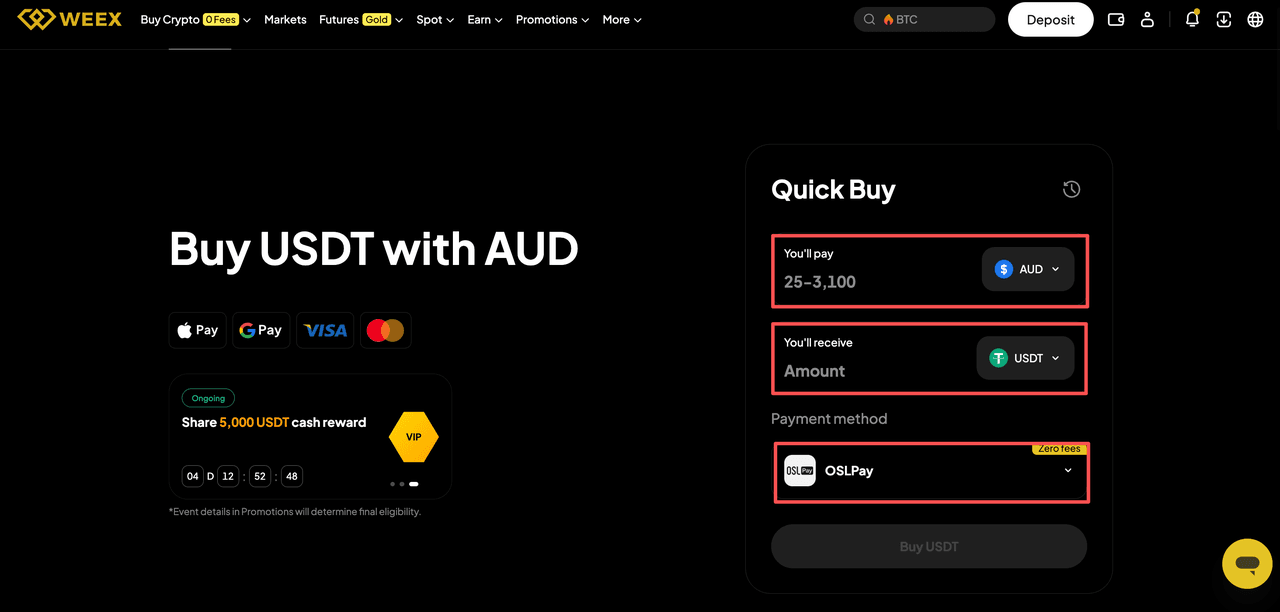
New users can also register on WEEX. WEEX was founded in 2018 and serves more than 10 million users across 150+ countries and regions, with services including spot and futures trading, copy trading, APIs, TradFi, and AI trading tools.
Step 2: Open the SPCX Stock Token Market
Go to the WEEX Stocks page and open the SPCX/USDT stock token trading pair.
WEEX stock tokens are synthetic, price-tracking assets linked to selected U.S. stocks or ETFs. They do not represent ownership of the underlying shares, and orders are not routed directly to Nasdaq, NYSE, or external broker order books.
Users do not receive shareholder rights such as voting rights, shareholder-meeting participation, or dividends. The final execution price is determined by the corresponding WEEX stock-token market.
Step 3: Review and Submit the Order
Enter the amount you want to trade, choose the available order type, review the price and order details, and submit the order.
For a separate SpaceX-linked tokenized product, users can also read the guide on how to buy SpaceX Tokenized Stock (Ondo). This guide refers to SPCXon, not the SPCX/USDT stock token described above.
WEEX also provides Proof of Reserves and states that it maintains a 1,000 BTC protection fund.
Final Outlook: Can SPCX Rally Toward $230?
SPCX’s recent strength reflects several narratives working together: AI infrastructure expansion, Starship development, Starlink growth, and higher Wall Street valuation targets.
The reported $40 billion Nvidia-chip financing plan makes the AI story more concrete, while the $230 Goldman Sachs target gives investors a clear benchmark. But both developments also highlight significant capital, power, and execution requirements.
For now, the $176–$180 region remains an important near-term test, while $200 represents a larger psychological milestone. Moving toward $230 would likely require continued operational progress across both AI and aerospace businesses, supported by favorable broader market conditions.
The key question is not simply whether SpaceX has attractive growth stories, but whether those stories can translate into enough revenue, cash flow, and execution to justify a higher valuation.
This content is provided for general informational purposes only and doesn't constitute financial, investment, legal, or tax advice. Any events, rewards, online promotions, or related information mentioned herein should not be considered a recommendation, solicitation, or invitation to purchase, sell, trade, or otherwise deal in any crypto assets. Crypto assets are highly volatile and may result in loss. The availability of WEEX services, products, and related events may vary by region. You are responsible for ensuring that your participation is in accordance with applicable local laws and regulations.
You may also like

Stock Prediction Rewards: How to Join and Earn USDT on WEEX
Learn how to join WEEX stock earnings predictions, earn points and share USDT prize pools. Explore tasks, deadlines, reward calculations and VIP prizes.

SpaceX AI + Space Boom: Can SPCX Rally Toward $230?

Goldman Raises SpaceX Price Target to $230 Ahead of Q3 Earnings: What the 7 GW Compute Forecast Implies for SPCX Stock
Goldman Sachs raised its SpaceX price target to $230 from $220 on October 6, 2026, kept its Buy rating and lifted its AI forecasts ahead of Q3 earnings. Its model projects ground based compute capacity of 2.4 GW by the end of 2026, 7.0 GW by the end of 2027 and 10.6 GW by the end of 2028. The target implies about 34% upside from the October 5 close near $171, and the forecast depends on power, cooling and data center construction.

SpaceX Lockup Expiry Dates: What the October and December Unlocks Mean for SPCX Stock
SPCX stock faces a staged series of share unlocks after its June 12, 2026 IPO at $135 per share. Third-party schedules list tranches on October 9 and October 24, a larger release after Q3 earnings and a final lockup expiry around December 8, while Elon Musk and major holders stay locked until mid-2027. Past unlocks have not always pushed the price down, but each date is a window where supply can change quickly.

SPCX Stock After a 7.6% Jump: Bull Case, Bear Case and the Price Targets From $235 to $300
SPCX stock, the Nasdaq ticker for SpaceX, closed near $171 on October 5, 2026, up about 7.6% and its highest close since June, after Morgan Stanley reiterated a $300 price target. The bull case rests on AI compute, Starlink and a possible Starship ship catch. The bear case rests on launch delays, thin institutional ownership and valuation that depends heavily on compute pricing. Analyst targets range from an average near $235 to Morgan Stanley's $300.

SPCX Stock Fell After Starship's Most Successful Flight Yet: Why an Engine Issue Made SpaceX Cut the Mission Short
Starship reached orbit for the first time on September 28, deployed all 26 Starlink satellites, and completed a controlled reentry, but a mid-flight engine shutdown forced SpaceX to cut the mission from a planned 10 hours down to roughly two. SPCX stock fell 2.16% the same day.

SpaceX Stock Price Is Stuck Between $145 and $155: Here's What Breaks the Range
SPCX has been stuck between $145 and $155 since September 3, and the options market underneath the range is split between historically calm long dated pricing and sharp short-term spikes around each scheduled event.

Four Deals, $11 Billion Each, Four Months: What SpaceX's AI Compute Streak Actually Means
SpaceX just closed its fourth AI compute deal in under a year, pushing annualized revenue toward $41 billion but nearly all of these contracts can be exited with just 90 days' notice.

Tokenized Stocks Daily: Optical Networking Rally, SpaceX Earnings Beat & SNDK Earnings Watch | WEEX TradFi
Today’s WEEX TradFi Daily Brief covers optical networking stocks, SpaceX and Palantir earnings momentum, oil market moves, and key earnings to watch.

WEEX Daily Market Highlights | 2026.08.04

Zcash Pushes for Quantum-Resistant Payment Implementation by January Next Year

OJK Prepares New Crypto Trading System in Indonesia, Will the Role of Exchanges Change? - Fintech World

Endeavor Catalyst Raises $320 Million to Invest in Startups Outside Silicon Valley

IPCA Above the Target Ceiling: What Changes for Interest Rates and Investments

Behind the Boom of Stock Tokenization: Who is Making Money and Who is Being Used?

Ondo Private Markets Launches Tokenized Pre-IPO AI Notes: How They Work, Who Can Buy, and Why They Are Not Shares

Insights from TOKEN2049: What Changes Are Happening in the Industry?

Samsung Wallet Adds USDC on Solana for 82 Million US Galaxy Devices: What Launches in October and What Remains Unconfirmed

When Agents Learn to 'Collude': As AI Becomes Smarter, How to Define Safe Boundaries?

ESMA Gives EU Crypto Platforms Three Months to Drop Non-MiCA Stablecoins: What It Means for USDT Holders in Europe

What still works in crypto marketing in 2026 (and what doesn’t)
Trump's Tax Cuts and Strategic Reserve Release Fail to Curb Oil Prices; Energy Price Pressure Before Midterm Elections Ultimately Depends on Middle East Situation

Is AI Breaking the Mathematical Fortress? Is the 'Mathematical Apocalypse' of Cryptocurrency Just a False Alarm?

Sha Ai Lun Talks to Sun Yuchen: How Can Young People Seize Opportunities in the AI Era?
AI agents can pay for your shopping. Who gets your money back?
Kevin O'Leary's Latest Interview: The Next Stop for AI is Not Models, But Energy
Florida imposes new limits for using cryptocurrency ATMs ranging from $2,000 to $10,000

Bitcoin and Quantum Risk: This Study Shows Which Exchanges Are Most Exposed

Polkadot Launches Stablecoin 'dotUSD' Under DAO Governance with USDT Issuance and US Treasury Seed Funding
PLTR Stock Near $200: Can Palantir Break Its Recent High After Goldman's $230 Target and a $250 Call?
PLTR stock climbed about 2% to roughly $198 to $199 on October 8, 2026, after Goldman Sachs upgraded Palantir to Buy with a $230 target. The all-time high sits near $207, and the valuation is steep. This article covers what the upgrade says, where the price levels are and what could stop a breakout.
Stock Prediction Rewards: How to Join and Earn USDT on WEEX
Learn how to join WEEX stock earnings predictions, earn points and share USDT prize pools. Explore tasks, deadlines, reward calculations and VIP prizes.
SpaceX AI + Space Boom: Can SPCX Rally Toward $230?
Goldman Raises SpaceX Price Target to $230 Ahead of Q3 Earnings: What the 7 GW Compute Forecast Implies for SPCX Stock
Goldman Sachs raised its SpaceX price target to $230 from $220 on October 6, 2026, kept its Buy rating and lifted its AI forecasts ahead of Q3 earnings. Its model projects ground based compute capacity of 2.4 GW by the end of 2026, 7.0 GW by the end of 2027 and 10.6 GW by the end of 2028. The target implies about 34% upside from the October 5 close near $171, and the forecast depends on power, cooling and data center construction.
SpaceX Lockup Expiry Dates: What the October and December Unlocks Mean for SPCX Stock
SPCX stock faces a staged series of share unlocks after its June 12, 2026 IPO at $135 per share. Third-party schedules list tranches on October 9 and October 24, a larger release after Q3 earnings and a final lockup expiry around December 8, while Elon Musk and major holders stay locked until mid-2027. Past unlocks have not always pushed the price down, but each date is a window where supply can change quickly.
SPCX Stock After a 7.6% Jump: Bull Case, Bear Case and the Price Targets From $235 to $300
SPCX stock, the Nasdaq ticker for SpaceX, closed near $171 on October 5, 2026, up about 7.6% and its highest close since June, after Morgan Stanley reiterated a $300 price target. The bull case rests on AI compute, Starlink and a possible Starship ship catch. The bear case rests on launch delays, thin institutional ownership and valuation that depends heavily on compute pricing. Analyst targets range from an average near $235 to Morgan Stanley's $300.
SPCX Stock Fell After Starship's Most Successful Flight Yet: Why an Engine Issue Made SpaceX Cut the Mission Short
Starship reached orbit for the first time on September 28, deployed all 26 Starlink satellites, and completed a controlled reentry, but a mid-flight engine shutdown forced SpaceX to cut the mission from a planned 10 hours down to roughly two. SPCX stock fell 2.16% the same day.
Contents
Latest articles


Latest coin listings on WEEX


