
How Copy Trading, Signal, and Telegram Trading Tools Can Build With WEEX Broker

 Prefer us on Google


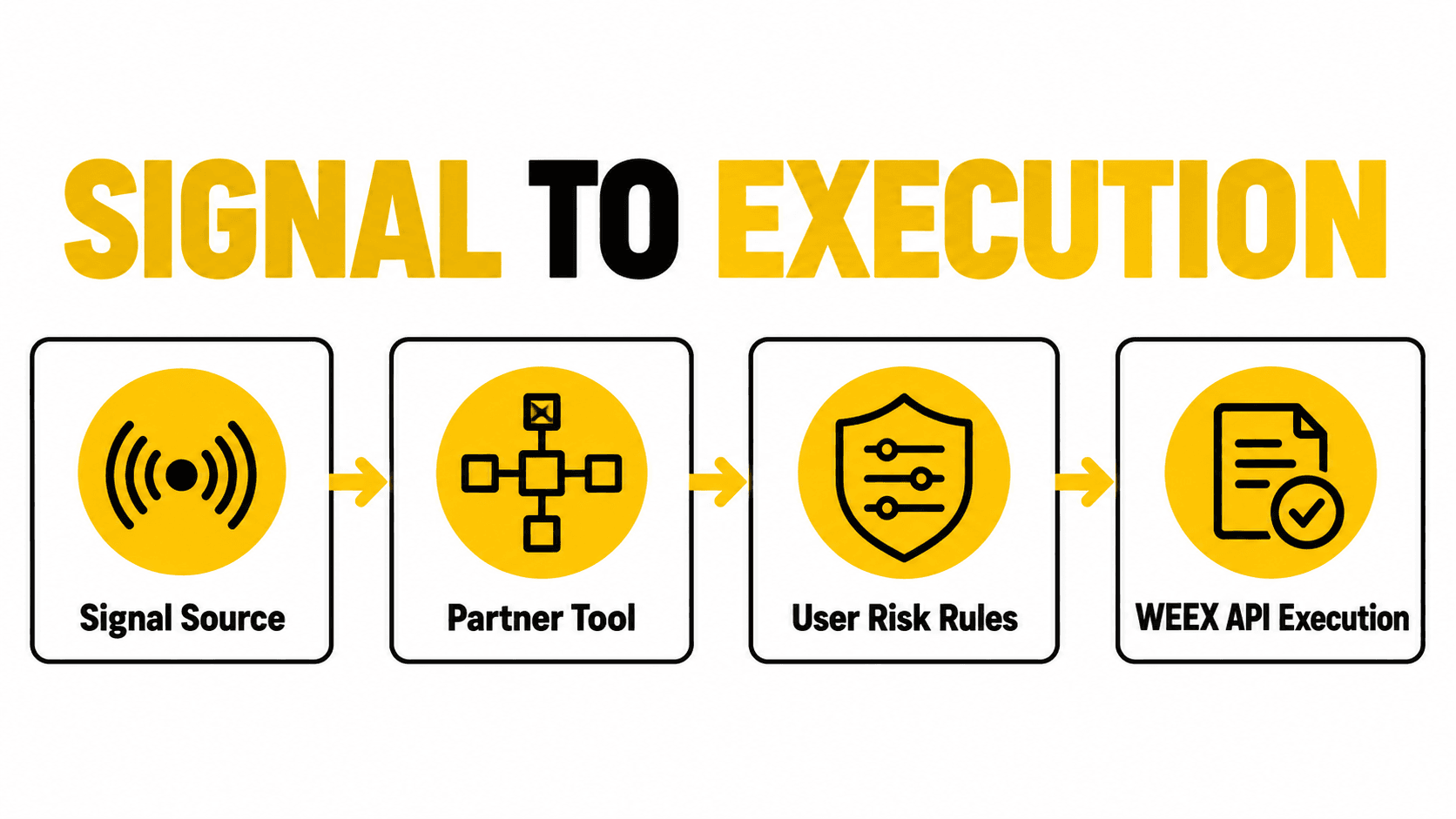
Copy trading, signal services, and Telegram-based trading tools can use WEEX Broker as an execution layer for eligible API-connected products. A partner can build the user-facing experience—signals, subscriptions, position rules, and alerts—while WEEX provides the trading infrastructure behind the order flow. For qualifying partners, Broker ID attribution links valid API orders to the broker relationship.
At WEEX, we believe a trading signal should not jump straight from a message to a live order without clear user settings, permissions, and risk controls. Better social-trading products make each step visible: where the signal came from, what the user has authorized, and what order will actually be sent.
One Signal, Three Different Product Models
“Social trading” is a broad category. In practice, partners may build different experiences around the same core need: helping users discover, interpret, or act on a trading idea.
| Product model | What the user sees | What the partner needs to control |
|---|---|---|
| Copy trading | A lead trader or strategy to follow | Allocation, position sizing, leverage limits, stop rules, and execution status |
| Signal platform | A trade idea, alert, or strategy output | Signal context, order details, risk parameters, and manual or rules-based execution |
| Telegram-based tool | A message, alert, command, or notification interface | Confirmation flow, permission checks, order review, and secure API handling |
The interface may differ, but the execution design should remain disciplined. A strong product does not treat every signal as an instruction to trade. It gives the user a clear choice and applies the limits they have set.
WEEX Broker is designed for professional partners that provide trading products or services through API integration. This includes social trading platforms and trading bot providers, alongside terminals and quantitative strategy platforms. Learn more about the program at WEEX Broker.
Where WEEX Broker Fits in the Execution Chain
A partner’s value is not only in generating a signal. It is also in turning that signal into a usable, accountable workflow.
A typical model can look like this:
- A lead trader, strategy, model, or alert engine produces a signal.
- The partner platform interprets the signal and presents the relevant order information.
- The user’s settings determine whether the order is allowed, resized, held for confirmation, or rejected.
- The partner submits an API order to WEEX with its valid Broker ID.
- The platform displays the resulting order and position status to the user.
For approved WEEX Broker partners, a unique Broker ID is used in eligible API order flow. This helps support order attribution within the broker relationship and enables the partner model to be tied to real execution activity.
Copy Trading Needs Subscriber-Level Controls
Copy trading is often described as “mirroring” another trader. That description is incomplete. A responsible copy-trading product needs to translate one trader’s activity into settings appropriate for each subscriber.
A lead trader may open a position at a size that does not suit every follower. Subscribers can have different account balances, risk tolerance, preferred leverage, and maximum exposure. The platform should therefore create a control layer between the source signal and the final API order.
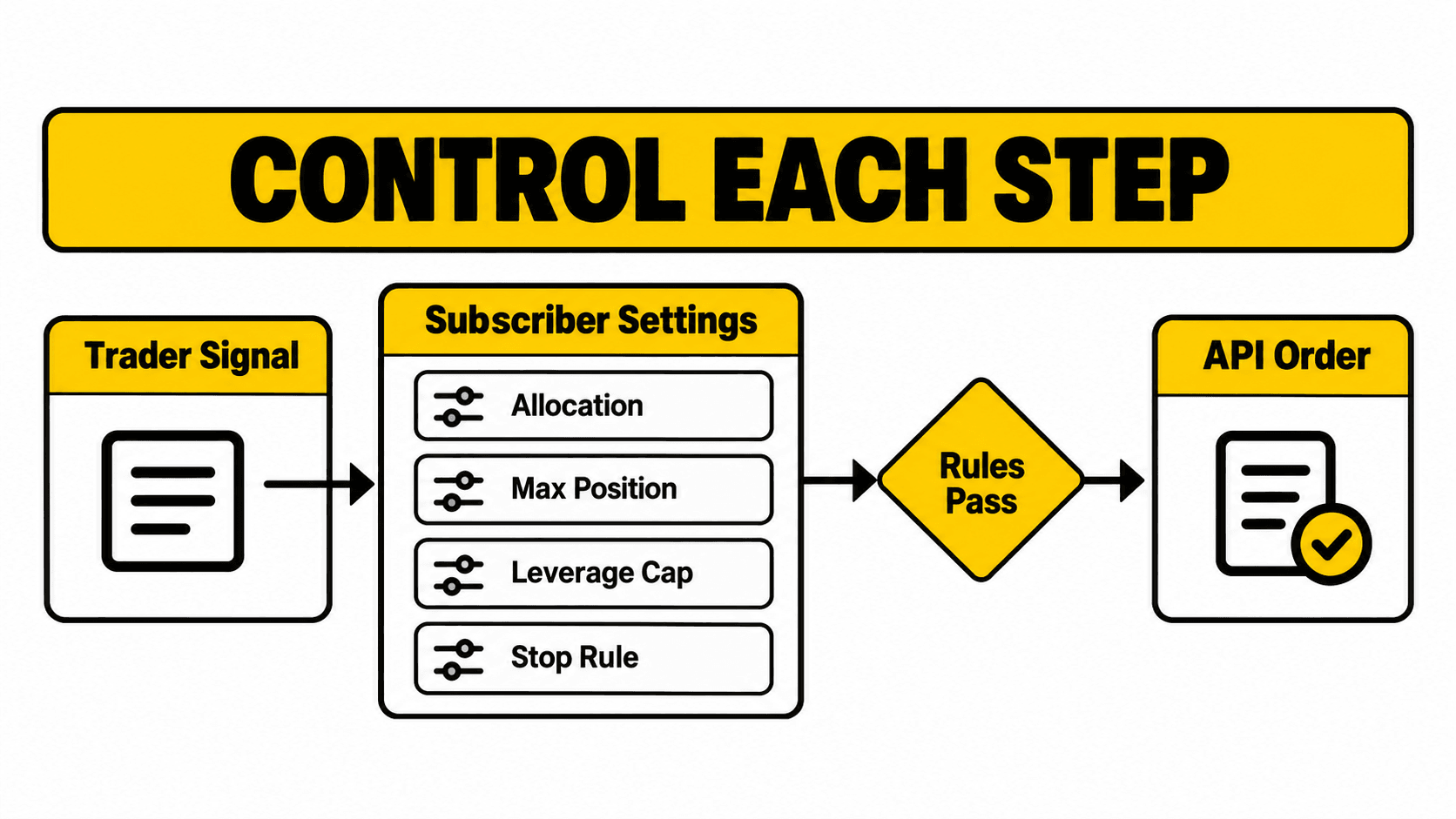
Useful controls can include:
- Allocation limits for a specific trader or strategy
- A maximum position size per market
- Leverage caps
- Stop rules or loss thresholds
- Rules for whether to copy new entries, exits, or both
- A clear option to pause or disconnect a strategy
This approach gives the partner a better product foundation and gives the user clearer control over how a strategy is applied to their account. It also avoids presenting a strategy’s historical activity as a guarantee of future results.
-- Price
Telegram Trading Tools Need a Confirmation Layer
Telegram can be a fast, familiar interface for trading communities. It can deliver alerts, share a strategy update, or act as the front end for a trading workflow. But a Telegram message should not automatically become an irreversible order.
For a Telegram-originated workflow, the partner should make the order details explicit before execution. That means showing the market, side, size, order type, leverage setting where relevant, and the user’s available permission level.
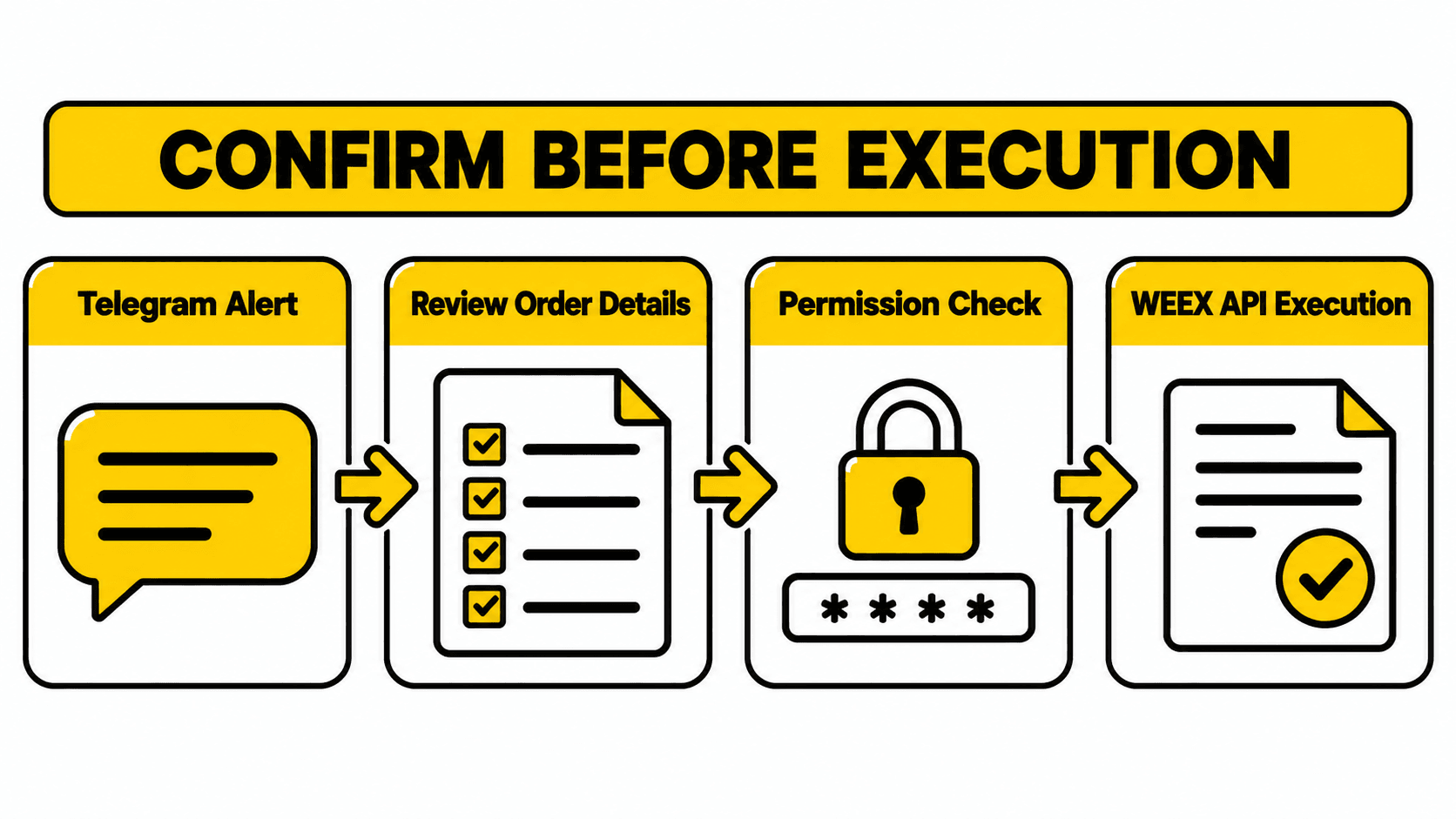
A practical flow is:
- The user receives a Telegram alert or enters a command.
- The tool creates an order preview rather than immediately sending an order.
- The user reviews key details and confirms them, if confirmation is required by the product design.
- The tool checks that the API permissions and account settings allow the requested action.
- The order is submitted through the WEEX API and the result is returned to the user.
This is an important distinction: Telegram can be the interaction layer, while the partner’s platform remains responsible for the order logic, risk checks, and API connection. WEEX does not represent every third-party Telegram tool as a native WEEX product.
What Partners Should Build Into the Product
The best social-trading and signal products make execution understandable before it happens. Whether the entry point is a web dashboard, a mobile terminal, or Telegram, partners should consider four practical areas.
1. Clear User Permissions
Users should understand what they are authorizing. A product should distinguish between viewing signals, generating an order preview, and sending a live API order.
2. Position and Exposure Rules
Partners can help users define their own limits around allocation, position size, leverage, and trading activity. These controls should be applied consistently before an order reaches execution.
3. Order-State Visibility
A signal is not the same as an executed order. The product should communicate whether an instruction is pending, rejected, partially filled, filled, canceled, or closed.
4. Traceable Activity
A good partner experience preserves a clear record of what happened: the original signal, the user settings applied, the order request, and the execution result. This helps users understand the service and helps partners operate a more transparent workflow.
How Broker ID Attribution Supports the Partner Model
WEEX Broker is built for partners that bring professional trading products and services to market. Once approved, a broker receives a unique Broker ID, which must be included in valid API order submissions under the program rules.
That attribution matters because it connects qualifying execution activity with the partner relationship. The program can support direct and indirect commission models, while applicable tiers, rates, and program conditions remain subject to the latest WEEX rules, systems, and agreements.
For product teams, this creates a clearer structure: build differentiated social-trading, signal, or automation experiences on the front end, then connect eligible order flow to WEEX through the broker integration.
Start Building With WEEX Broker
If you operate a copy-trading service, signal platform, bot product, or Telegram-based trading workflow, WEEX Broker offers a route to explore API-connected execution infrastructure.
Before applying, review the WEEX Broker Program FAQ for partner eligibility, Broker ID requirements, API-order attribution, and other program details.
WEEX Editorial View: Social Trading Must Be Designed for Accountability
Social trading works best when it helps users make informed decisions, not when it hides the decision-making process behind a one-click promise. The meaningful product opportunity is not simply to distribute more signals. It is to connect discovery, user-defined controls, and transparent execution in one accountable workflow.
That is the role we see for WEEX Broker: giving qualified partners an API pathway to build their own trading experiences while connecting users to WEEX execution infrastructure.
FAQs
1. Can Copy Trading Platforms Apply to WEEX Broker?
Yes. WEEX Broker is intended for professional partners that provide trading products or services through API integration, including social trading platforms and trading bot providers.
2. Can a Telegram Trading Tool Connect to WEEX Broker?
A partner can design a Telegram-based interface as part of its trading workflow, subject to applicable API integration and program requirements. The partner should maintain clear user permissions, order review, and risk controls.
3. How Are WEEX Broker API Orders Attributed?
Approved brokers receive a unique Broker ID. Valid API order requests must include the applicable Broker ID under the program requirements, enabling attribution within the broker relationship.
Sources
This content is provided for general informational purposes only and doesn't constitute financial, investment, legal, or tax advice. Any events, rewards, online promotions, or related information mentioned herein should not be considered a recommendation, solicitation, or invitation to purchase, sell, trade, or otherwise deal in any crypto assets. Crypto assets are highly volatile and may result in loss. The availability of WEEX services, products, and related events may vary by region. You are responsible for ensuring that your participation is in accordance with applicable local laws and regulations.
You may also like
Third-Party Trading Platforms vs Direct WEEX Trading: Fees, Liquidity, Security, and Control
How Quant Trading Platforms and Bots Can Build With WEEX Broker
How Trading Platforms and Terminals Can Connect to WEEX Broker

How to Buy USDT in Thailand: Payment Methods, Fees and Transfer Checks

What Is RLC Crypto? How iExec (RLC) Powers Confidential Computing

What Is WEEX Fast Connect? How OAuth Connects Third-Party Trading Platforms
How to Become a WEEX Broker: Application, API Setup and Go-Live
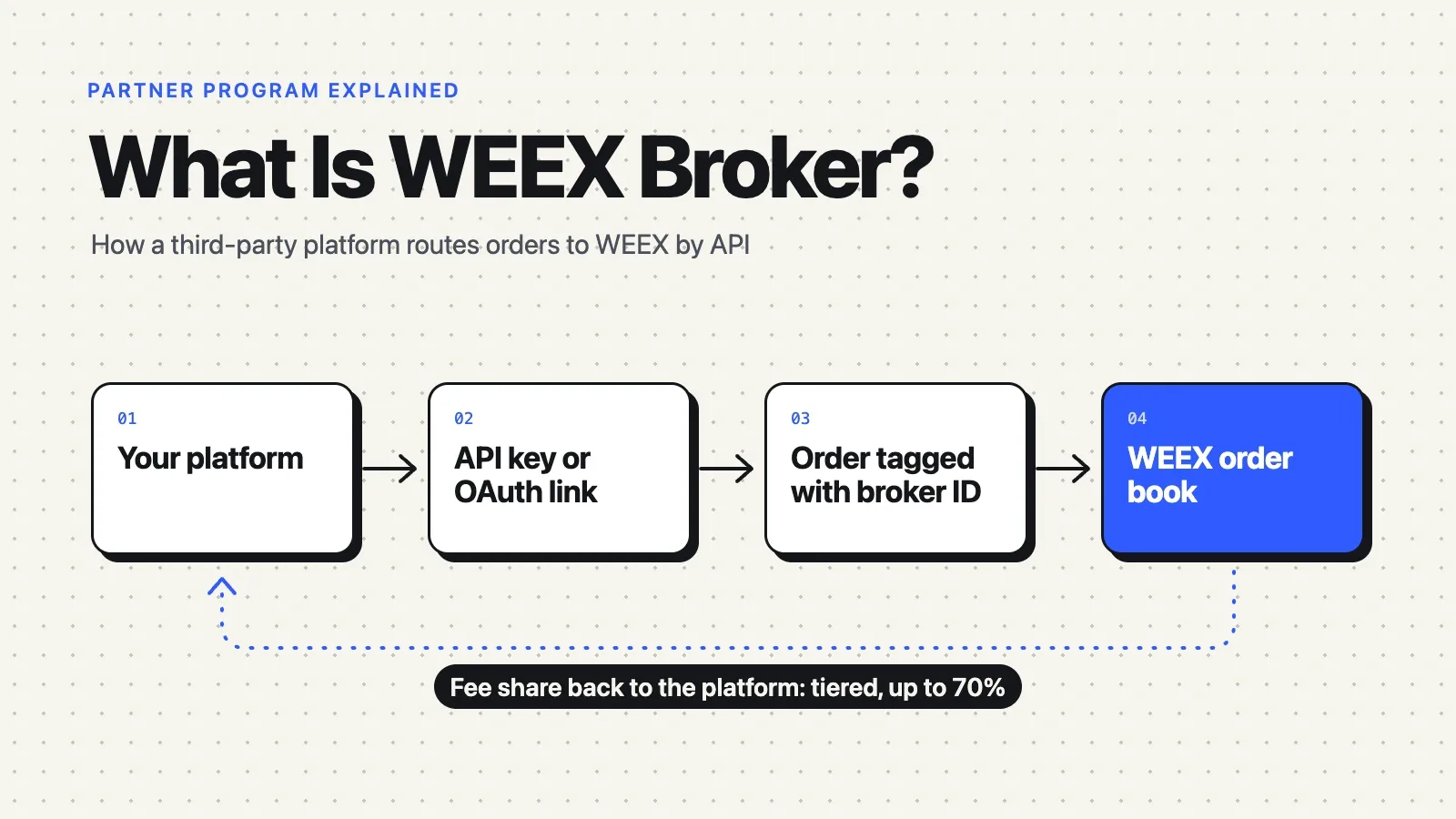
What Is WEEX Broker? API Program, Commissions and How It Works
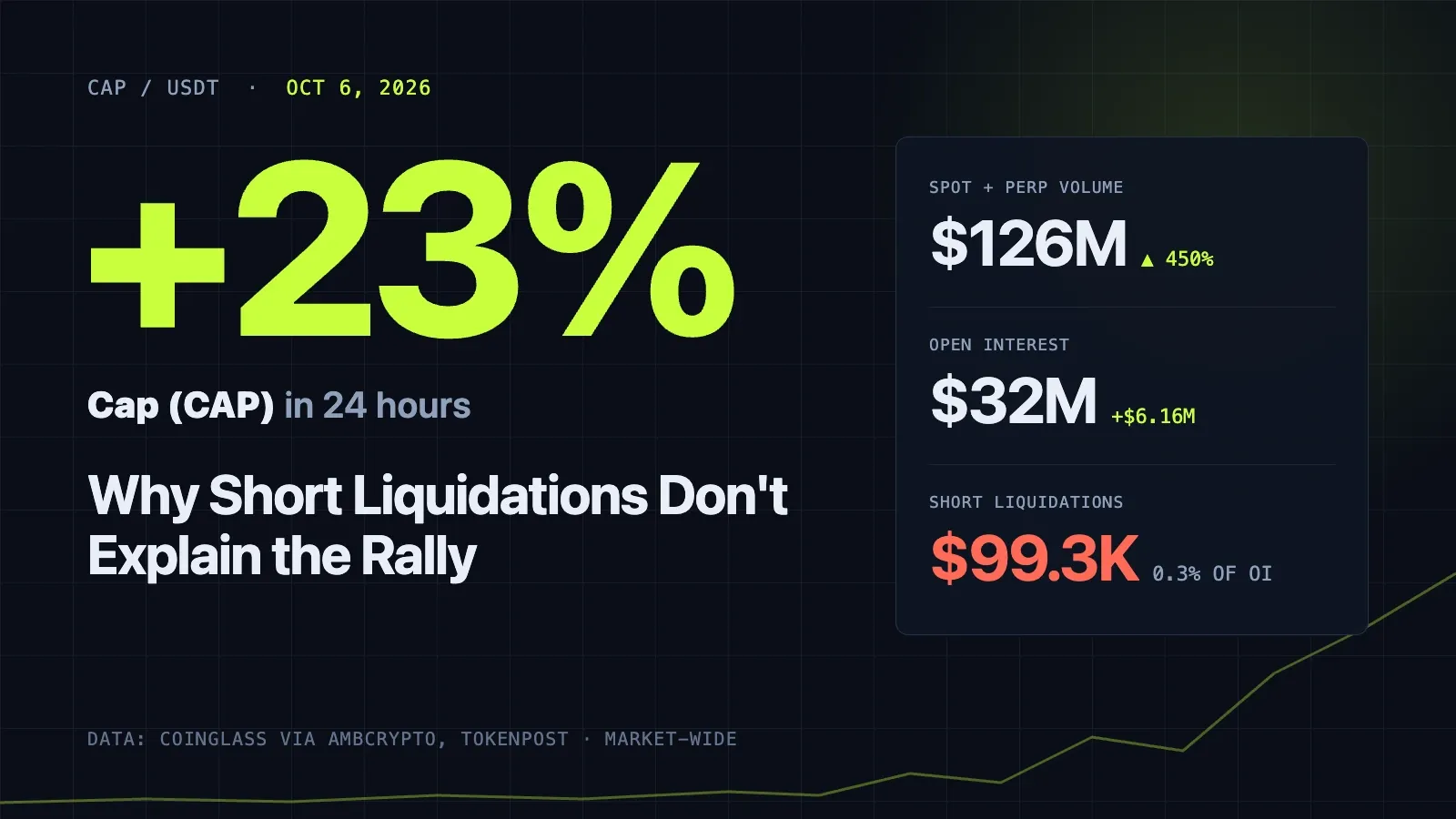
CAP Price Up 23%: Why Short Liquidations Don't Explain the Rally
WEEX TOKEN2049 Day 2 Live Preview: KOLs, AWS, PingCAP and Andrew
Why Does Bitcoin (BTC) Drop? How to Read a BTC Liquidation Heatmap Without Guessing the Bottom
What Is a Decentralized Crypto Exchange (DEX)? How It Works, Costs, Risks, and When to Use One
HPE Stock Hits a Record on $1.2B AI Order: Is It Still Cheap?
MU Stock After a Record Q4: Why Micron Slipped on a Huge Beat
Bitcoin Futures at $83K: PnL and Position Sizing Into Jobs Week
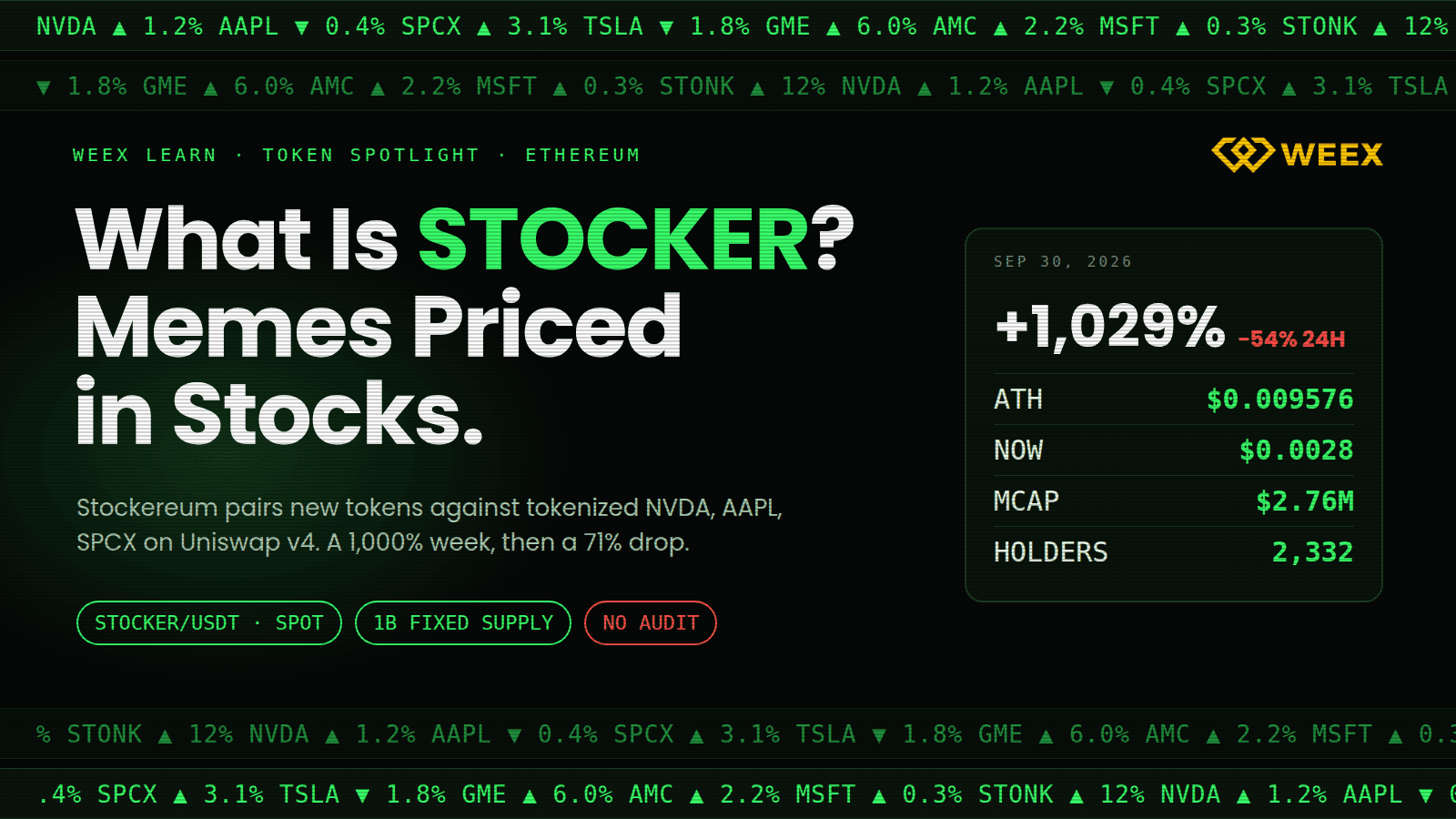
What Is STOCKER? Stockereum, Stock-Paired Meme Tokens, and Risks
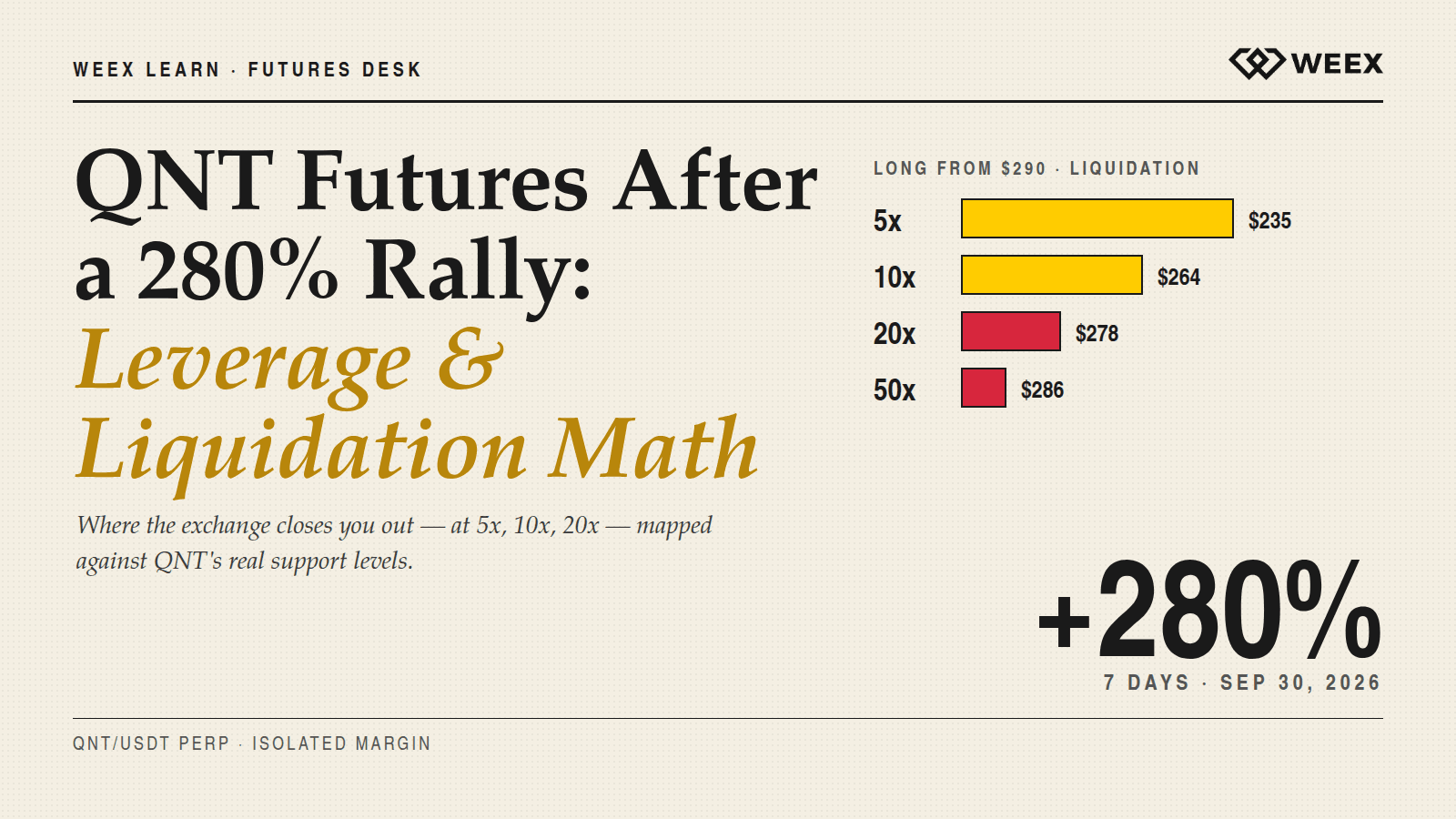
QNT Futures After a 280% Rally: Leverage and Liquidation Math
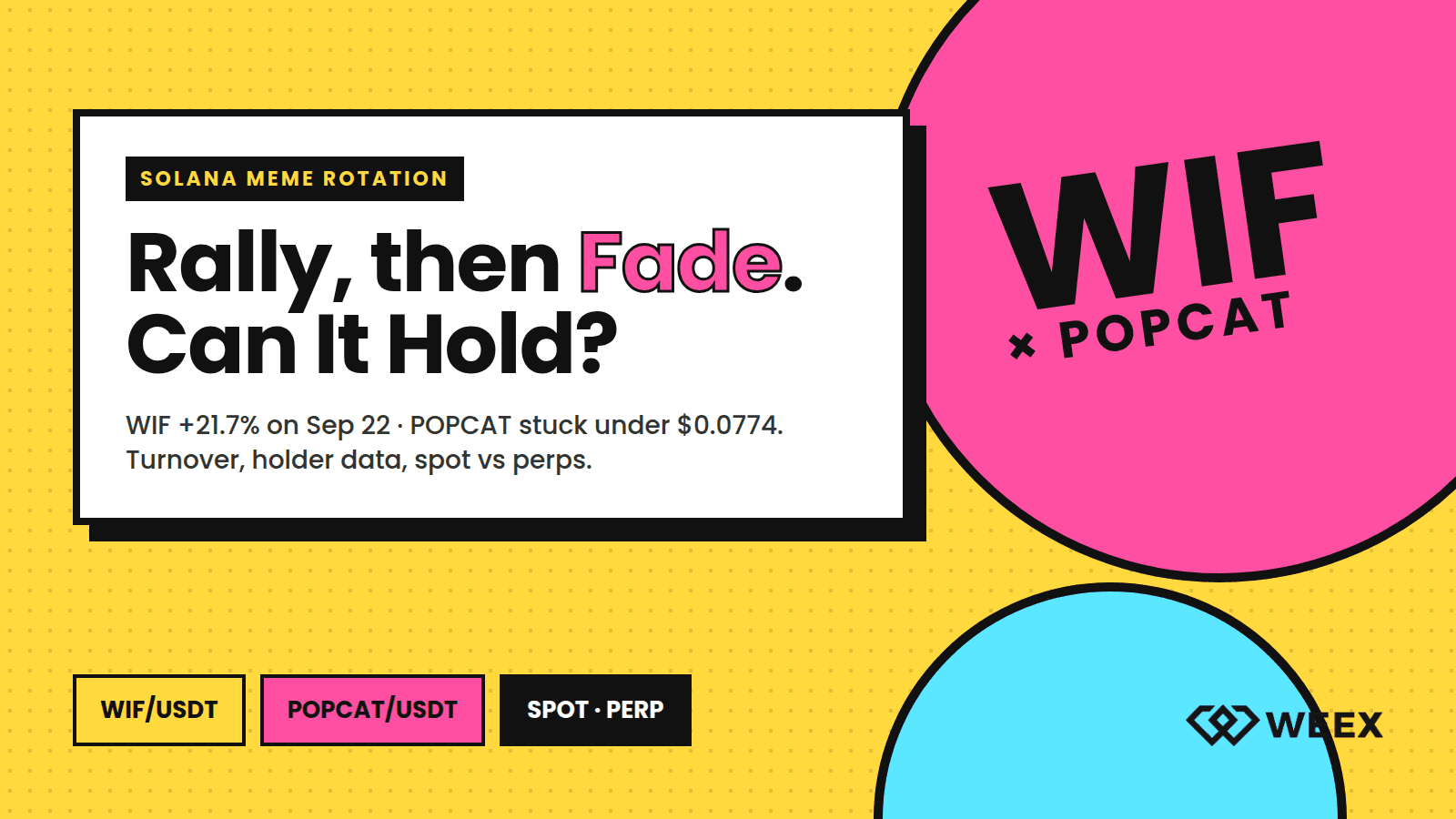
WIF and POPCAT Price Rally: Can the Solana Meme Rotation Hold?

Is QNT a Stock or Crypto? Quant (QNT) and Quantinuum Stock Are Not the Same Asset
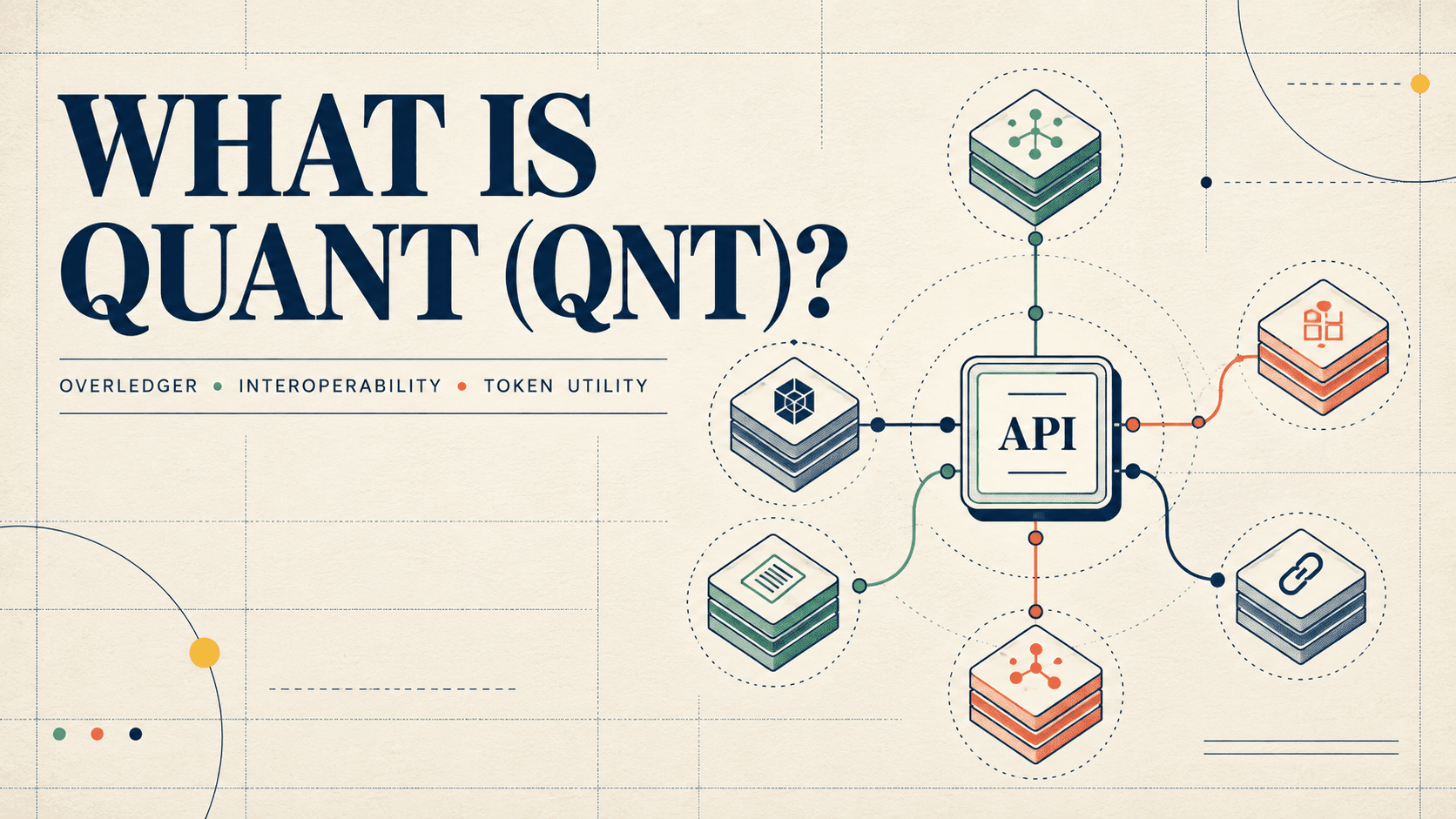
What Is Quant (QNT) Crypto? How Overledger Works, QNT Utility, and Token Supply Explained

Taiwan's Travel Rule Starts in October: What Domestic Crypto Transfers Will Require
Italian Crypto Tax Return 2026: Filing Deadline, Forms and Gains Rate
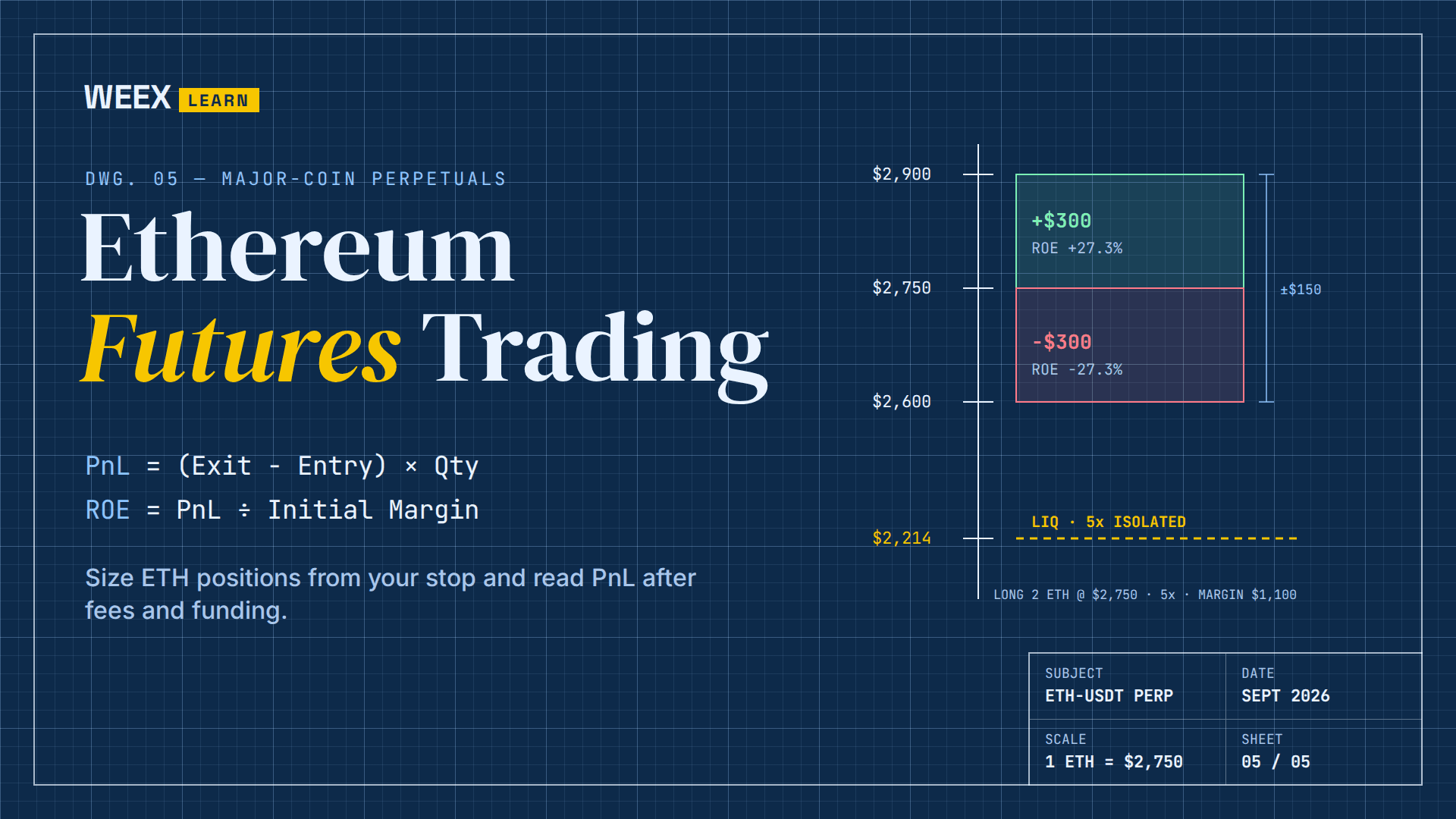
Ethereum Futures Trading: How to Size ETH Positions and Read PnL
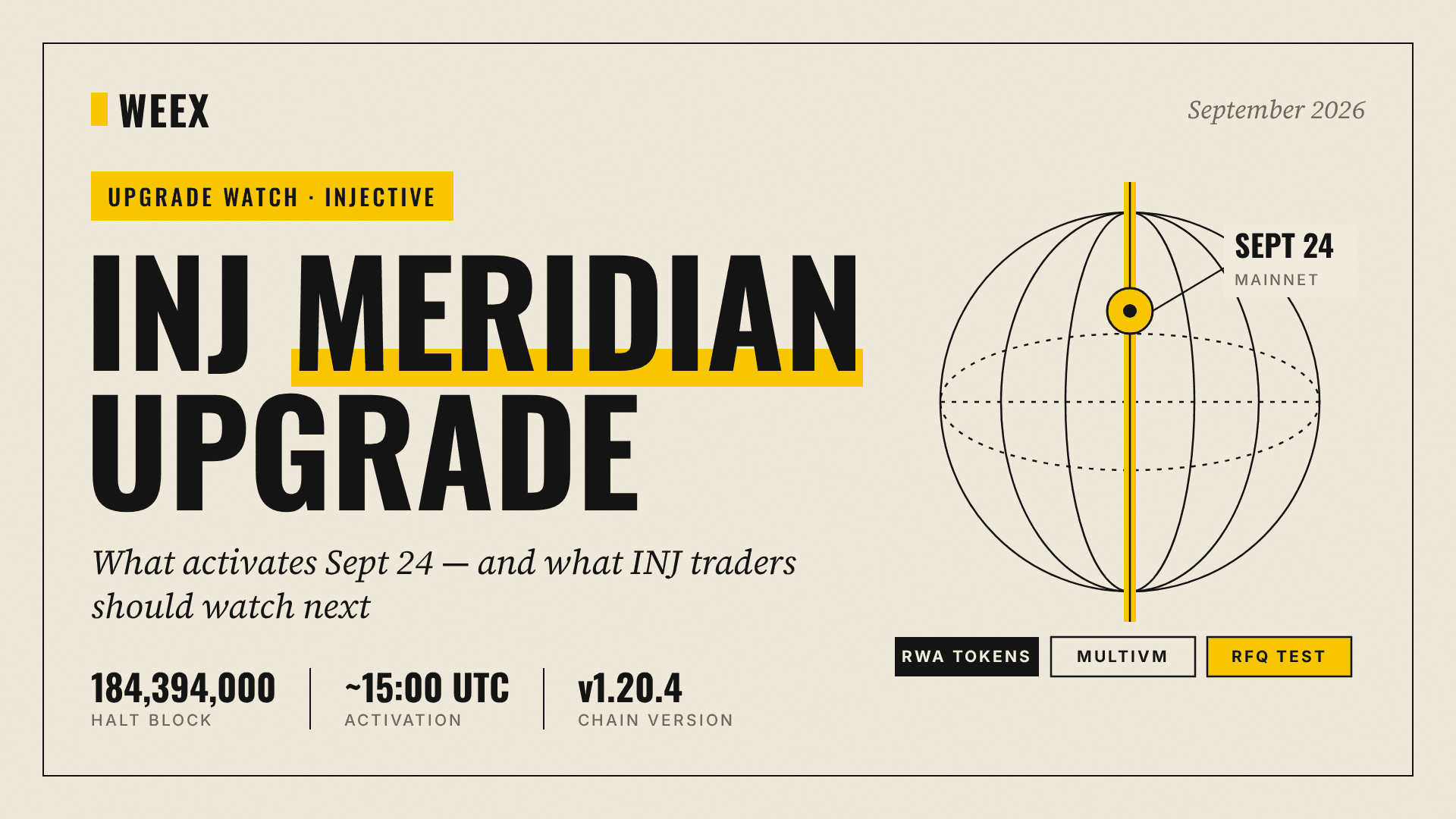
INJ Meridian Upgrade: What Activates Sept 24 and What to Watch

How to Connect Phantom Wallet to a Solana DApp
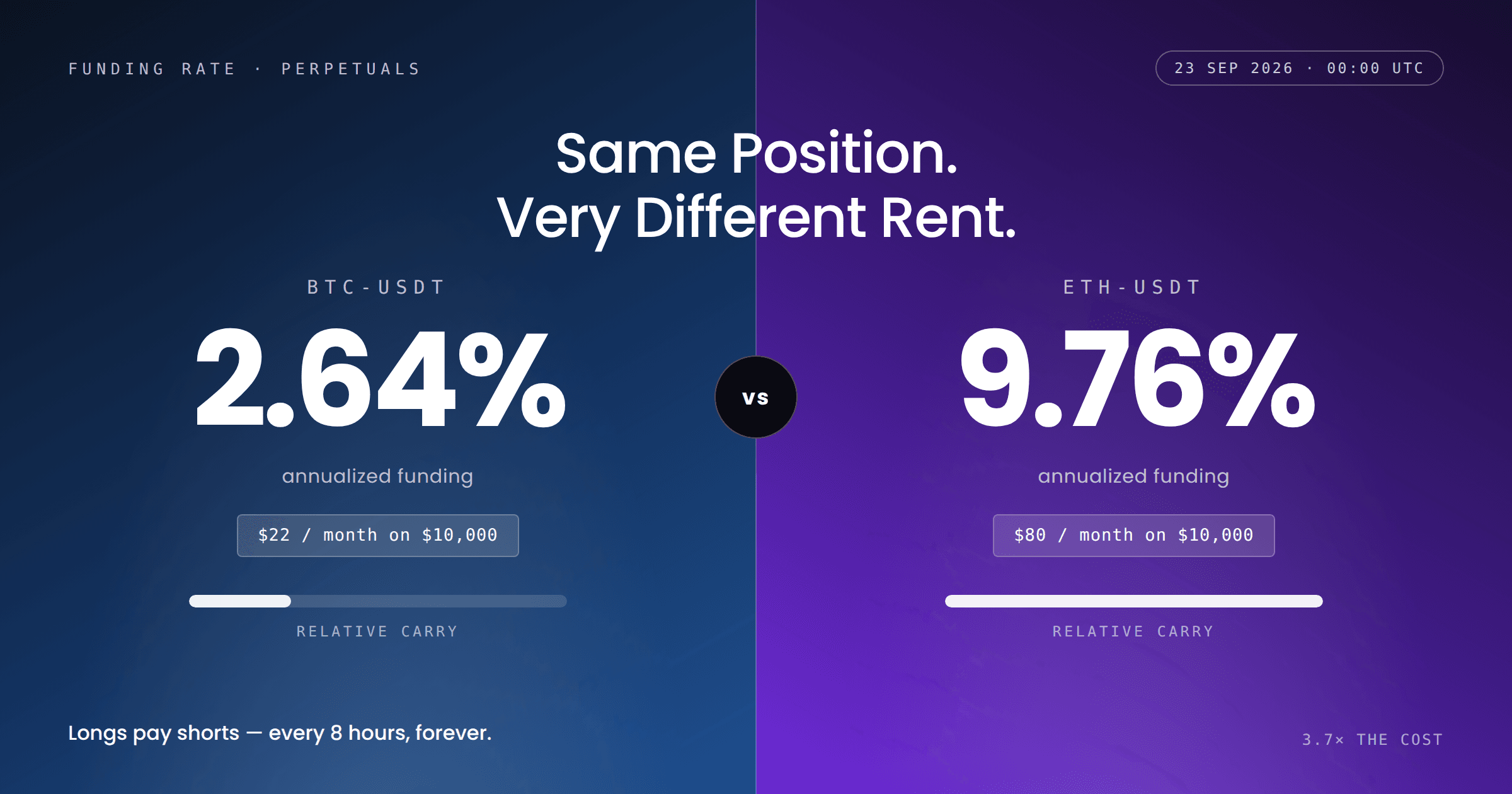
Funding Rate Crypto: What BTC and ETH Are Paying Right Now
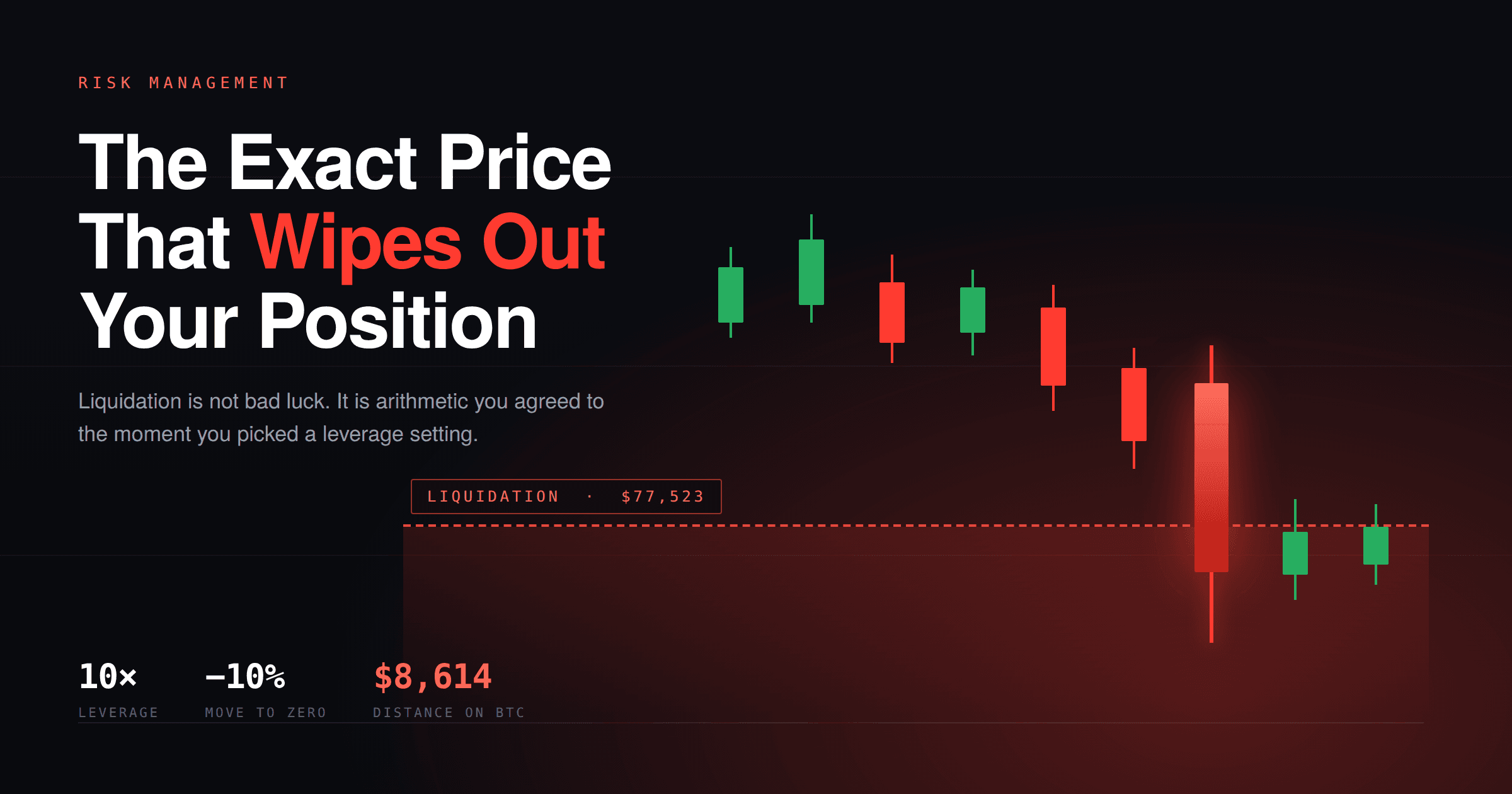
Crypto Liquidation: The Exact Price That Wipes Out Your Position

How to Trade on Hyperliquid: A Step-by-Step Guide
WEEX and MiCA: What the RDWW-1194 Entry in Poland's Register Says
XPL Unlock on Sept 25: How to Long or Short Plasma Futures Safely
Third-Party Trading Platforms vs Direct WEEX Trading: Fees, Liquidity, Security, and Control
How Quant Trading Platforms and Bots Can Build With WEEX Broker
How Trading Platforms and Terminals Can Connect to WEEX Broker
How to Buy USDT in Thailand: Payment Methods, Fees and Transfer Checks
What Is RLC Crypto? How iExec (RLC) Powers Confidential Computing
What Is WEEX Fast Connect? How OAuth Connects Third-Party Trading Platforms
Contents
Popular coins
Latest articles


