
How Quant Trading Platforms and Bots Can Build With WEEX Broker

 Prefer us on Google


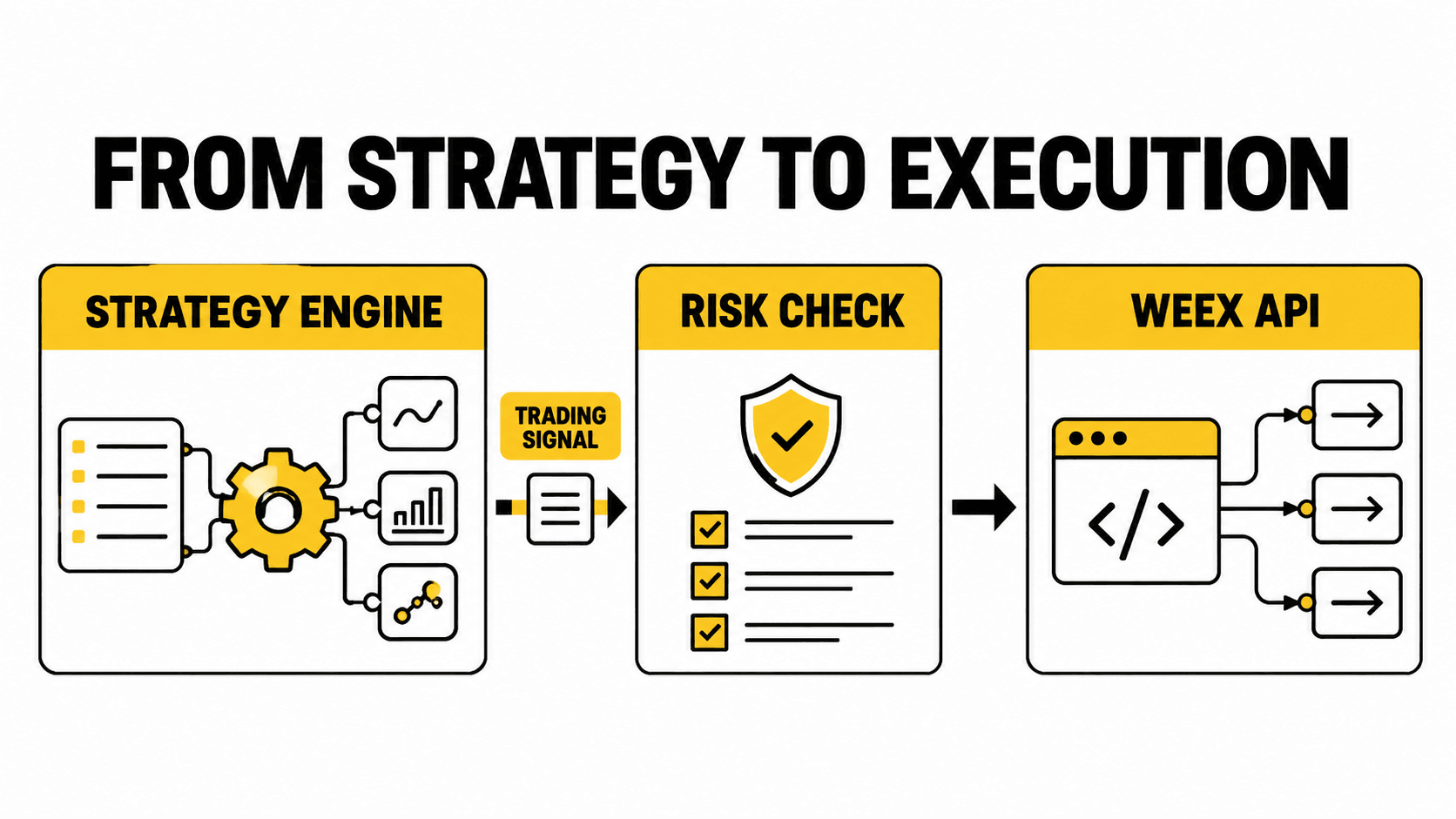
WEEX Broker enables quantitative trading platforms, strategy products, and trading-bot providers to connect their services to WEEX through API integration. Partners can build workflows around market data, user account connections, order execution, and real-time interfaces, while a valid Broker ID allows qualifying API orders to be attributed under the current broker program.
At WEEX, we do not see automated trading as a reason to remove accountability from the process. A bot can execute a strategy faster than a person, but it can also execute a bad assumption faster. The platforms that create lasting value are the ones that treat strategy logic, risk controls, API permissions, and execution monitoring as one connected system.
Why Quant Platforms Need an Execution Layer
Quantitative products begin with an idea: a factor model, indicator combination, arbitrage condition, grid rule, signal feed, portfolio rebalance, or AI-assisted strategy. But research alone does not create a complete trading product.
For a strategy platform, the difficult transition is the path from signal to execution. Users need a clear way to connect accounts, define permissions, inspect the intended order, and understand what happens if market conditions or technical systems change before the order reaches the exchange.
WEEX Broker is built for partners that want to offer this full workflow rather than stop at analysis. The program is open to quantitative trading and strategy platforms, trading-bot providers, and other professional services that integrate through API. Once approved, a partner receives a unique Broker ID to include in qualifying API order requests.
That structure gives product teams a practical foundation: they can focus on their own strategy engine and user experience while connecting execution to WEEX infrastructure.
From Strategy Logic to a WEEX API Order
A reliable quantitative trading product should make its execution path easy to explain. The user should not have to guess whether a signal is informational, simulated, queued for approval, or already sent to the market.
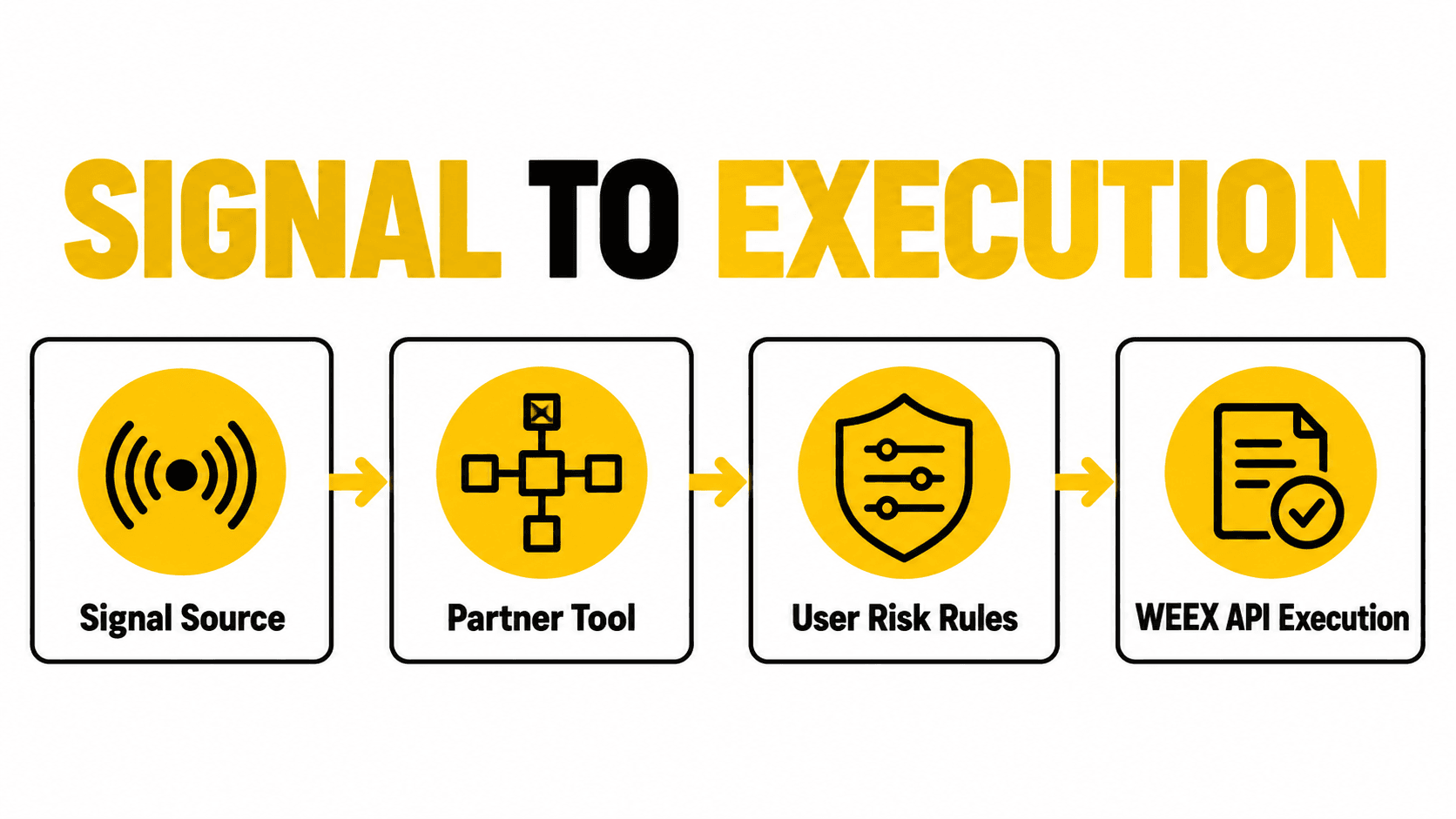
A typical workflow has four layers:
| Layer | Platform Responsibility | WEEX Broker Connection |
|---|---|---|
| Research | Build indicators, models, alerts, or portfolio logic | Access market data relevant to product design |
| Strategy Decision | Define entry, exit, sizing, and risk rules | Prepare a structured order instruction |
| Risk Check | Apply user limits, permission checks, and error handling | Prevent incomplete or unauthorized requests |
| Execution and Attribution | Submit qualifying API orders and monitor outcomes | Send the order through API with the Broker ID |
The Broker ID is not a decorative partner label. It is part of the order-attribution process. Under the current program rules, qualifying API orders must include the valid Broker ID for the corresponding broker commission to be calculated. A missing or incorrectly configured ID can prevent the order from qualifying.
【Insert Inline Image 1: exec-b569e0b2-d674-4ef2-af62-2d8ba92b21c4.png | ALT: API order workflow showing Broker ID tagging and commission-dashboard attribution】
What Can Quant Platforms Build With WEEX?
The same API foundation can support different product types. A platform does not need to become a full terminal or create a generic bot marketplace to make the integration useful.
Strategy and Signal Platforms
A strategy platform may begin with research and alerts. Over time, it can offer users an optional execution route after they review the strategy conditions and connect their WEEX account. This is relevant for products built around technical signals, portfolio rules, quantitative screens, or webhook-based instructions.
The product’s real differentiation remains its research or decision logic. WEEX Broker gives the platform a route to connect that logic to an execution workflow without requiring the platform to build exchange infrastructure from scratch.
Automated Trading Bots
Bot providers can connect user-authorized API credentials to a structured strategy engine that manages predefined rules. An automated workflow might place orders according to a grid, scheduled allocation model, signal trigger, or other strategy design.
For example, HaasOnline publicly lists WEEX spot and futures integrations for its bot environment, where users can connect their own API keys, build strategies, and work with market data. That is a useful illustration of the broader opportunity: a specialized product can own its strategy and automation layer while using WEEX as the execution venue.
Automation, however, should never be marketed as a substitute for risk management. A bot does not validate the economic logic of a strategy merely because it can run continuously.
Developer and CCXT-Based Tools
For teams building their own applications, the WEEX developer documentation provides routes for market data, trading, accounts, and real-time interfaces. Developers can use those capabilities to build dashboards, execution services, research tools, and custom trading workflows.
CCXT also documents WEEX as an exchange integration, which can be useful for developers working with a unified exchange-library approach. That does not mean every CCXT method or a third-party framework automatically fits every product design. Teams should test their specific order types, authentication flow, error handling, and market requirements before relying on a generic adapter in production.
-- Price
Validate a Strategy Before You Scale It
Backtesting is valuable, but it is not proof that a strategy will behave the same way in live conditions. Historical data can help test whether an idea had logic in the past; it cannot fully reproduce latency, changing liquidity, partial fills, changing spreads, API interruptions, or a user’s real risk behavior.
We recommend a staged deployment mindset:
- Backtest the logic.
Test whether the rules are internally consistent across historical conditions. Be explicit about data quality, fees, fill assumptions, and the time period used. - Forward-test the workflow.
Observe how the system behaves on data it has not already seen. This is where many implementation problems become visible: duplicate orders, missed signals, timing drift, or incorrect position handling. - Run a small live pilot.
Start with strict limits, close monitoring, and a defined rollback process. The purpose is not to prove that the strategy will always win; it is to confirm that the actual order and risk workflow behaves as designed.
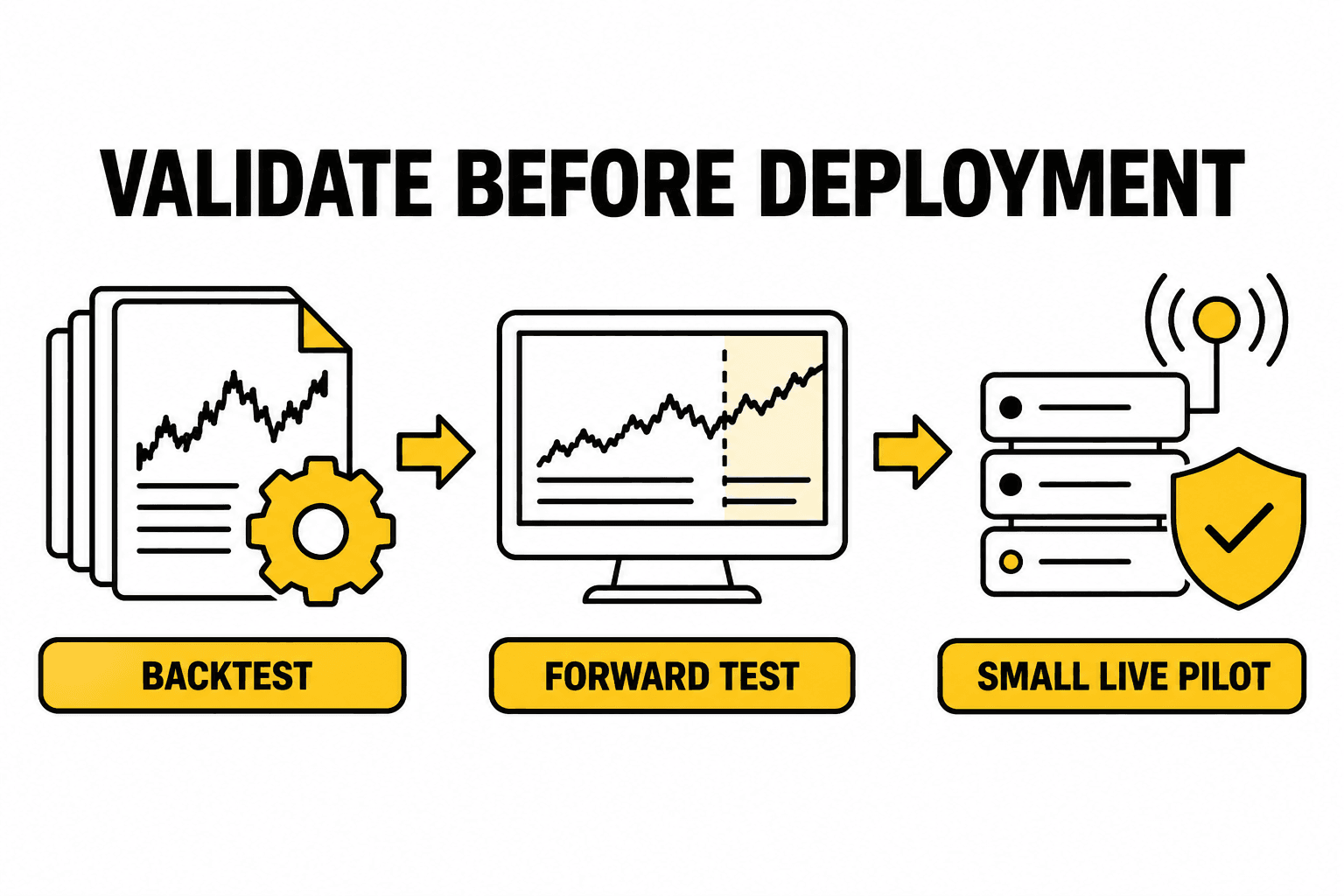
This progression is more credible than moving directly from an attractive backtest chart to unrestricted live execution.
Automation Needs Guardrails
For a quantitative platform, API access is a permissions and operations decision—not simply a development task.
A secure integration design should use the minimum access needed for the product’s intended workflow. If a service needs to read balances, retrieve market data, and place orders, its permission design should reflect those specific needs. It should not request broader access merely because broader access is technically available.
The platform should also define what happens when a request fails. For example, it should know whether an order was rejected, accepted, partially filled, cancelled, or left in an unknown state after a network interruption. Repeated blind retries can create duplicate exposure, while silent failures can leave users believing an order exists when it does not.
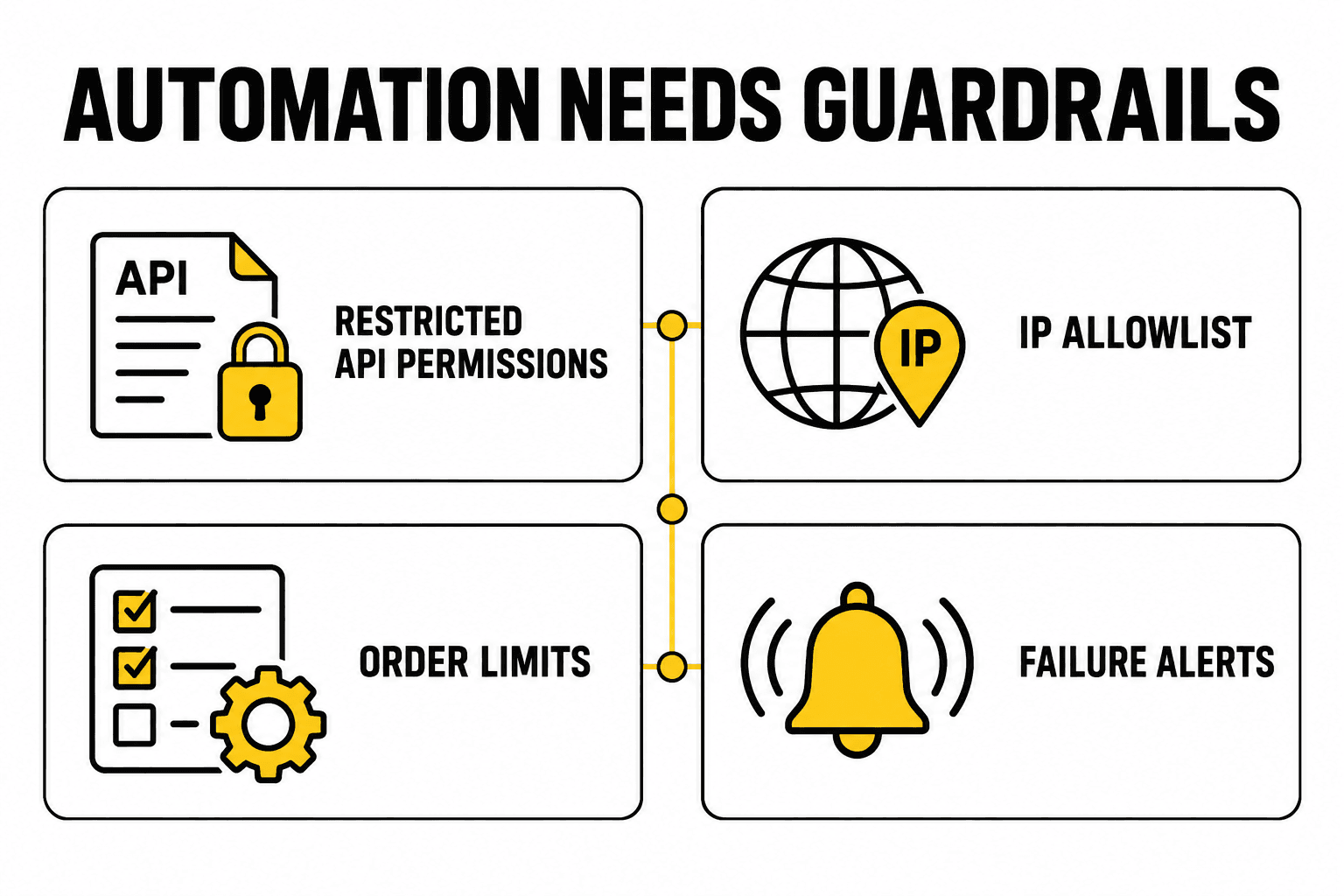
Four controls deserve special attention:
- Restricted API permissions aligned with the product’s actual functions
- IP allowlists or comparable infrastructure controls where appropriate
- Order and exposure limits that prevent unintended scaling
- Failure alerts and logging that make abnormal behavior visible quickly
WEEX developer guidance also recommends that integrators pause requests and apply backoff when throttled rather than retry continuously. This is a small engineering choice with a large operational impact: stable integrations account for platform limits instead of treating every error as a reason to send more traffic.
How the WEEX Broker Model Supports Platform Growth
WEEX Broker is designed to recognize platforms that create real trading utility. Under the program’s current terms, partners can receive a unique Broker ID, access API integration support, and monitor relevant activity through partner-facing tools.
The program also distinguishes between direct and indirect commission scenarios. Direct commission generally relates to users referred through the broker’s own channel, while indirect commission can apply when users with an existing referral relationship trade through a broker’s product, tool, strategy, or API service—subject to current program rules and correct attribution.
This matters for established quantitative products. A platform’s value is not limited to acquiring entirely new users. If existing WEEX users choose a platform because it improves research, automation, workflow, or execution management, the partner’s contribution can still be recognized under the applicable broker framework.
Broker tiers, commission rates, and other commercial terms may change over time. Partners should confirm the latest requirements during onboarding and should not build product economics around assumptions that have not been formally agreed.
How to Start Building With WEEX Broker
Partners interested in a quantitative-platform or bot integration can begin with the WEEX Broker page. The page outlines the partnership model and provides an application route.
Before applying, prepare a concise technical and product overview:
- What does the platform help users do?
- Which API functions are needed?
- How will users authorize access?
- How will the platform control orders, limits, and error handling?
- Where will the Broker ID be included in the order workflow?
- What testing must be complete before users access live execution?
For the broker-program rules and application steps, review the WEEX Broker Program and Commission Structure. For technical implementation planning, use the WEEX Developer Documentation.
WEEX Editorial View: Build for Controlled Execution, Not Automated Hype
The market does not need more bots that promise effortless returns. It needs better tools that make strategy logic, permissions, and execution outcomes easier to inspect.
That is the standard we encourage partners to build toward. A quantitative platform should help users understand what the system is doing before it trades, not explain it only after something goes wrong. A broker integration should connect useful technology with accountable execution, not turn API access into a black box.
WEEX Broker is designed for platforms that share that view: build a differentiated strategy or trading product, integrate deliberately, protect the workflow, and let execution infrastructure support real product value.
Sources
- WEEX, WEEX Broker: Crypto Brokerage & API Solutions, accessed October 9, 2026.
- WEEX Help Center, WEEX Broker Program and Commission Structure, accessed October 9, 2026.
- WEEX Developer Documentation, Build With WEEX APIs, accessed October 9, 2026.
- HaasOnline, WEEX Trading Bot, accessed October 9, 2026.
- CCXT, WEEX Exchange Documentation, accessed October 9, 2026.
This content is provided for general informational purposes only and doesn't constitute financial, investment, legal, or tax advice. Any events, rewards, online promotions, or related information mentioned herein should not be considered a recommendation, solicitation, or invitation to purchase, sell, trade, or otherwise deal in any crypto assets. Crypto assets are highly volatile and may result in loss. The availability of WEEX services, products, and related events may vary by region. You are responsible for ensuring that your participation is in accordance with applicable local laws and regulations.
You may also like
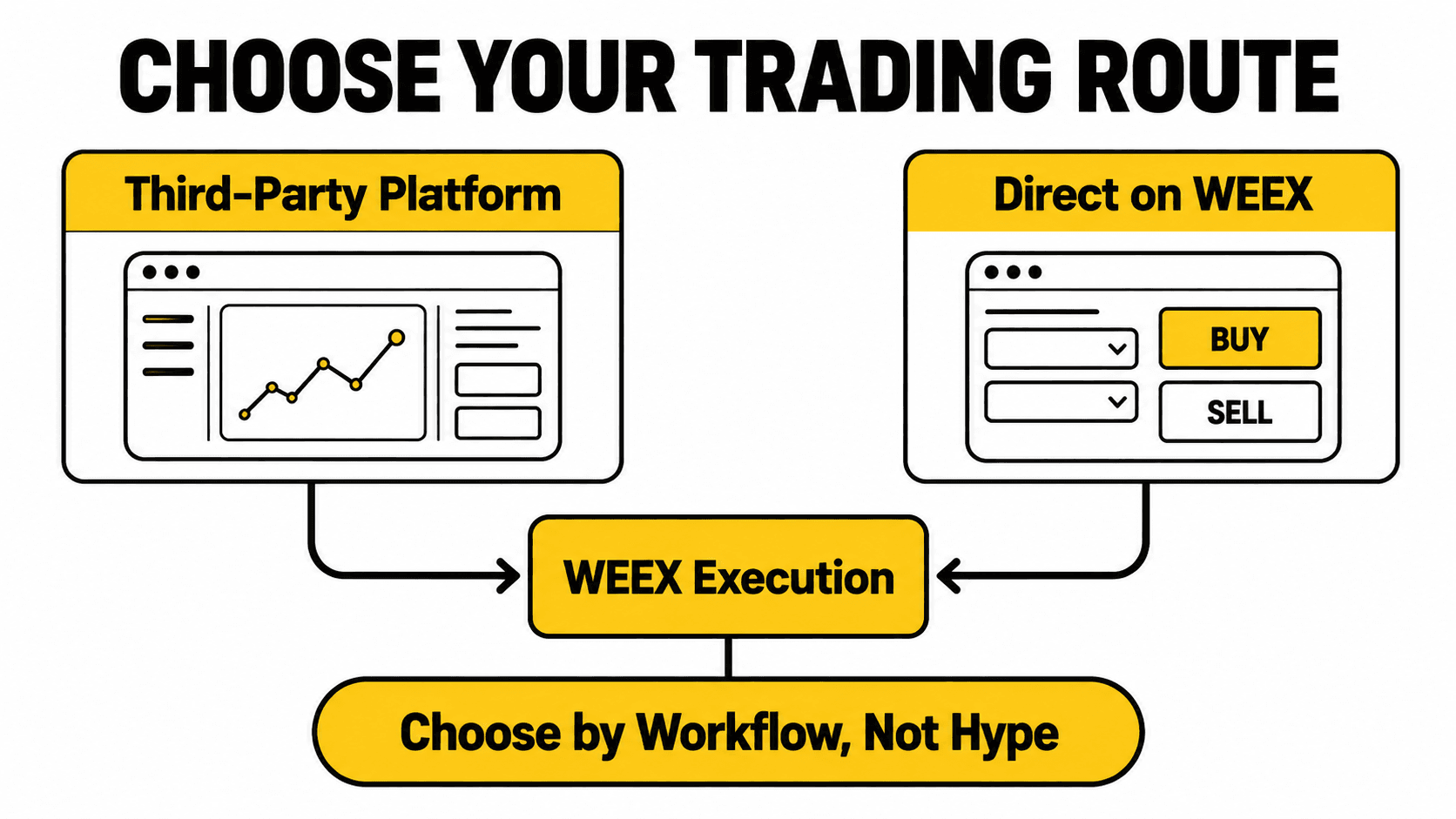
Third-Party Trading Platforms vs Direct WEEX Trading: Fees, Liquidity, Security, and Control
How Copy Trading, Signal, and Telegram Trading Tools Can Build With WEEX Broker
How Trading Platforms and Terminals Can Connect to WEEX Broker

How to Buy USDT in Thailand: Payment Methods, Fees and Transfer Checks

What Is RLC Crypto? How iExec (RLC) Powers Confidential Computing

What Is WEEX Fast Connect? How OAuth Connects Third-Party Trading Platforms
How to Become a WEEX Broker: Application, API Setup and Go-Live
What Is WEEX Broker? API Program, Commissions and How It Works
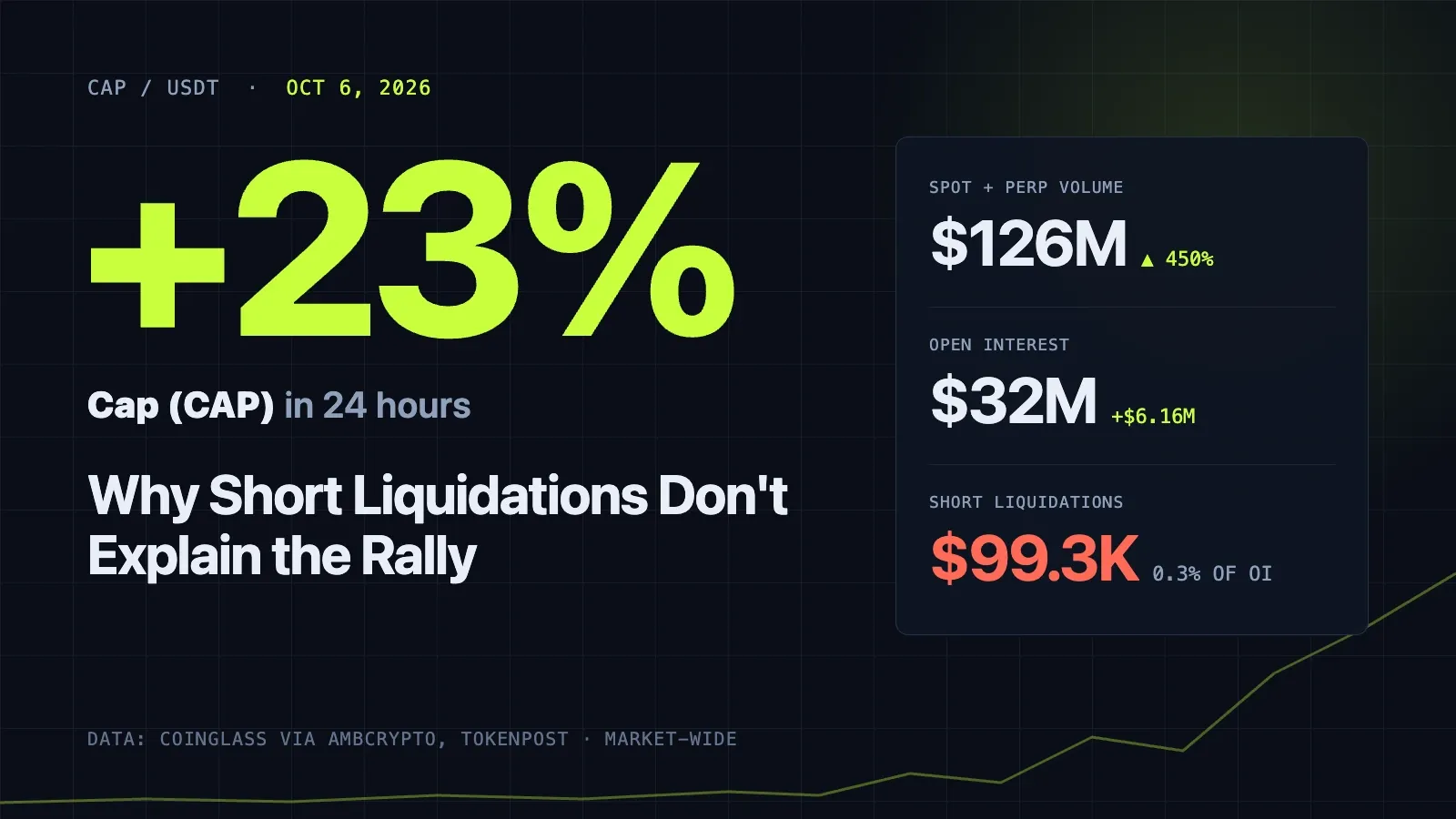
CAP Price Up 23%: Why Short Liquidations Don't Explain the Rally
WEEX TOKEN2049 Day 2 Live Preview: KOLs, AWS, PingCAP and Andrew
Why Does Bitcoin (BTC) Drop? How to Read a BTC Liquidation Heatmap Without Guessing the Bottom
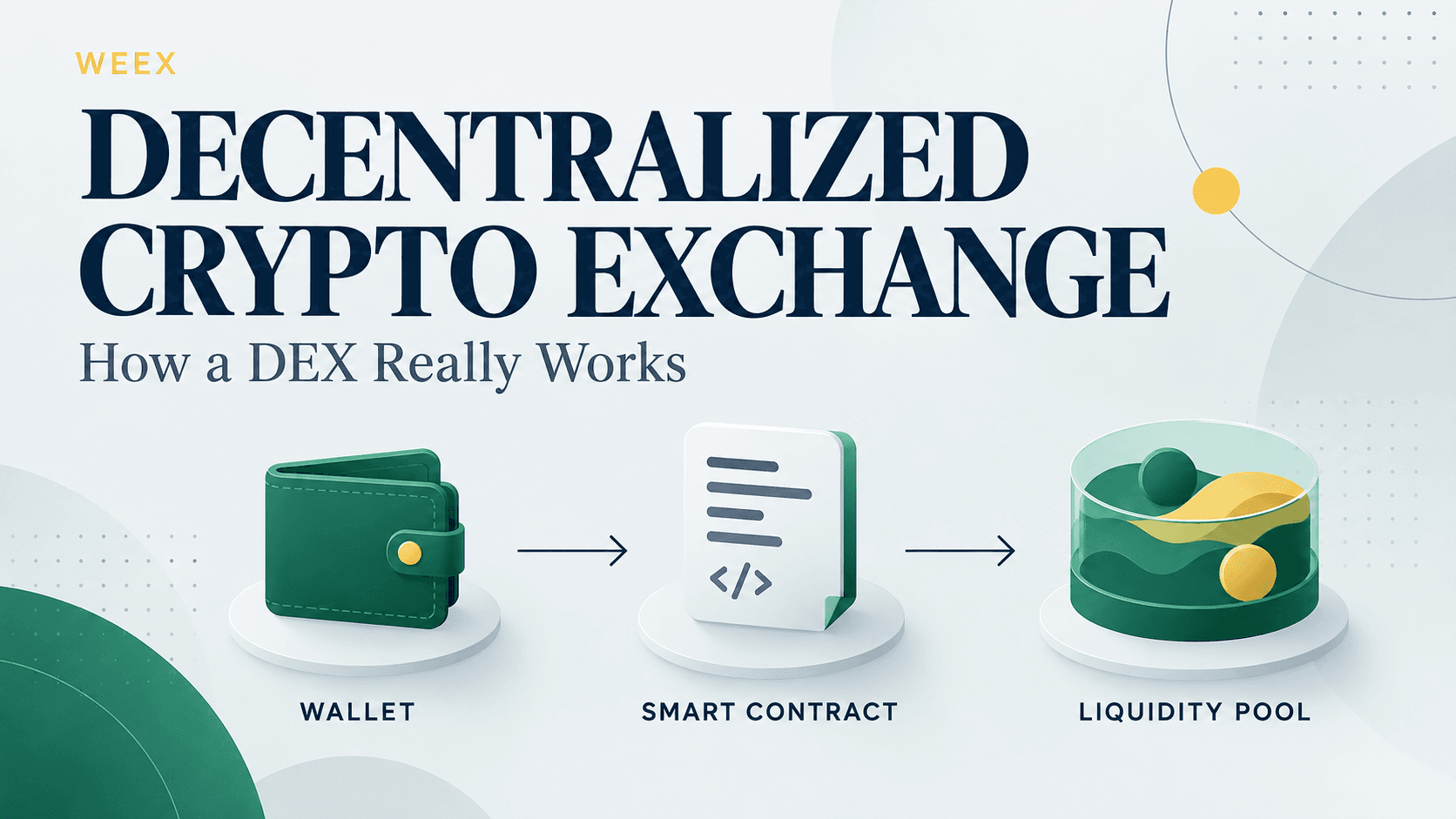
What Is a Decentralized Crypto Exchange (DEX)? How It Works, Costs, Risks, and When to Use One
HPE Stock Hits a Record on $1.2B AI Order: Is It Still Cheap?
MU Stock After a Record Q4: Why Micron Slipped on a Huge Beat
Bitcoin Futures at $83K: PnL and Position Sizing Into Jobs Week
What Is STOCKER? Stockereum, Stock-Paired Meme Tokens, and Risks
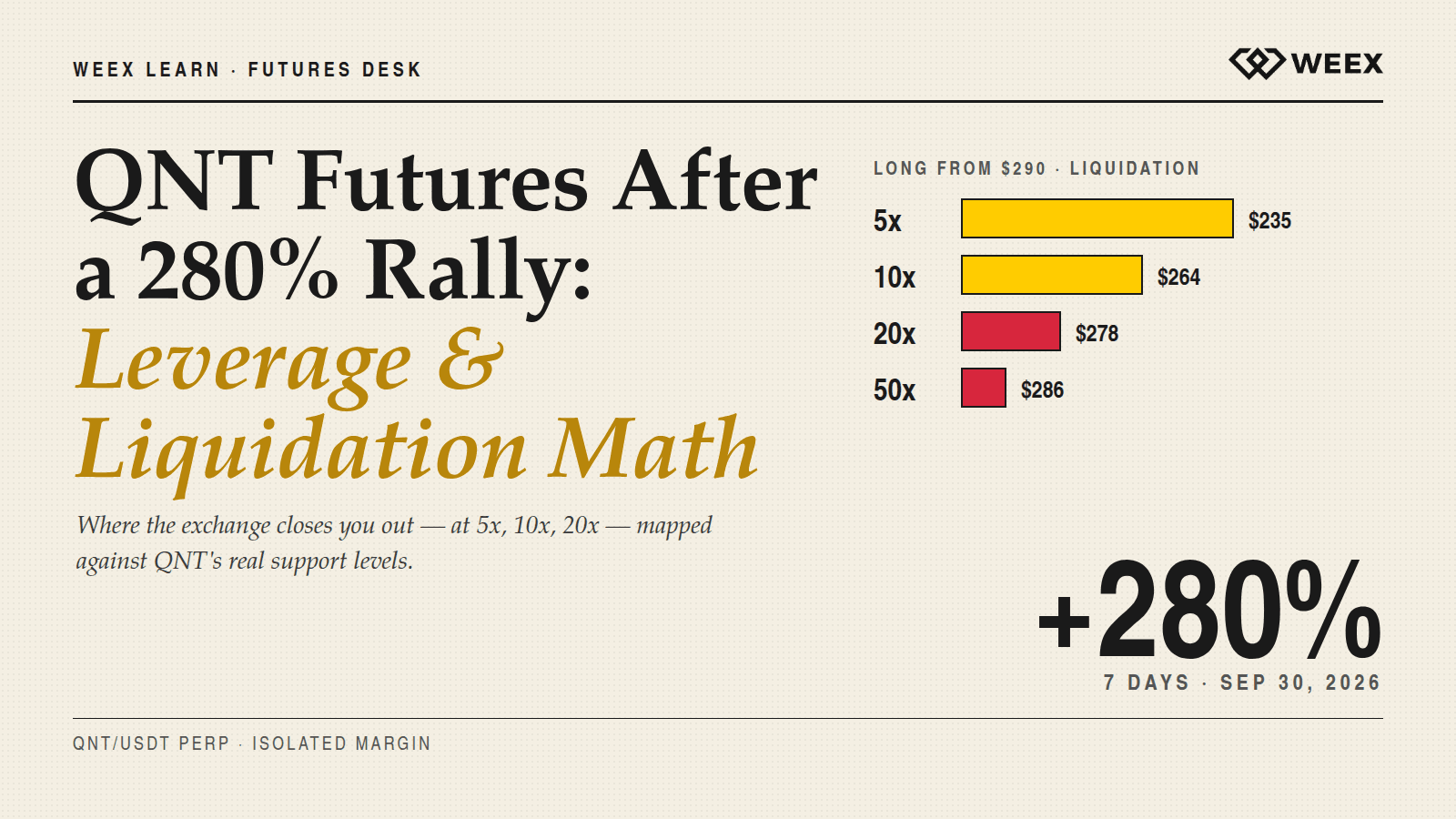
QNT Futures After a 280% Rally: Leverage and Liquidation Math

WIF and POPCAT Price Rally: Can the Solana Meme Rotation Hold?
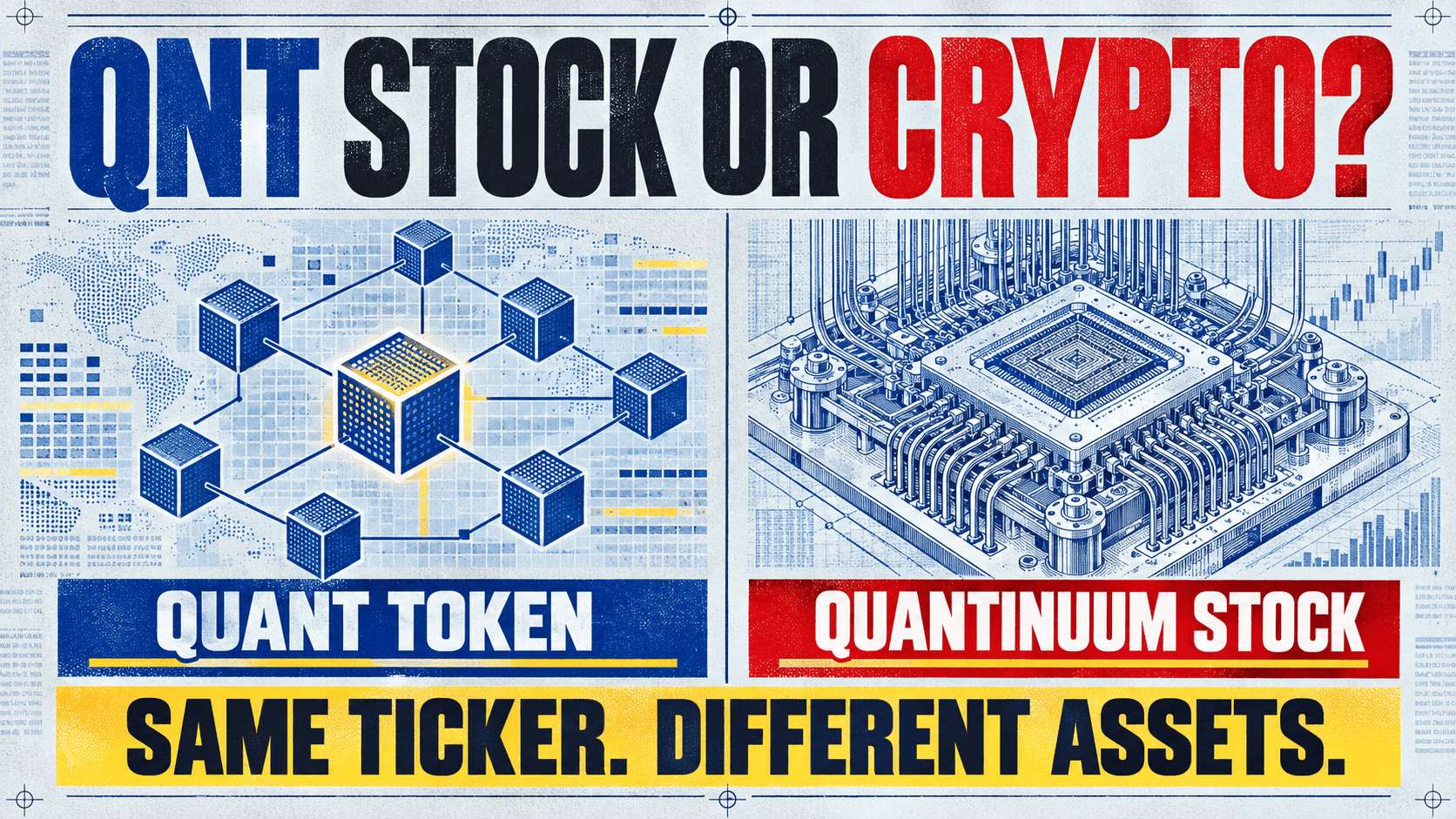
Is QNT a Stock or Crypto? Quant (QNT) and Quantinuum Stock Are Not the Same Asset
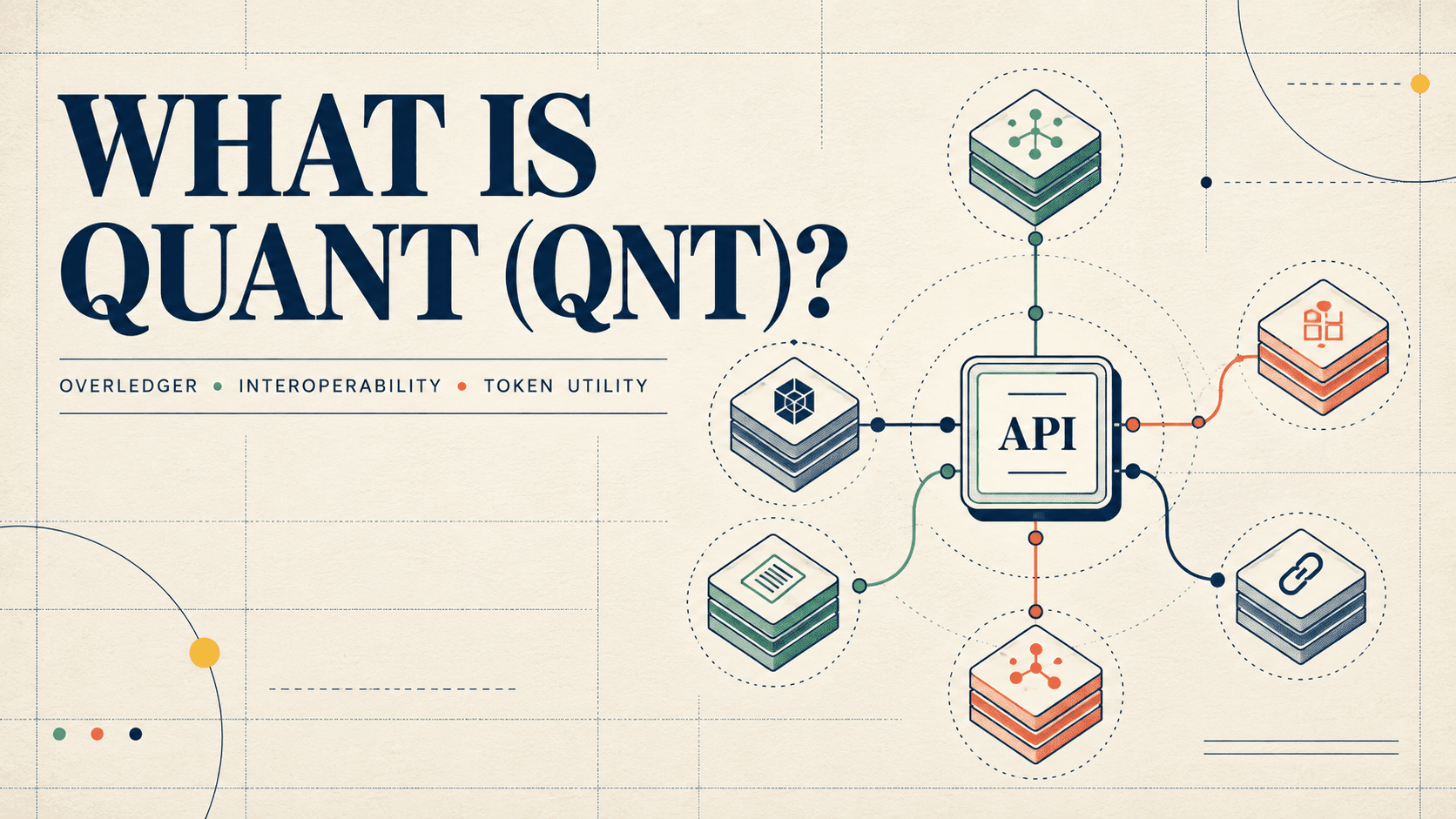
What Is Quant (QNT) Crypto? How Overledger Works, QNT Utility, and Token Supply Explained

Taiwan's Travel Rule Starts in October: What Domestic Crypto Transfers Will Require
Italian Crypto Tax Return 2026: Filing Deadline, Forms and Gains Rate
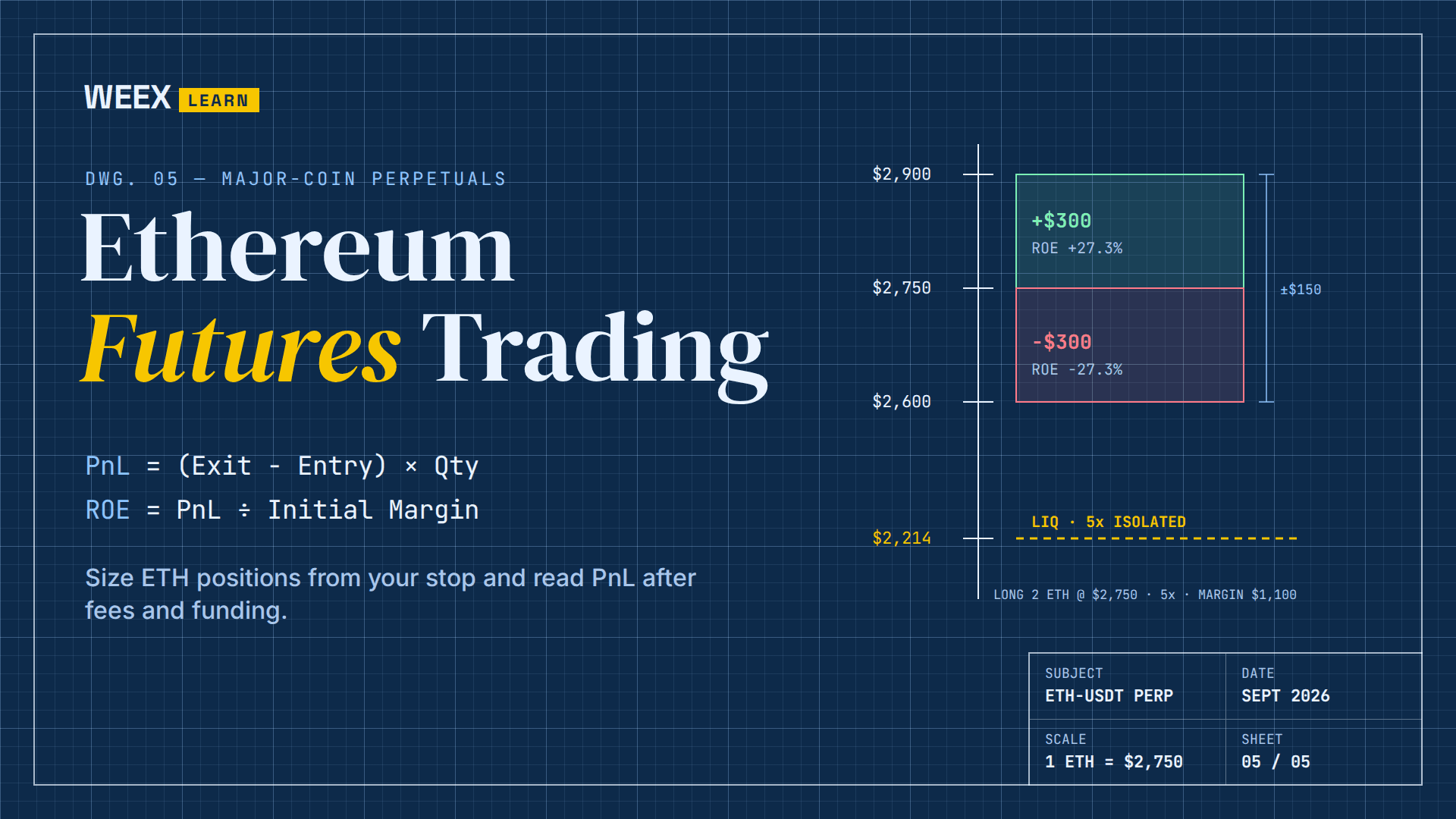
Ethereum Futures Trading: How to Size ETH Positions and Read PnL
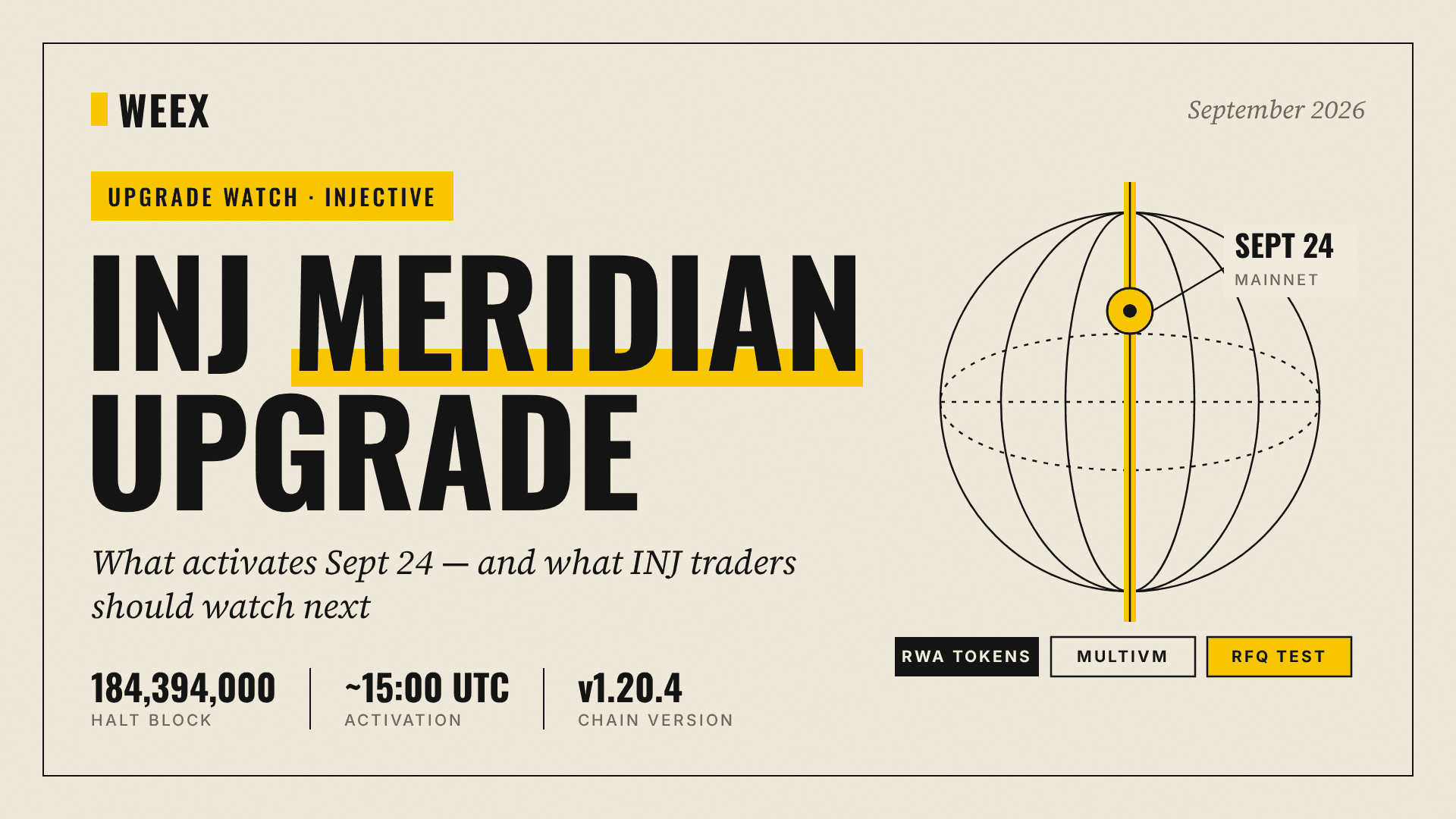
INJ Meridian Upgrade: What Activates Sept 24 and What to Watch

How to Connect Phantom Wallet to a Solana DApp
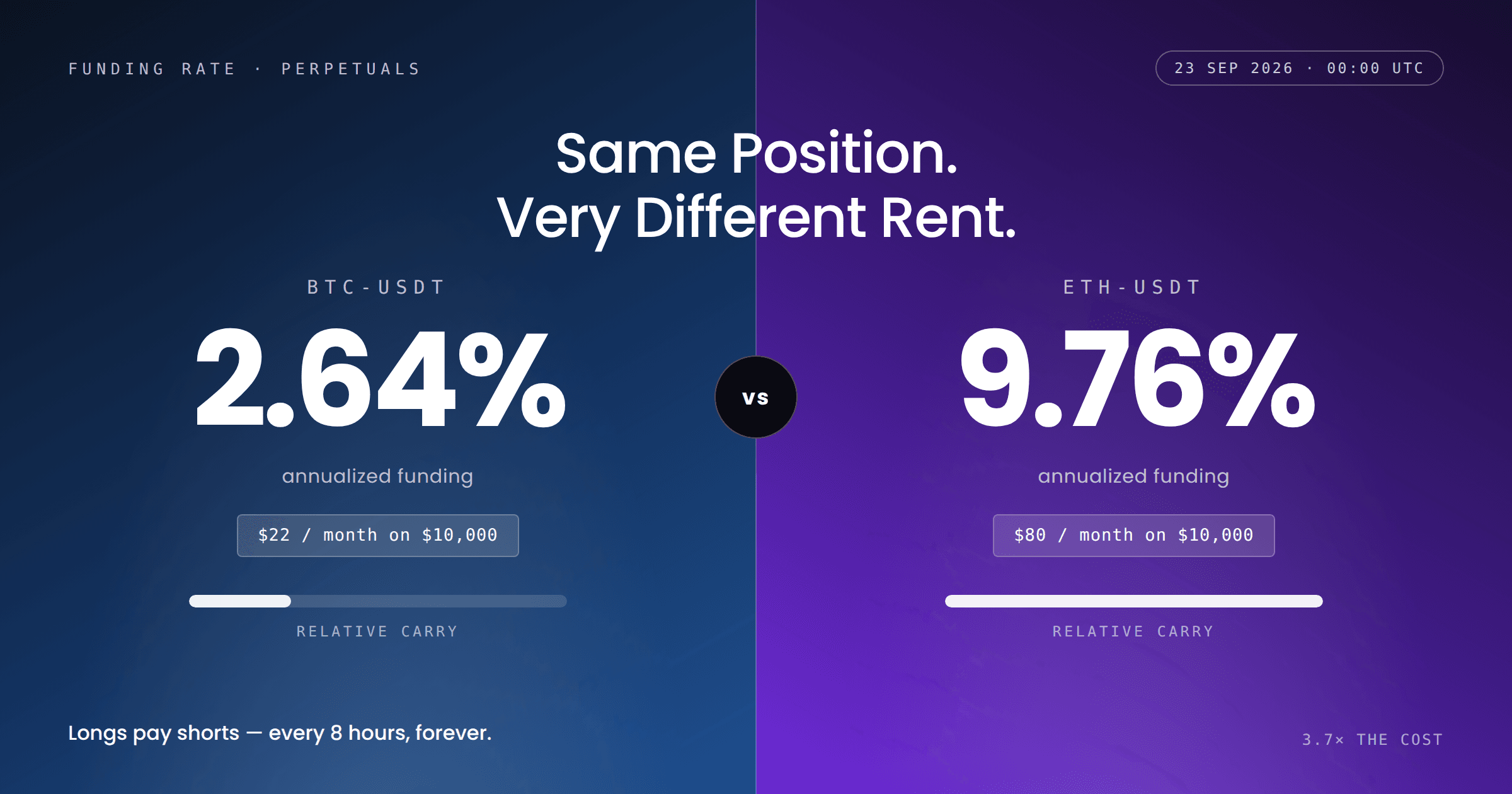
Funding Rate Crypto: What BTC and ETH Are Paying Right Now
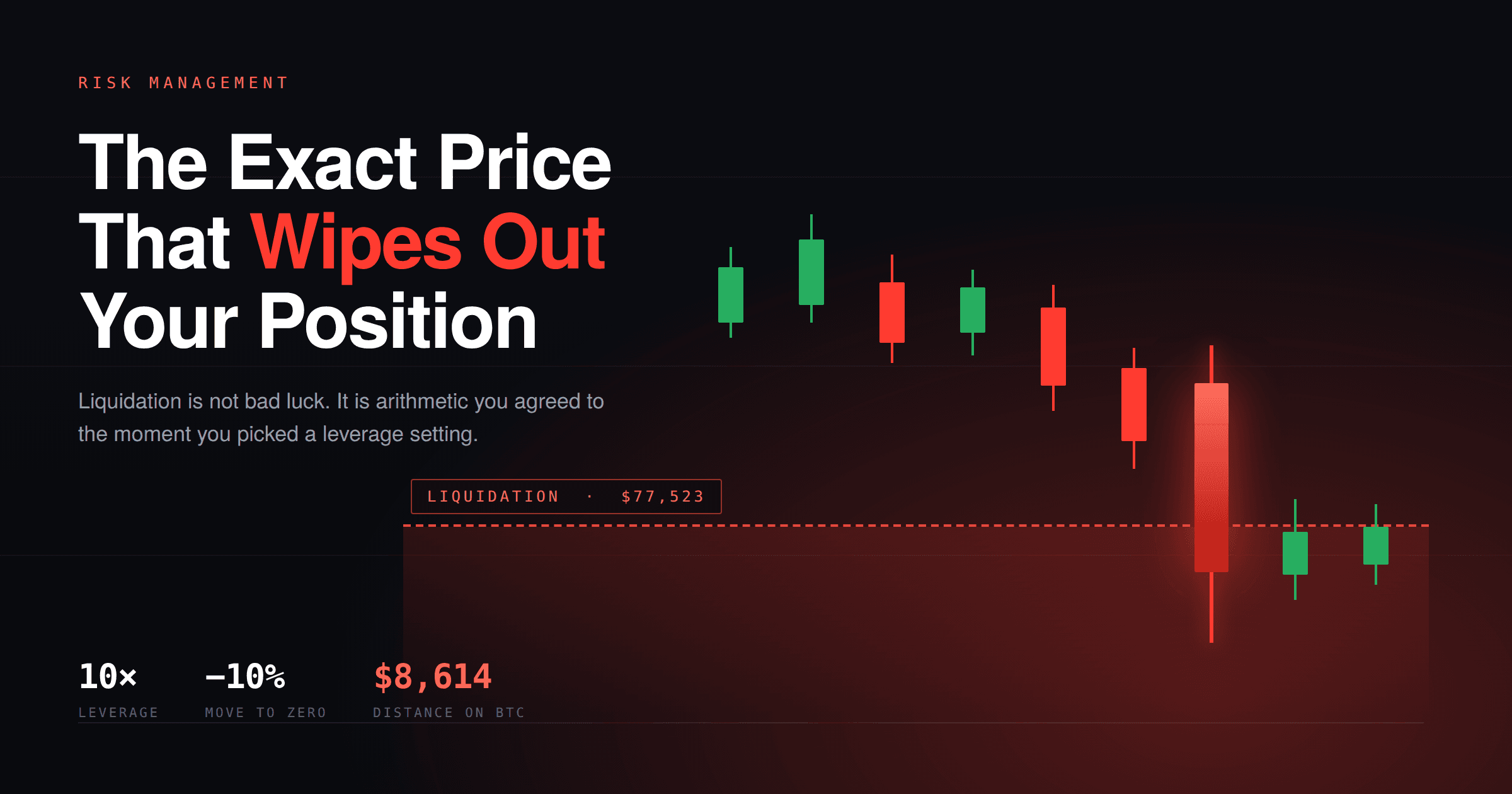
Crypto Liquidation: The Exact Price That Wipes Out Your Position

How to Trade on Hyperliquid: A Step-by-Step Guide
WEEX and MiCA: What the RDWW-1194 Entry in Poland's Register Says
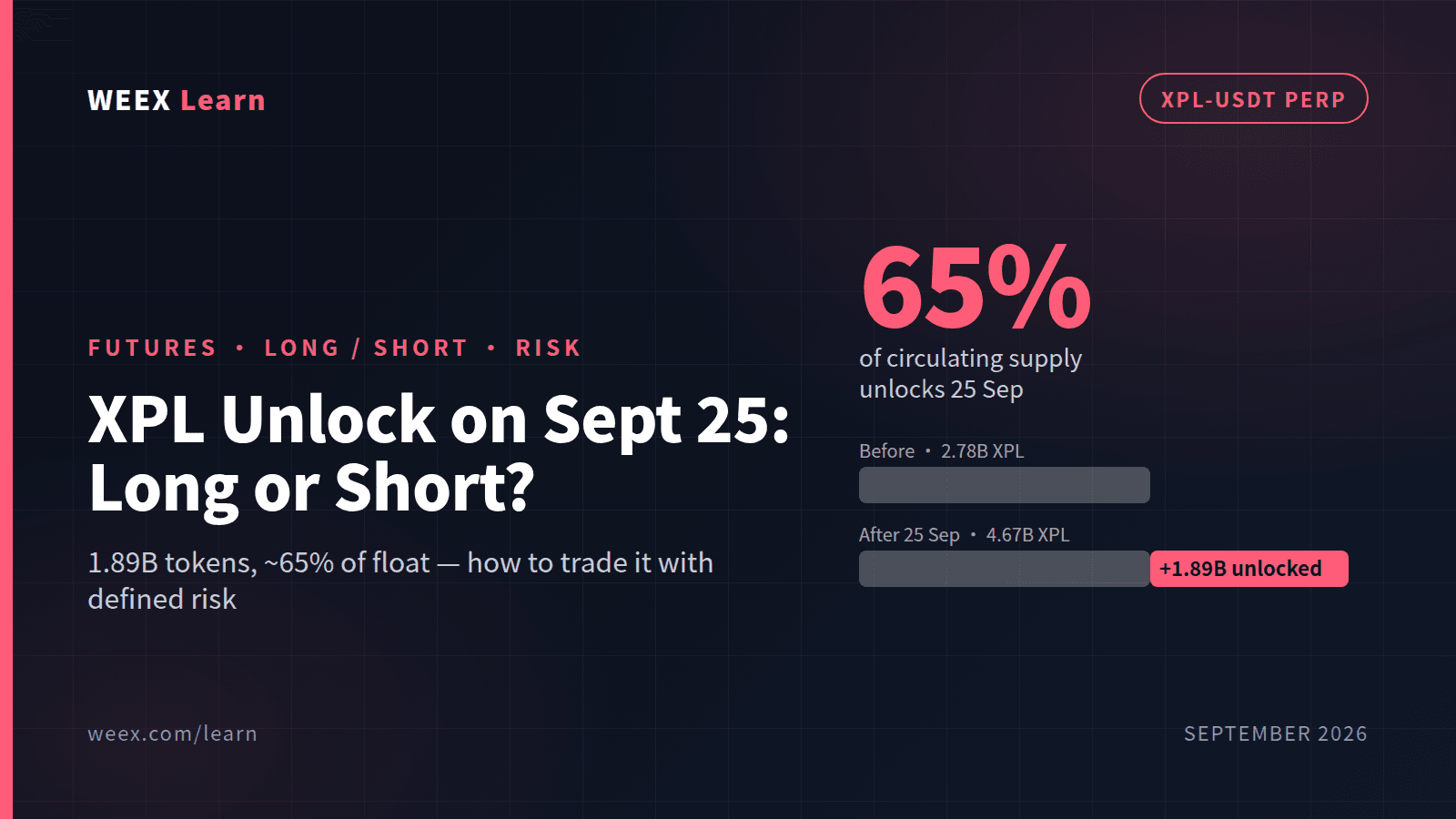
XPL Unlock on Sept 25: How to Long or Short Plasma Futures Safely
Third-Party Trading Platforms vs Direct WEEX Trading: Fees, Liquidity, Security, and Control
How Copy Trading, Signal, and Telegram Trading Tools Can Build With WEEX Broker
How Trading Platforms and Terminals Can Connect to WEEX Broker
How to Buy USDT in Thailand: Payment Methods, Fees and Transfer Checks
What Is RLC Crypto? How iExec (RLC) Powers Confidential Computing
What Is WEEX Fast Connect? How OAuth Connects Third-Party Trading Platforms
Contents
Popular coins
Latest articles


