
How to Day Trade Crypto for Beginners: Do the Fee Math First

 Prefer us on Google


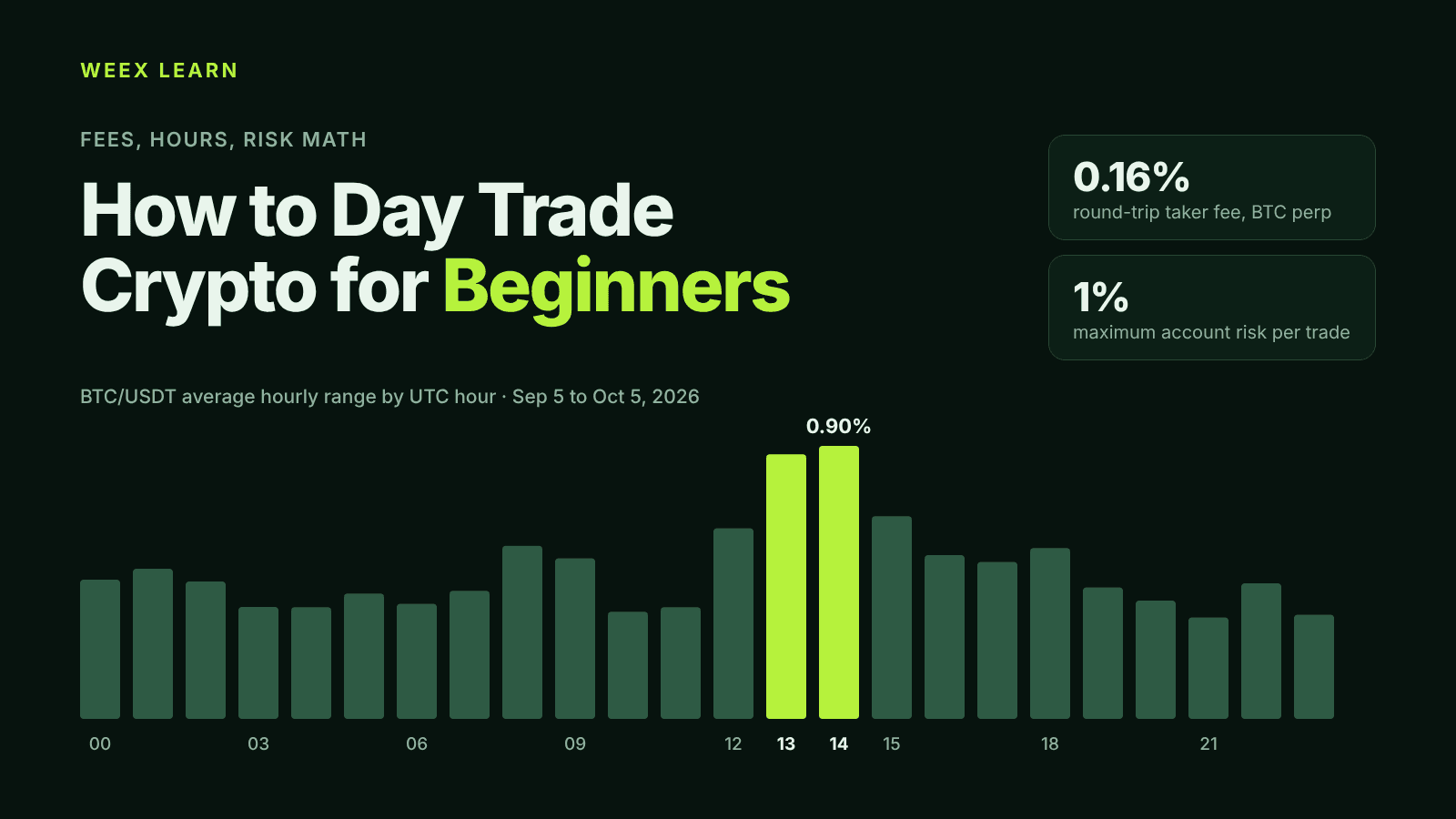
How to day trade crypto for beginners comes down to five decisions made before any chart pattern matters: trade one or two liquid pairs, risk a fixed 1% of the account per trade, put the stop where the idea is proven wrong, size the position from that stop, and be flat when the session ends. Strategy comes second. This guide works through what fees do to a small account using WEEX's fee schedule as of October 2026, how position sizing works with real numbers, why leverage pulls liquidation closer, and what a sane first 30 days looks like.
Day trading means opening and closing positions inside one session, so nothing rides overnight. Crypto never closes, so no bell ever tells you to stop. You trade either spot, where you own the coin and can lose only what you paid, or perpetual futures, where you post margin against a larger position, can go short, and can be liquidated.
Every order is either a maker or a taker. A limit order that rests on the book pays the maker fee; a market order that hits the book pays the taker fee and crosses the spread, the gap between the best bid and the best ask. Those costs are certain on every trade. Profit is not. In one widely cited study of individuals who began day trading Brazilian equity futures between 2013 and 2015 and kept going for at least 300 days, 97% lost money. Different market, same structure: small accounts paying to trade against faster ones.
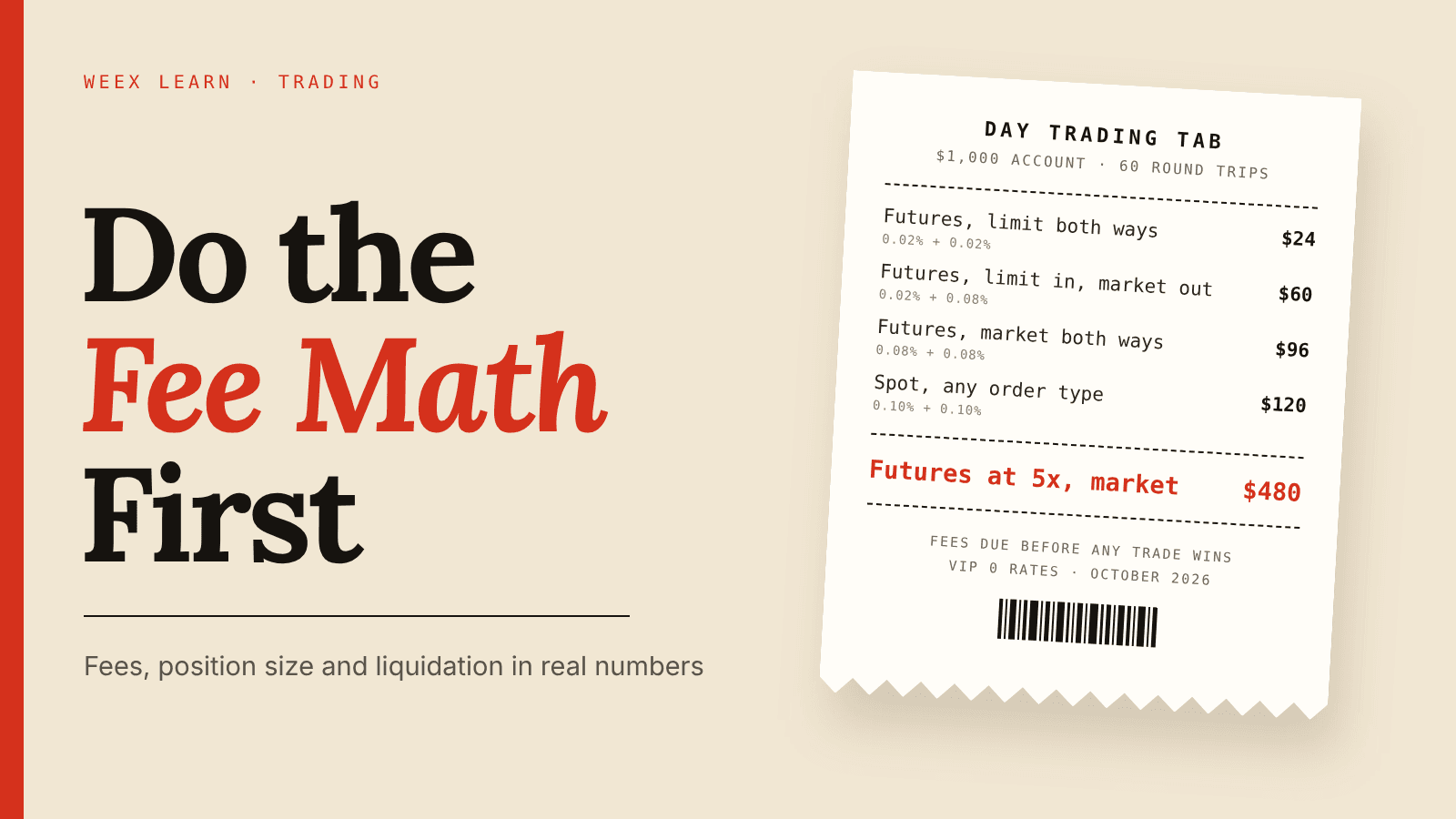
What Fees and Spread Do to a Small Day Trading Account
As of October 2026, WEEX's VIP fee table lists the starting tier, VIP 0, at 0.10% maker and 0.10% taker on spot, and 0.02% maker and 0.08% taker on futures. The rate shown on the trading page is the one that applies, so check it there before relying on these figures. Futures fees are charged on position value, not on margin, which is how leverage quietly multiplies them.
Take a $1,000 account that makes three round trips a day for 20 trading days. That is 60 round trips, each with a $1,000 position. Before a single trade wins or loses, fees come to:
- Spot, any order type: $2.00 per round trip, $120 for the month, 12% of the account.
- Futures, market orders in and out: $1.60 per round trip, $96, or 9.6%.
- Futures, limit entry and market exit: $1.00 per round trip, $60, or 6%.
- Futures, limit orders both ways: $0.40 per round trip, $24, or 2.4%.
- Futures at 5x, so a $5,000 position, market orders both ways: $8.00 per round trip, $480, or 48% of the account.
Spread comes on top. On BTC/USDT the quoted spread is normally tiny next to the fee. On a thin altcoin it can exceed the fee several times over, and it widens exactly when you most want out.
Two things follow. Trade count is a cost you choose, and three trades a day is already expensive at $1,000. And order type matters more than any indicator setting: a limit-order entry costs a fraction of a market-order entry for the same idea.
Position Sizing: How Much to Risk per Crypto Day Trade
Position size is an output, not a choice. Fix the dollars at risk, find the stop, and the size falls out. The steps below use a round BTC price of $100,000 purely to keep the arithmetic clean.
- Set the risk. 1% of $1,000 is $10. That is the most this trade is allowed to lose.
- Find the stop on the chart. It goes just beyond the level that proves the idea wrong, such as the low of the pullback you are buying, not at a loss that feels comfortable. Say entry is $100,000 and the stop is $99,200, which is 0.8% away.
- Divide. $10 ÷ 0.008 = $1,250 of BTC, or 0.0125 BTC.
- Subtract costs. Market orders in and out on futures cost $1,250 × 0.16% = $2.00. A stopped trade loses $12, not $10. A winner at twice the risk nets $18, not $20.
- Place the stop when you enter, and never widen it. On WEEX, take-profit and stop-loss orders send a market order once the trigger price is touched, and the help page says plainly that triggered does not mean instantly filled. In a fast move the exit can be worse than the stop.
That $2 is 20% of the risk unit, and it shifts the odds. With targets equal to risk, the break-even win rate moves from 50% to 60%. With targets at twice the risk it moves from 33% to 40%. Halve the stop to 0.4% and the position doubles to $2,500, the fee doubles to $4, and break-even at equal targets becomes 70%. Tight-stop scalping is where fees bite hardest, which makes it a poor place to begin.
Should Beginners Use Leverage to Day Trade Crypto?
Only as a by-product of sizing, never as a starting point. The $1,250 position above needs 1.25x on a $1,000 account. Nothing in the 1% rule asks for more.
Leverage does not change what a 0.8% stop is. It changes how large the position is and how near liquidation sits. With isolated margin, the adverse move that erases your margin is roughly 100% divided by the leverage: about 50% at 2x, 20% at 5x, 10% at 10x, 5% at 20x and 2% at 50x. Liquidation arrives slightly sooner than that, because WEEX closes a position once its maintenance margin equals the margin balance, and maintenance margin rates climb with position size.
The BTC/USDT perpetual page advertises up to 500x as of October 2026. At 500x, a 0.2% move covers the entire margin. That is a ceiling, not a suggestion. WEEX's own liquidation explainer advises staying below 5x.
Now run the common beginner version: $1,000 of margin at 10x, a $10,000 position, the same 0.8% stop. The loss is $80 plus $16 in taker fees, or 9.6% of the account on one trade. Five of those in a row, a streak any honest trade log will contain, removes about 40% of the account. Same chart and same stop as the $12 loss above. Only the size changed.
Perpetuals also carry funding. WEEX charges it every 8 hours, and its funding Q&A describes rates as generally within ±0.03%. On a $5,000 position, 0.03% is $1.50 per settlement, or $4.50 a day on the paying side. Funding applies to positions open at the settlement time, so a trader who is flat by then pays nothing. The bill arrives when a losing day trade gets promoted to a "swing trade."
-- Price
Which Day Trading Setups Suit Beginners?
The ones with an obvious place for the stop. None of the three below carries an edge on its own; each is a frame for testing whether you have one.
- Range fade. When BTC has bounced between a clear floor and ceiling several times, buy near the floor with the stop just under it and a target at mid-range. It fails on the day the range breaks, which is why the stop is not optional.
- Breakout retest. Skip the candle that breaks the level. Wait for price to come back and hold the level, then enter with the stop back inside the old range.
- Trend pullback. On a session making higher highs and higher lows, buy the dip toward the prior swing area with the stop under the last higher low.
Scalping is missing on purpose. See the 70% figure above.
Your First 30 Days of Crypto Day Trading
- Days 1 to 7, no real money. WEEX demo trading offers a simulated SBTC/SUSDT futures pair for learning the order ticket: limit, market, stop, isolated margin. Demo fills are kinder than live ones, so count it as button practice, not proof.
- Days 8 to 30, go live at small size, risking 0.5% to 1% per trade.
- Trade two pairs only, BTC/USDT and ETH/USDT. They have the deepest books and the cleanest levels.
- Keep one fixed session: the same two hours each day, three trades at most, and done for the day after two losses.
- Journal every trade: setup, entry, stop, size, fees paid, result in multiples of risk, and whether you followed your rules.
- On day 30, total the trades, the fees and the net result. Fewer than 30 trades tells you nothing yet. If fees exceed gross profit, the problem is frequency, not strategy.
How Beginner Crypto Day Traders Lose Money
- Overtrading. Every extra round trip is a guaranteed cost paid for an uncertain payoff.
- Moving the stop. Once it moves, the $10 risk figure is fiction and the position was sized wrong.
- Trading illiquid altcoins. Wide spreads and thin books mean stops fill well past their trigger. The coin that is up 40% today is usually the worst book to learn on.
- Holding perps too long. Funding every 8 hours on an oversized position turns a small loss into a liquidation.
- Revenge trading. Doubling size to win back a loss is how a 1% day becomes a 10% day. The two-loss rule exists for this.
The honest version of how to day trade crypto for beginners is this: keep costs and losses small enough to last until you find out whether you have an edge at all.
FAQ
1. How much money do you need to start day trading crypto?
There is no meaningful minimum beyond the exchange's smallest order. Use money you can lose entirely. With $1,000, a 1% risk is $10 per trade, enough to make the journal honest and small enough that 20 straight losses, fees included, still leave close to four-fifths of the account.
2. Is day trading crypto profitable for beginners?
For most people, no. Research on retail day traders in other markets is bleak, and crypto adds round-the-clock trading and very high leverage. Nobody can promise an edge. What a beginner controls is cost, position size and trade count.
3. How many trades a day should a beginner make?
One to three. At WEEX's VIP 0 rates as of October 2026, each futures round trip with market orders costs 0.16% of position value, so frequency is the fastest way to lose without ever being wrong about direction.
4. Is spot or futures better for a beginner day trader?
Spot cannot be liquidated and has no funding, but at VIP 0 it costs 0.20% per round trip and you cannot short. Futures cost 0.04% to 0.16% per round trip and add liquidation risk. Low-leverage futures on isolated margin keep the lower fee without pulling liquidation close; spot is simpler if you only ever buy.
This content is provided for general informational purposes only and doesn't constitute financial, investment, legal, or tax advice. Any events, rewards, online promotions, or related information mentioned herein should not be considered a recommendation, solicitation, or invitation to purchase, sell, trade, or otherwise deal in any crypto assets. Crypto assets are highly volatile and may result in loss. The availability of WEEX services, products, and related events may vary by region. You are responsible for ensuring that your participation is in accordance with applicable local laws and regulations.
You may also like
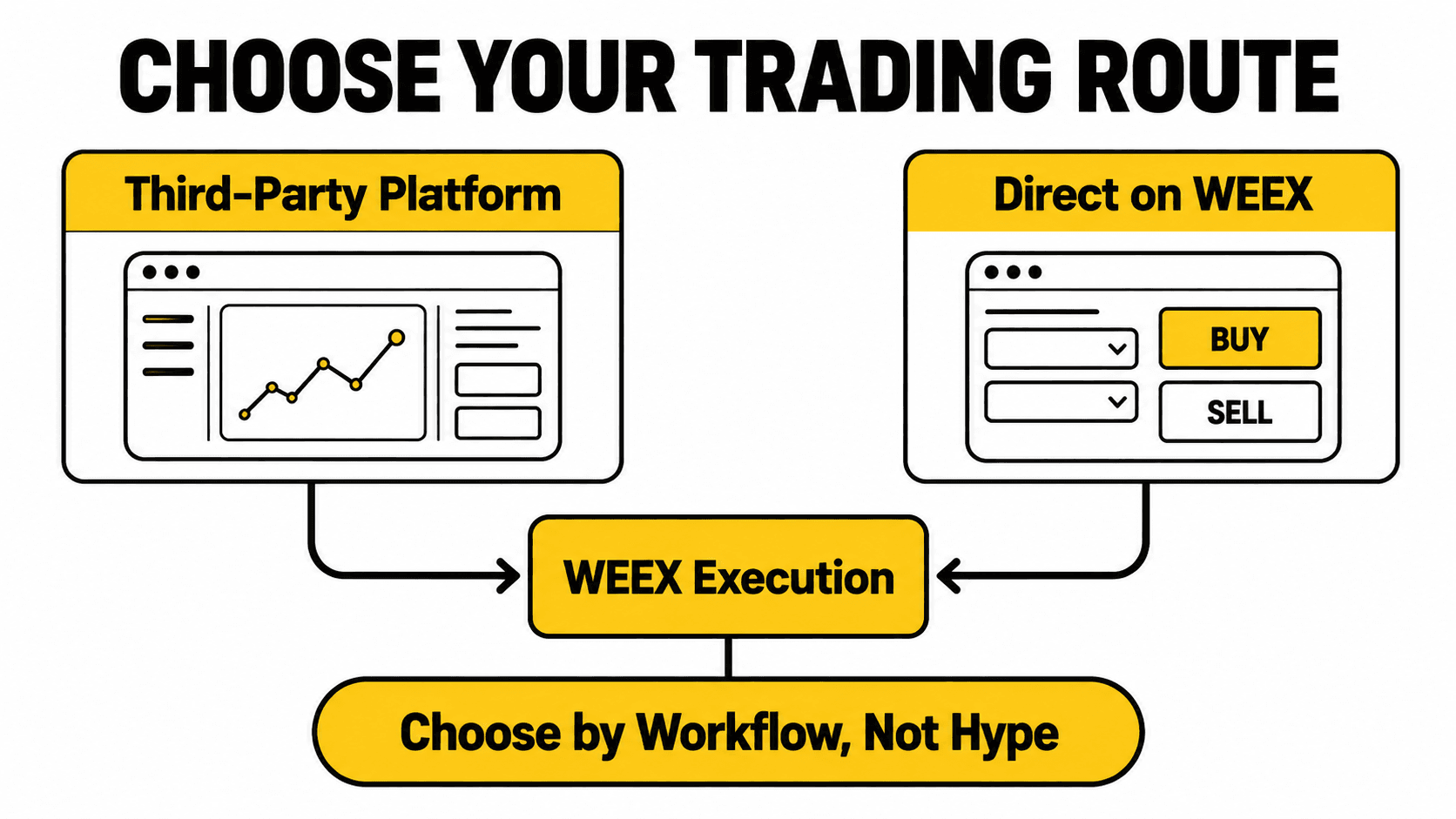
Third-Party Trading Platforms vs Direct WEEX Trading: Fees, Liquidity, Security, and Control
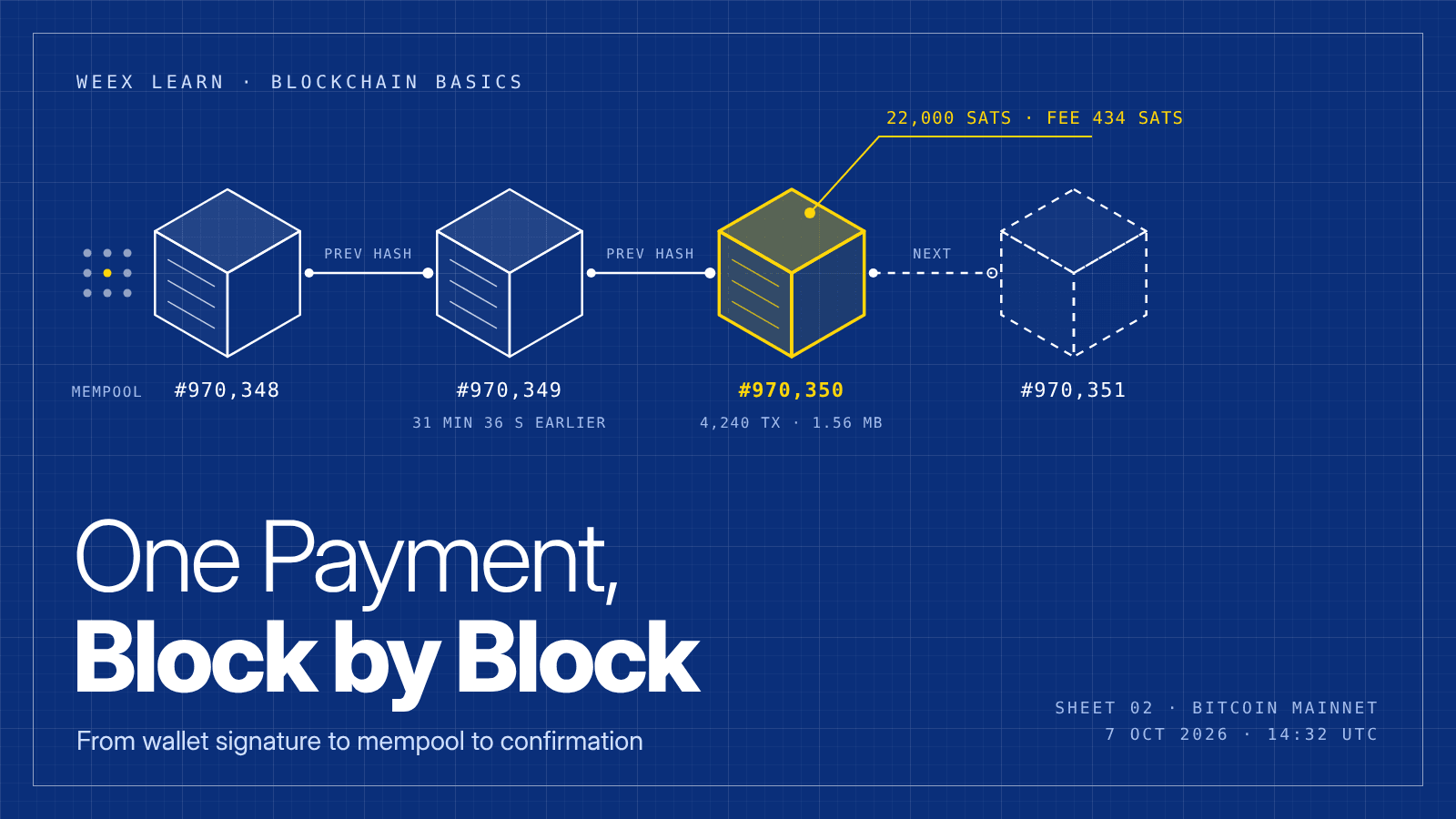
What Is Blockchain and How Does It Work? One Real Payment Traced
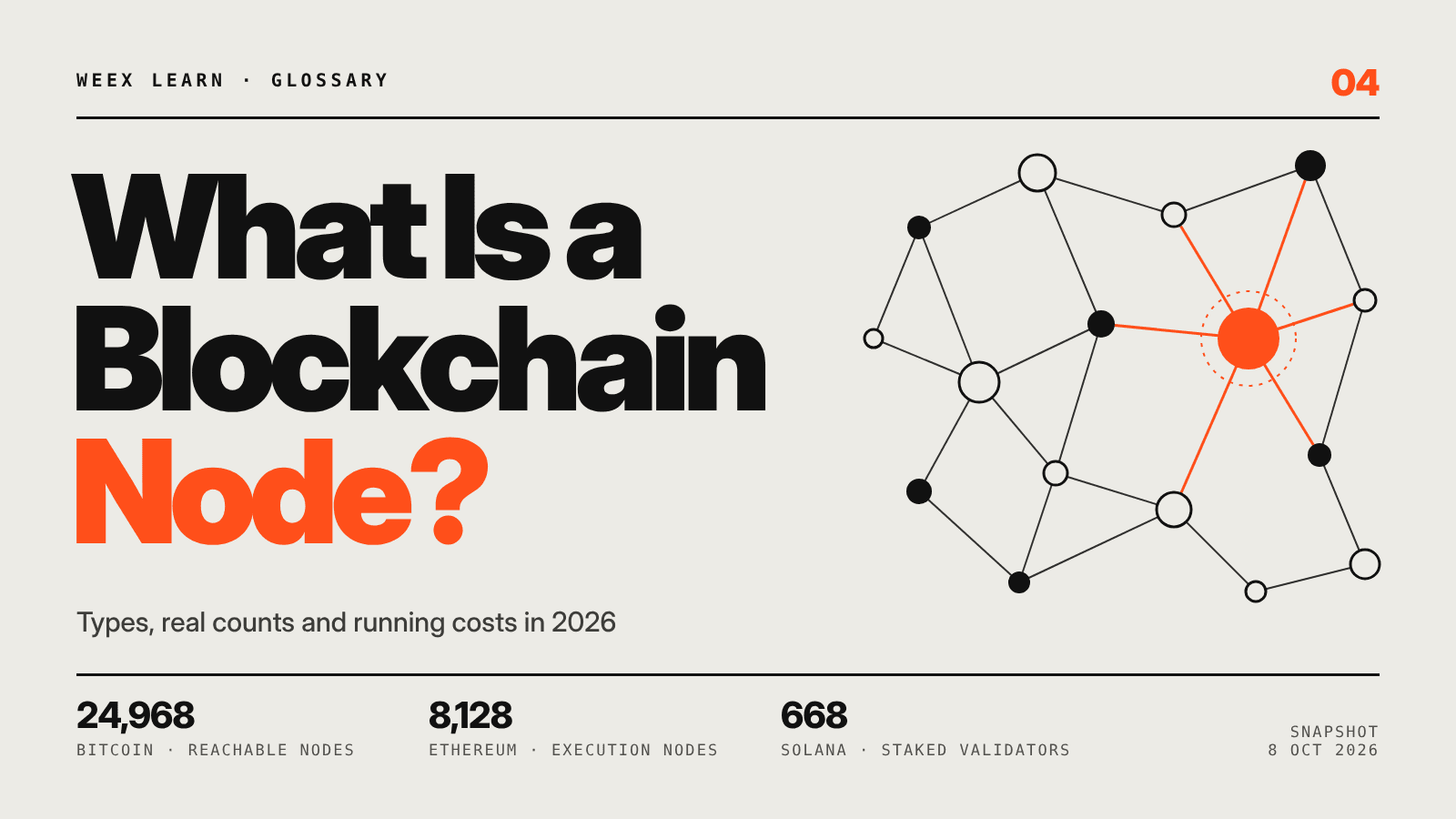
What Is a Blockchain Node? Types, 2026 Counts, and Real Costs

TSMC Stock Outlook Ahead of Q3 Earnings: Can AI Demand Push Shares Higher?
Taiwan Stock Market Nears 50,000: Can the TAIEX Break the Milestone After the Holiday?

How to Buy USDT in Thailand: Payment Methods, Fees and Transfer Checks

What Is RLC Crypto? How iExec (RLC) Powers Confidential Computing
Best Crypto Trading Strategies for Beginners: What to Know Before You Trade
PUMP Price Rally: Can Pump.fun Buybacks Outrun Monthly Unlocks?
How to Day Trade Crypto for Beginners: Fees, Hours, Risk Math
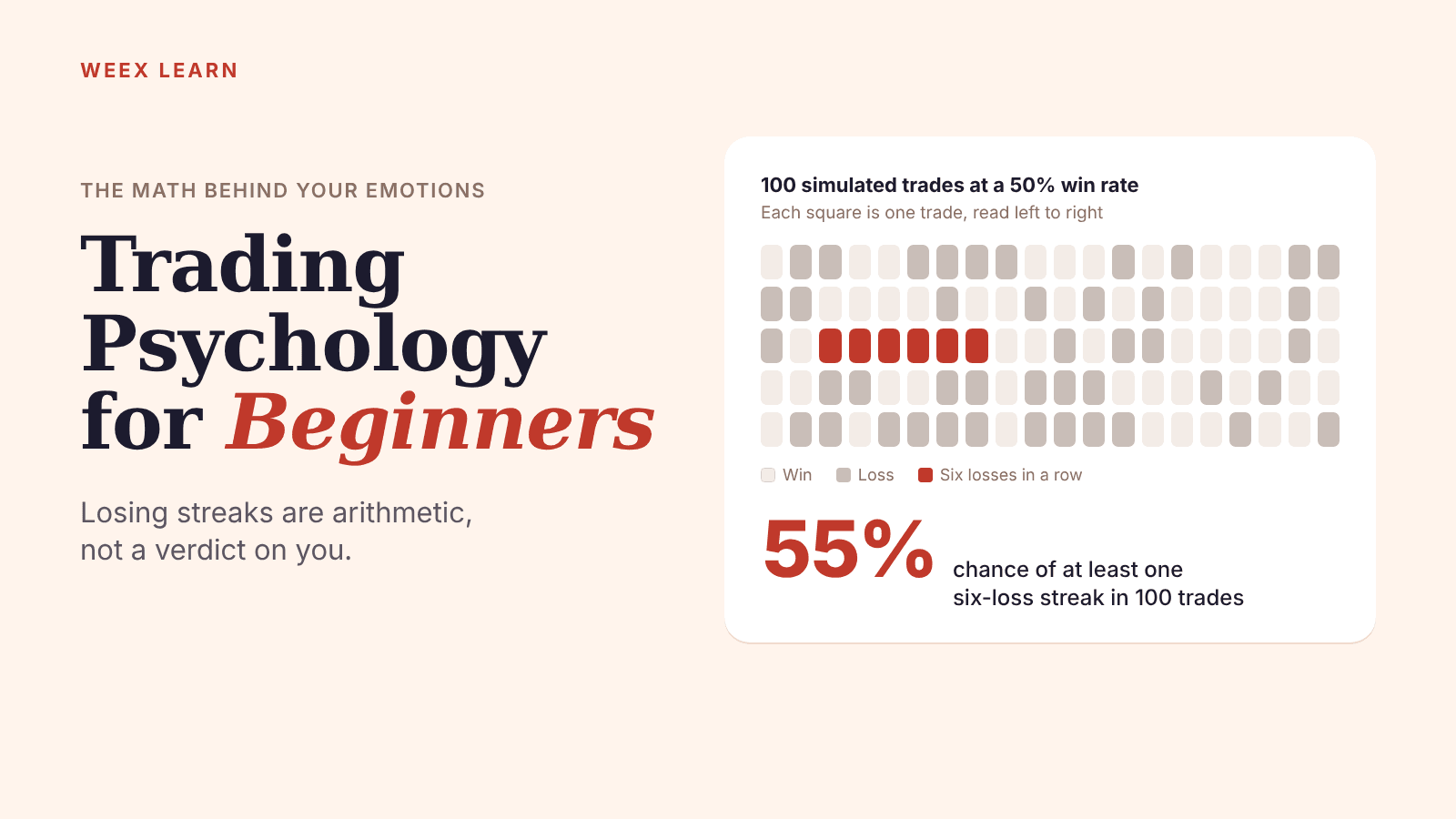
Trading Psychology for Beginners: The Math Behind Your Emotions
Best Crypto Apps for Beginners: The Five Features That Actually Matter on Your Phone
WEEX Passkey Now Secures Withdrawals: The 4 Actions It Covers
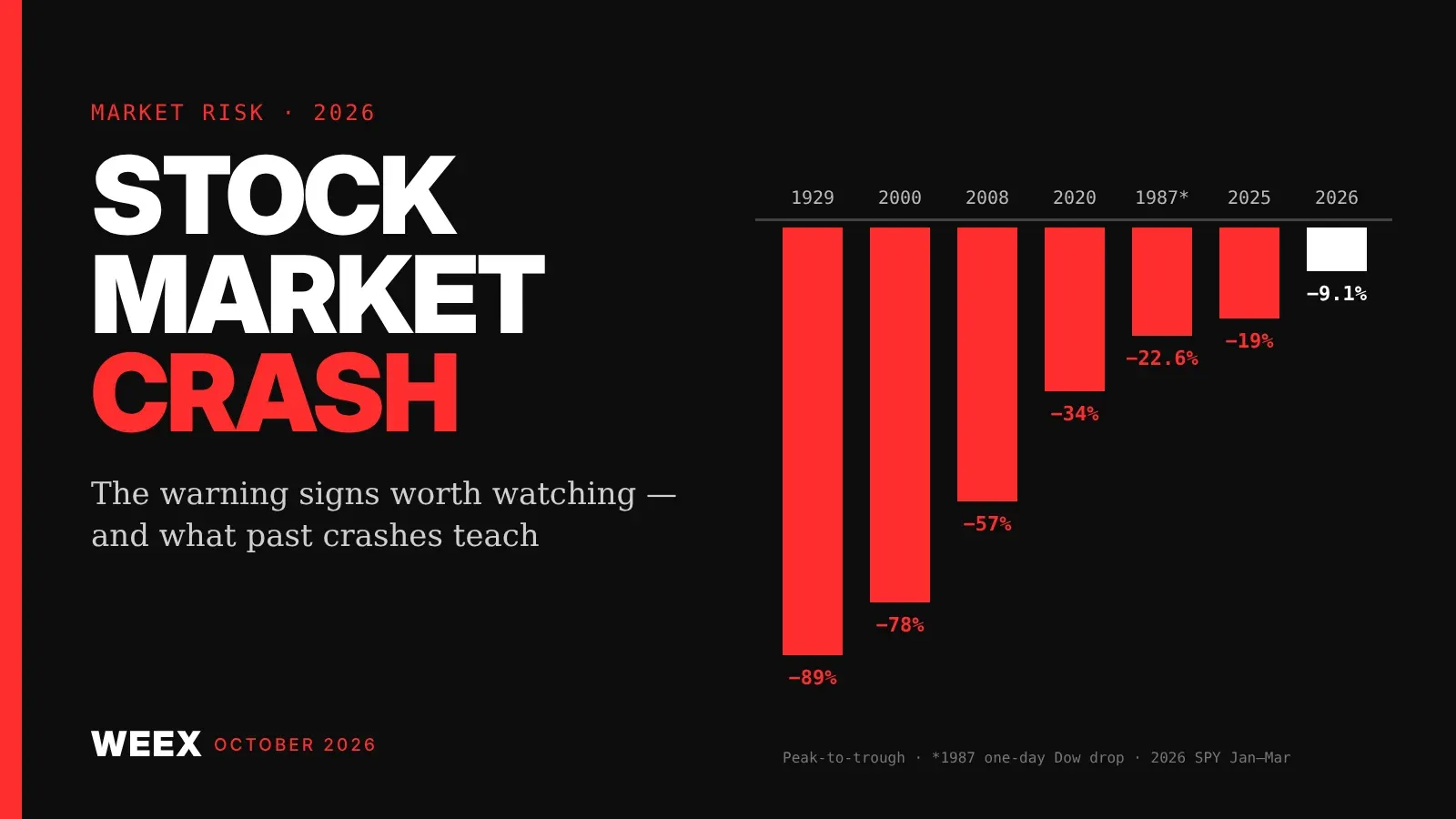
Stock Market Crash Risk in 2026: The Warning Signs Worth Watching
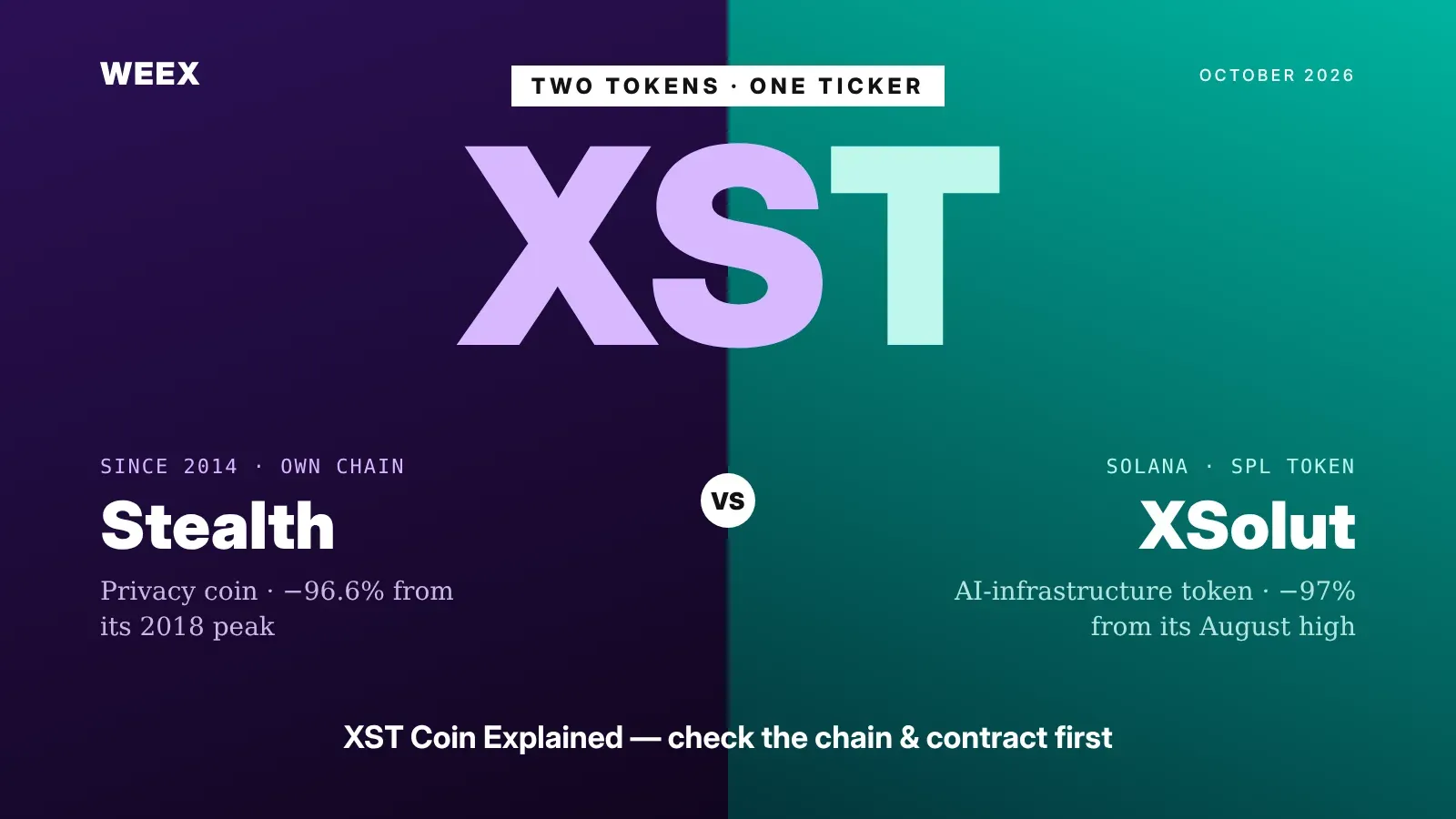
XST Coin Explained: Two Tokens Share One Ticker, Check Which One
SPY Stock in 2026: What the Rebound to Record Highs Is Hiding
What Is Blockchain and How Does It Work? A Transaction Traced
How to Buy Crypto with PayPal: The Custody Catch Most Beginners Miss
ENA Token Price Up 76% in a Month: The October 5 Unlock Test
MU Stock After a Record Q4: Why Micron Slipped on a Huge Beat

QNT Price Near $295: Does the Bank Deal Justify a 4x Rally?
HBAR Price Spike and Reversal: Long, Short, and Stop-Loss Orders
QNT Futures After a 280% Rally: Leverage and Liquidation Math
XRP Upgrade Update: XRPL Batch Slips to Oct 9 and What Changes

Safest Crypto Wallet in 2026: Matching Wallet Type to the Threat You're Actually Worried About
No KYC Crypto Wallet: 6 Picks and 5 Places Your ID Still Leaks
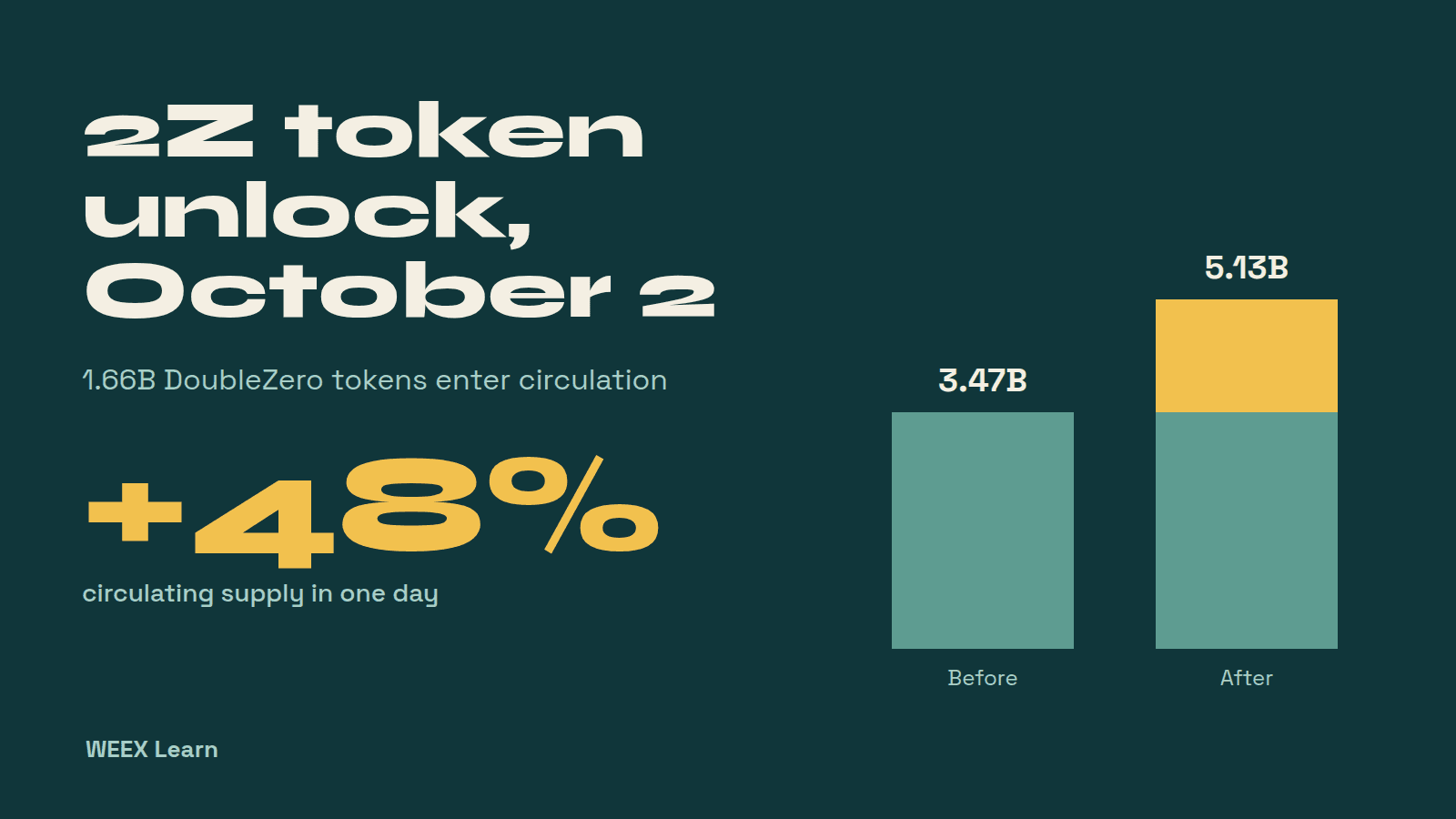
2Z Token Unlock on October 2: What 1.66B DoubleZero Tokens Mean
Best Decentralized Crypto Wallet for Beginners: What Self-Custody Really Asks of You
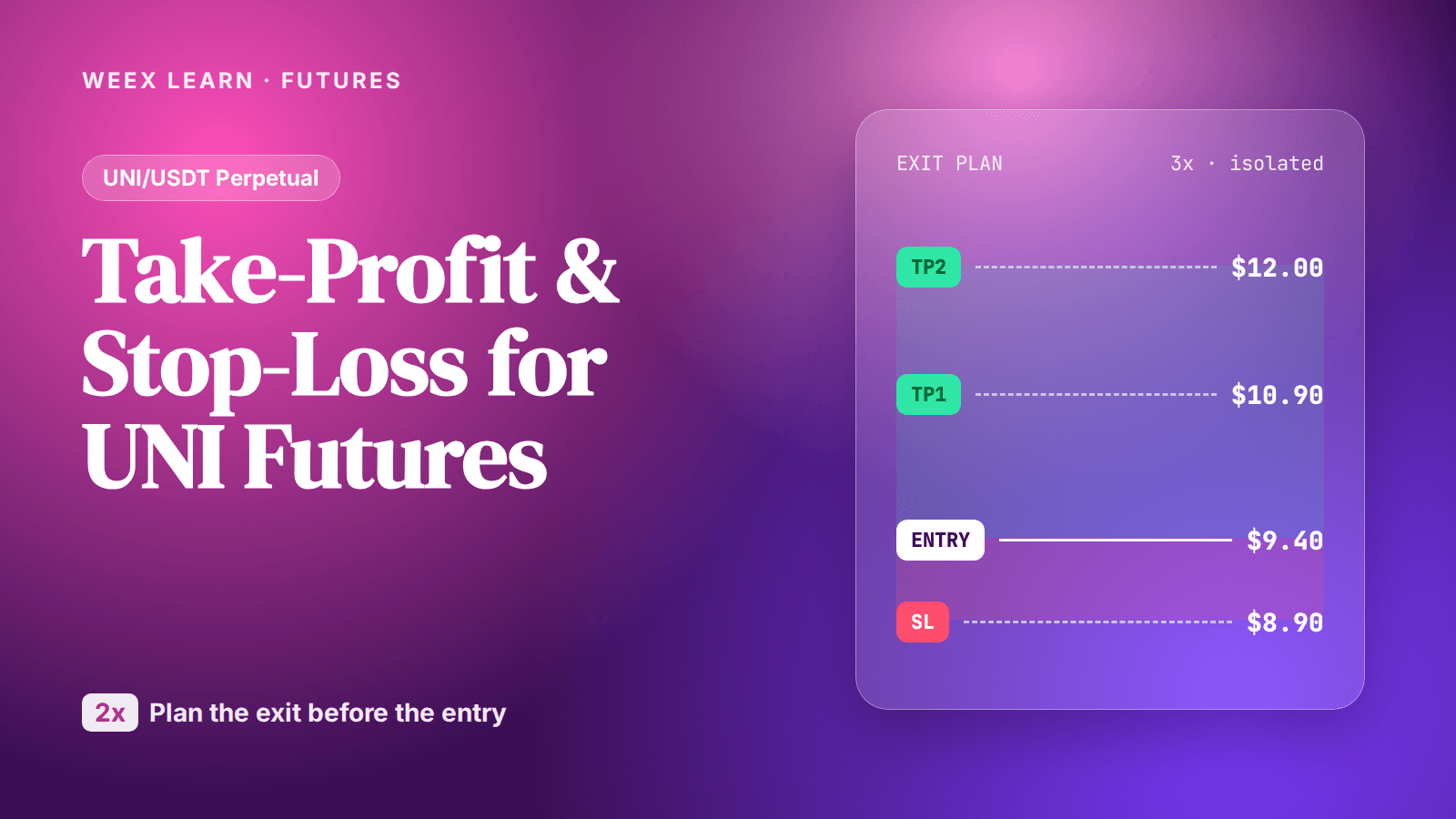
UNI Futures: How to Set Take-Profit and Stop-Loss After a 2x Run
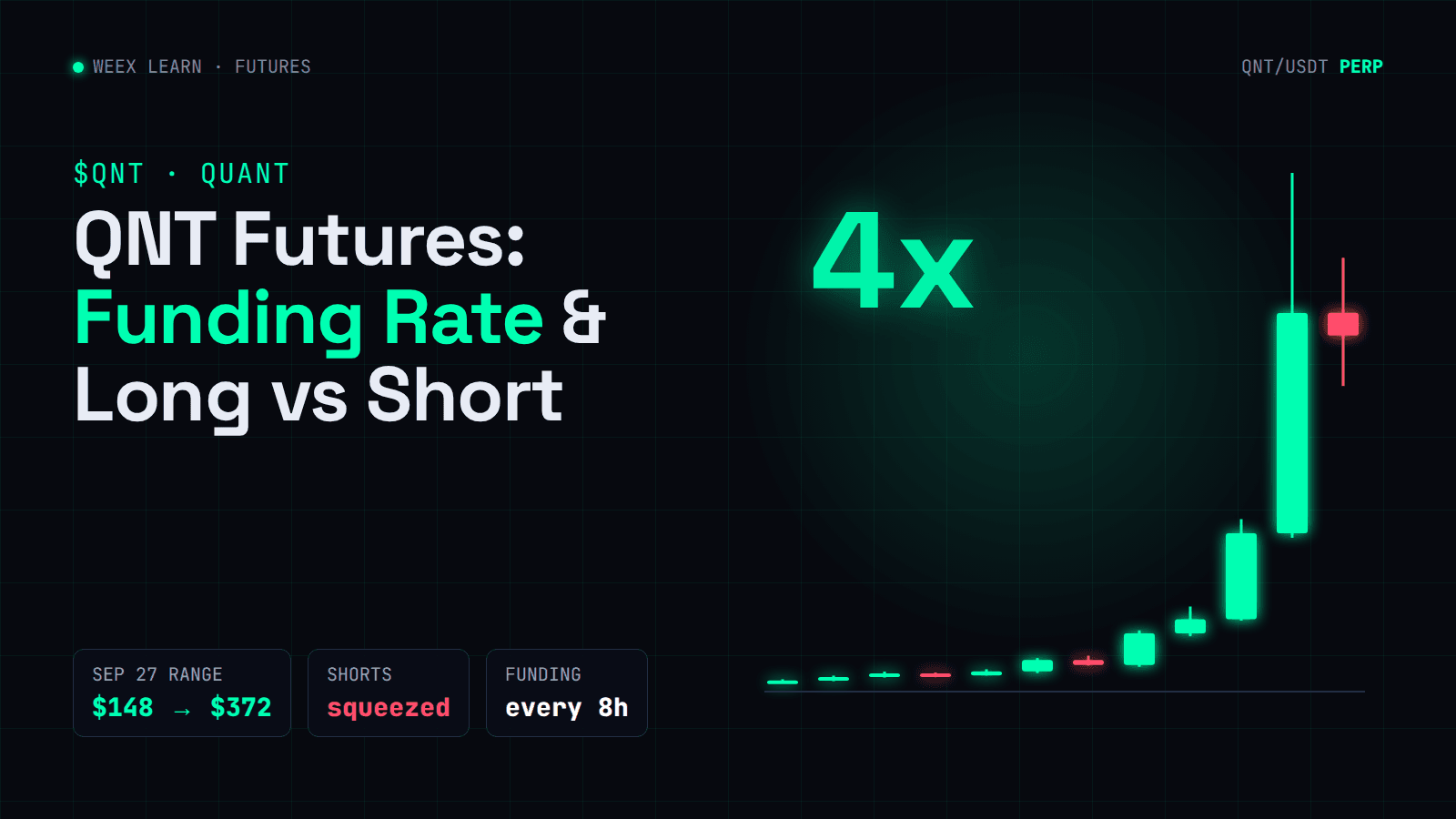
QNT Futures: Funding Rate and Long vs Short After a 4x Rally
Third-Party Trading Platforms vs Direct WEEX Trading: Fees, Liquidity, Security, and Control
What Is Blockchain and How Does It Work? One Real Payment Traced
What Is a Blockchain Node? Types, 2026 Counts, and Real Costs
TSMC Stock Outlook Ahead of Q3 Earnings: Can AI Demand Push Shares Higher?
Taiwan Stock Market Nears 50,000: Can the TAIEX Break the Milestone After the Holiday?
How to Buy USDT in Thailand: Payment Methods, Fees and Transfer Checks




