
What Is Derive (DRV)? Why the Token Jumped About 25% After Citrini Research's Altcoin Portfolio Report

 Prefer us on Google
Derive (DRV) has moved from a niche options token to one of the day's biggest crypto movers. On October 9, 2026, CoinGecko showed DRV near $0.458, up about 25.8% in 24 hours, after reports that Citrini Research gave DRV a 10% target weight in a 15-token altcoin portfolio.
Many readers know the protocol only by its old name, Lyra, or have not heard of it at all, so this guide first explains what Derive (DRV) is and how the token works, then looks at what drove the jump and what could limit it. A closing section covers how traders can approach Derive (DRV) on WEEX Spot.
What Is Derive (DRV)?
Derive is a self-custodial crypto trading platform for options, perpetuals and spot markets, and DRV is its governance and utility token. The protocol was previously called Lyra, and according to DataWallet, the Lyra brand was retired in December 2024, followed by a migration from the LYRA token to DRV in January 2025. Derive's own documentation describes a settlement protocol with an order book exchange on top, where users keep control of their funds while trades settle onchain.
Lyra began in the Synthetix ecosystem on Optimism as an options automated market maker, and was rebuilt in 2023 around a central limit order book with portfolio margin. Derive is the largest venue in a small niche. According to DataWallet and a September 22 CryptoBriefing report citing the Delphi Digital dashboard, Derive accounts for roughly 95% of onchain options premium volume, yet onchain options make up only about 4.3% of overall crypto options activity. Derive co-founder Nick Forster estimated in Bankless that Deribit holds roughly 70% to 75% of the broader market, so Derive's size should be read against that context.
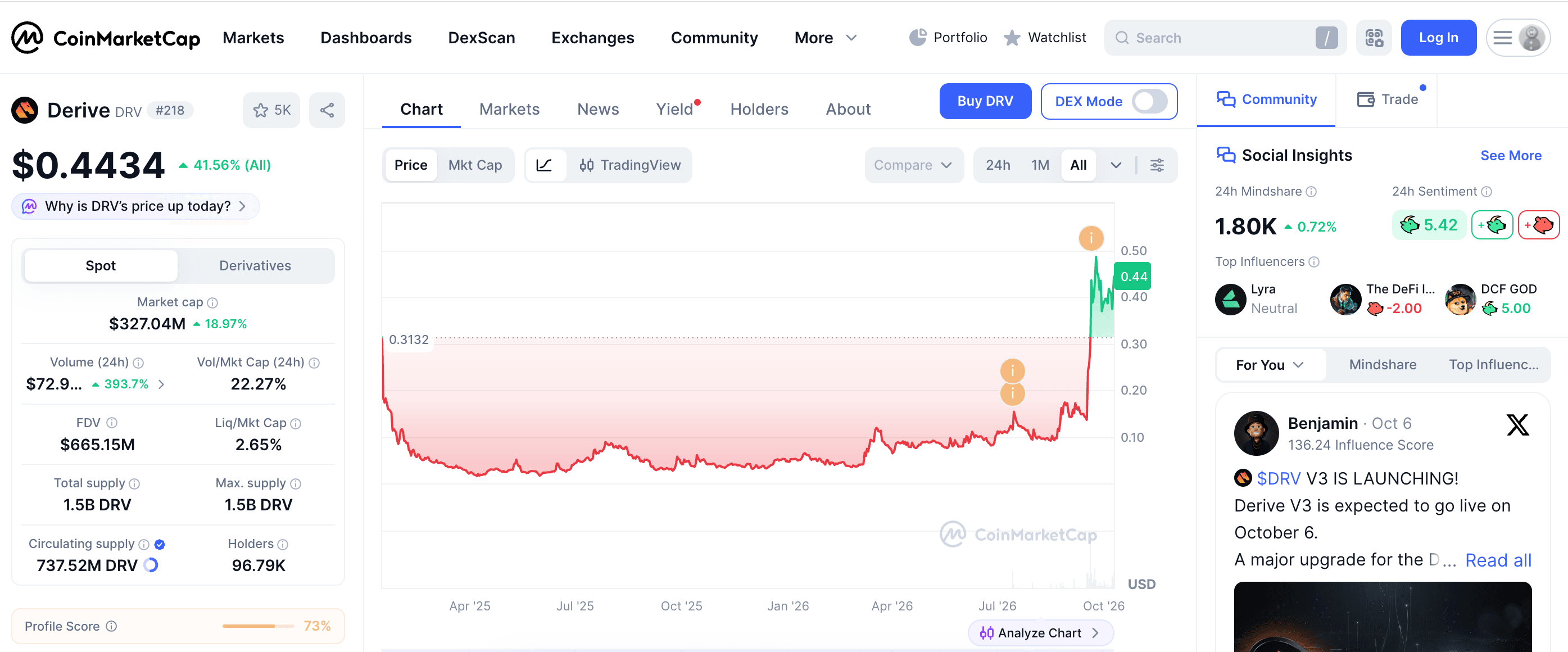
Source: CoinMarketCap, DRV/USD. October 9, 2026.
How Does Derive Work?
Derive matches orders off-chain through an order book and settles trades onchain, with one portfolio margin account covering options on BTC, ETH, HYPE, SOL and gold-backed XAUT, according to DataWallet. The order book is operated by a company, while settlement and liquidations run through the protocol, which is governed by the Derive DAO. This hybrid design gives faster execution than a fully onchain order book, but it also means users rely on the operator for matching.
The platform is also changing its architecture. Bankless reported on October 1 that Derive V3 would retire the project's own OP Stack chain and move to Ethereum as a single zero-knowledge virtual machine (zkVM) application, with Ethereum verifying one proof per batch and trade data posted to Celestia. The V3 go-live was scheduled for October 6 pending a governance vote, which showed about 99.18% in favor, although the tally came from only 12 votes. CoinGecko's news feed lists V3 as live. Bankless also cited Alea Research data showing Derive had cleared about $14.2 billion in options notional so far in 2026, nearly three times its 2025 total.
What Is the DRV Token Used For?
DRV can be staked into a non-transferable form called stDRV, which carries governance votes and weekly rewards, and staking also lowers trading fee tiers, according to DataWallet. DRV can additionally be used as trading collateral. These functions tie the token to platform activity, although the benefit depends on how much trading Derive actually attracts.
The token also has a buyback. According to Coinjuice, 35% of net protocol fees go to weekly DRV buybacks, up from 25% in April 2026, while weekly staking emissions were cut to 100,000 DRV. DataWallet reported that more than 27 million DRV had been repurchased by mid-September. Supply is the other side of the story. DRV launched with a 1 billion cap, and in September 2025 co-founder Nick Forster proposed minting 500 million more tokens, which raised the maximum supply to 1.5 billion. The Block described this as diluting existing holders by up to 33%, which matches the arithmetic of 1 billion growing to 1.5 billion. The stated aims were retaining core contributors and closing institutional partnerships.
-- Price
Why Did the DRV Price Jump About 25% After the Citrini Research Report?
On October 8, TokenPost and Bitcoin Sistemi reported that Citrini Research had published a 15-token crypto portfolio with target weights, giving DRV, Lighter (LIT) and ether.fi (ETHFI) 10% each, Aave (AAVE) and Ethena (ENA) 9% each and Solana (SOL) 8%. Citrini is a New York-based thematic and macro research firm, and the report reportedly examines where AI agents and crypto intersect. ChainCatcher described the portfolio as leaked, with screenshots circulating, and the original source has not been independently confirmed, so the portfolio should be treated as reported rather than officially verified.
According to CoinGecko on October 9, DRV traded near $0.4581, up about 25.8% over 24 hours, about 11.7% over seven days and about 178.3% over 30 days. Its market capitalization was about $457.7 million, its fully diluted valuation about $686.7 million and its 24-hour volume about $71.1 million. CoinGecko listed an all-time high of $0.5089, roughly 10% above the price at the time. KuCoin put the intraday gain at nearly 25%, and CoinGabbar at 26.3%, because each snapshot was taken at a different time.
The Citrini report is unlikely to be the only reason. DRV was near $0.14 at the end of August and about $0.40 by October 1, according to Bankless, ahead of the V3 launch and what the article called Derive's busiest month on record. In July, listings on Upbit and Bithumb had already lifted DRV by about 52% in a day to $0.1802, according to Invezz. On the same day as the Citrini report, LIT, which has the same 10% weight, rose only about 2%, according to KuCoin. The report may have added momentum, but the data does not prove it was the cause.
What Are the Risks of Holding DRV?
Supply and dilution are the first concern. DataWallet noted that 230 million tokens for core contributors vest over four years from July 2025, and 270 million are reserved for market makers, prime brokers and institutional partners. Coinjuice estimated in June that about 762 million DRV still had to enter circulation through unlocks and emissions. Circulating supply also varies by tracker, from about 737.5 million on Coinbase to about 1 billion on DefiLlama and CoinGecko, which makes valuation comparisons uncertain. The gap between the market cap and the $686.7 million fully diluted valuation shows how much supply is still to come.
Platform risk is the second. DataWallet listed centralized order matching by one company, execution risk in migrating about $2 billion in open positions to V3 and a Derive subsidiary multisig that can update key parameters at launch. Bankless added that the multisig will own the protocol at launch, with a 6-of-8 path to bypass its timelock. Options themselves carry complexity, since losses from selling options can exceed the premium received. DataWallet also reported that Derive has no derivatives license in major markets and relies mainly on geoblocking, with US persons, Australian tax residents and Ontario residents restricted from using the platform. After a 178% monthly gain, price volatility is a risk of its own.
How to Buy Derive (DRV) on WEEX Spot
WEEX offers DRV on Spot, where traders buy the token with USDT and hold the actual asset, with no leverage and no liquidation risk. Spot does not remove price risk, though. A token that has risen about 25% in a day and about 178% in a month can reverse sharply, so the entry price matters more than the headline. Limit orders let traders set a price instead of accepting the spread during a fast move, and splitting a purchase into smaller parts reduces the impact of buying near a short-term peak.
Before buying, traders can check the circulating supply source, the vesting schedule and the date of any price figure they rely on, since each of those has changed within weeks. The Citrini portfolio is a reported research allocation, not a WEEX recommendation or a guarantee of performance. WEEX maintains a 1,000 BTC protection fund, with details at weex.com/protectfund. Users should confirm the DRV trading pair, fees and rules on the platform before placing an order.
Conclusion
Derive (DRV) is the token of a self-custodial onchain options exchange formerly known as Lyra, and its jump of about 25% on October 8 and 9 came on top of a rally of about 178% in 30 days. The Citrini Research report added attention, but V3, record platform volume and earlier exchange listings were already building momentum. Dilution, unlock schedules, centralized matching and the V3 migration remain the main risks to watch.
FAQ
1. What is Derive (DRV)?
Derive (DRV) is the governance and utility token of Derive, a self-custodial exchange for options, perpetuals and spot trading. It can be staked for governance votes, rewards and lower fees.
2. Why did the DRV price jump about 25%?
DRV rose after reports that Citrini Research gave it a 10% weight in a 15-token portfolio on October 8. The token had also gained about 178% over 30 days, so the report was likely one factor among several.
3. Is Derive the same as Lyra?
Yes. Derive is the new name of Lyra, which was retired as a brand in December 2024, and LYRA holders migrated to DRV in January 2025.
4. What is the maximum supply of DRV?
The maximum supply of DRV is 1.5 billion tokens, after a September 2025 proposal to mint 500 million more on top of the original 1 billion.
5. Can DRV be bought on WEEX Spot?
Yes. WEEX Spot lets users buy DRV with USDT without leverage or liquidation risk, though the token's price can still change sharply.
This content is provided for general informational purposes only and doesn't constitute financial, investment, legal, or tax advice. Any events, rewards, online promotions, or related information mentioned herein should not be considered a recommendation, solicitation, or invitation to purchase, sell, trade, or otherwise deal in any crypto assets. Crypto assets are highly volatile and may result in loss. The availability of WEEX services, products, and related events may vary by region. You are responsible for ensuring that your participation is in accordance with applicable local laws and regulations.
You may also like
Crypto Leverage Trading: What 400x Leverage Actually Costs You
NEAR Futures Take-Profit and Stop-Loss: Managing a Parabolic Move
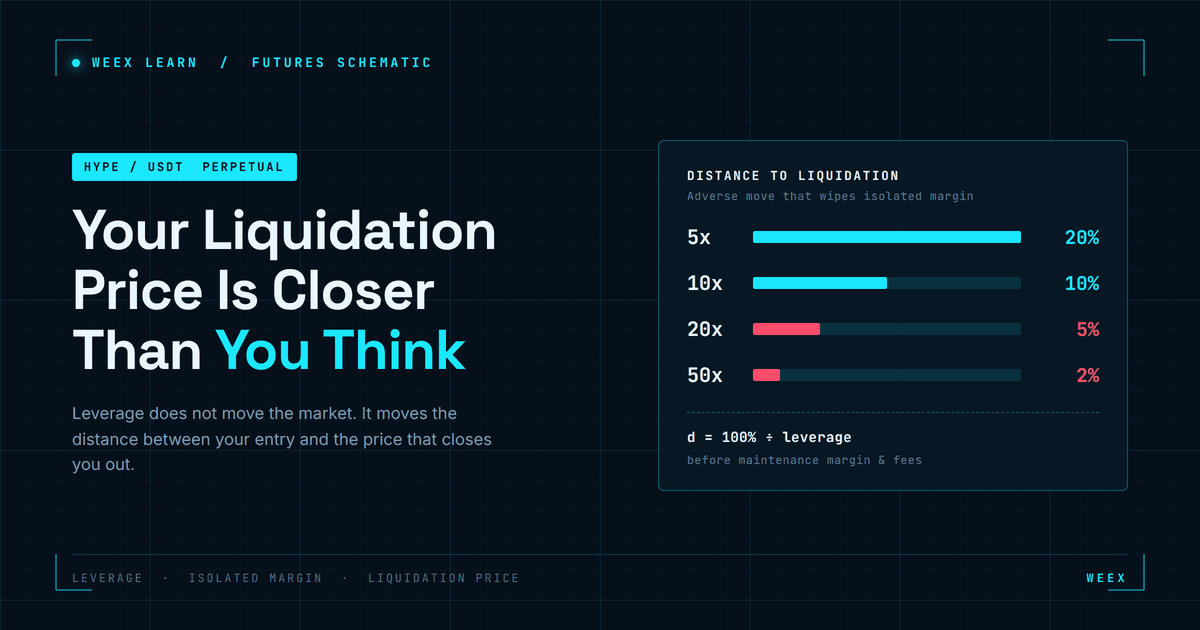
HYPE Token Unlock and Leverage: What the $1.2B Number Hides
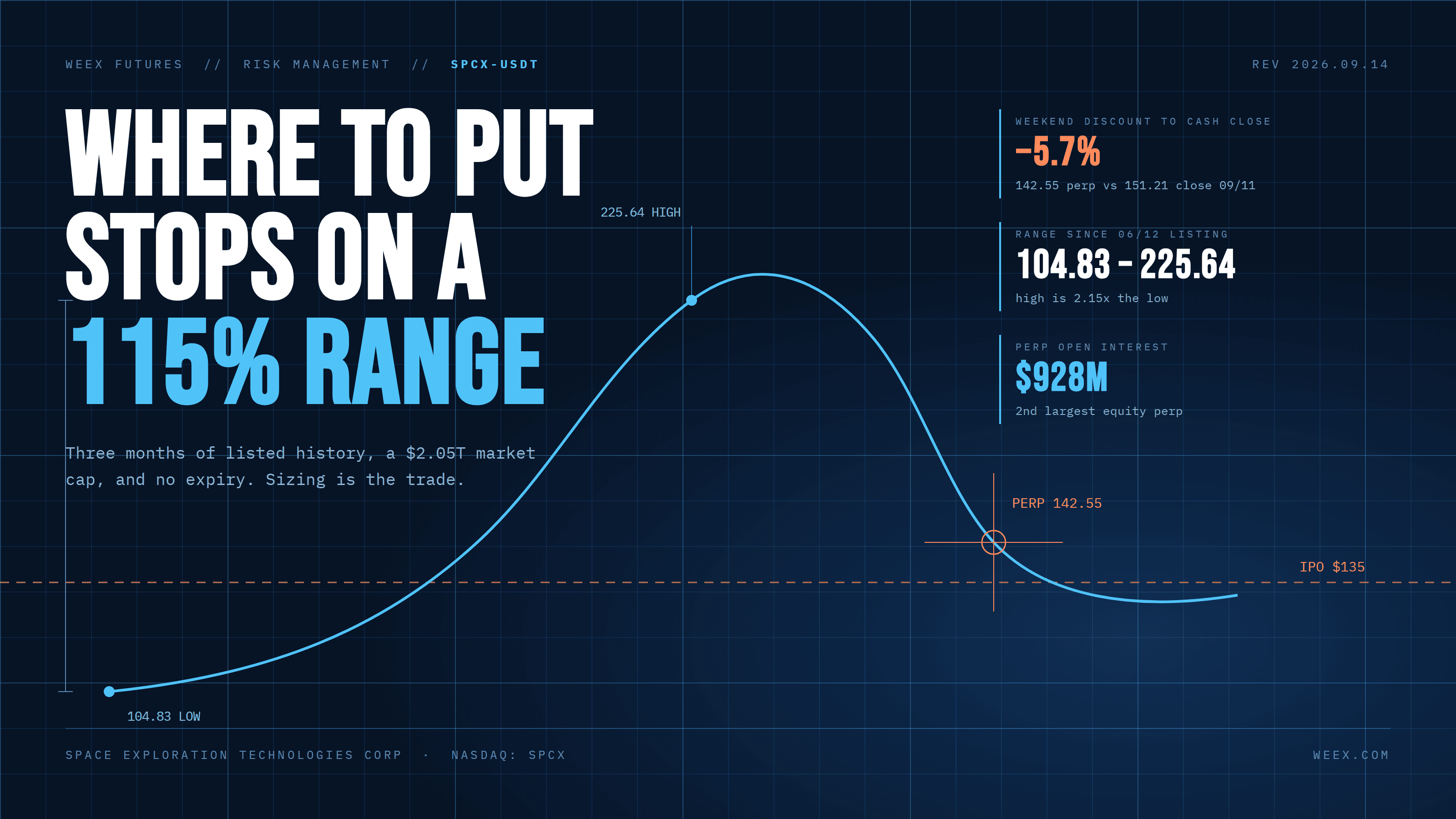
SpaceX Stock Futures: Where to Put Stops on a 115% Range
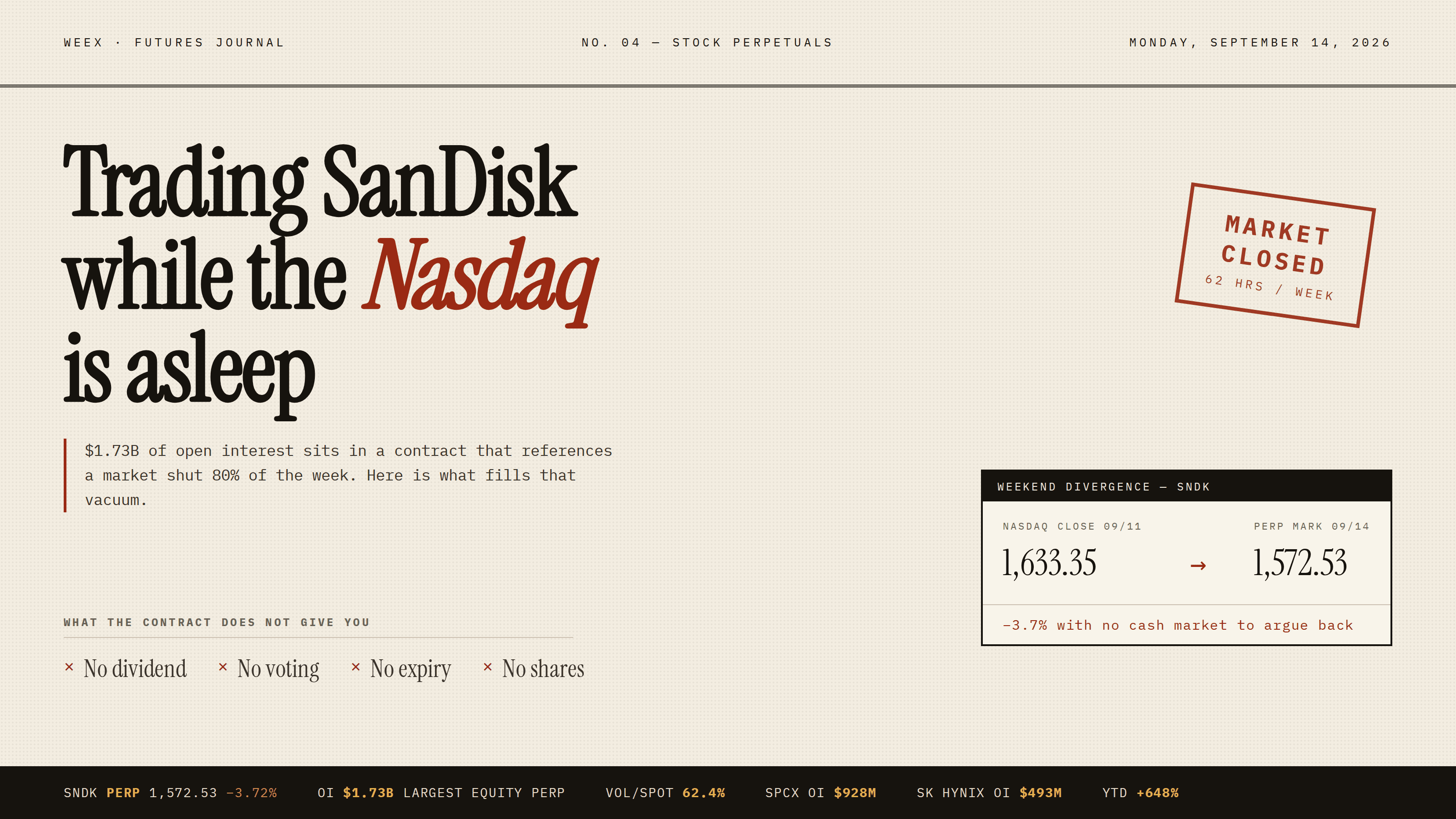
SanDisk Stock Perpetuals: Trading SNDK While Nasdaq Sleeps
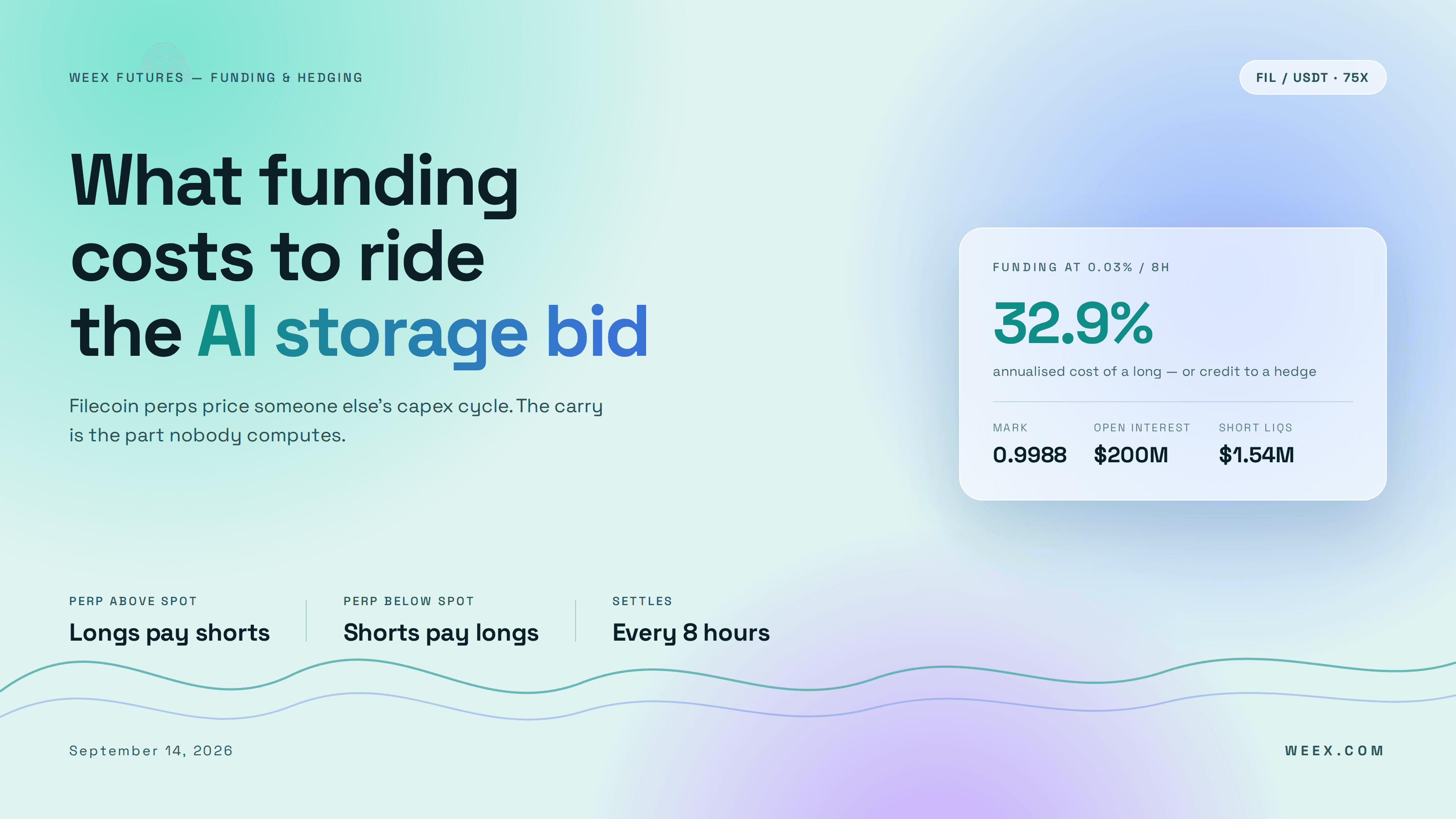
Filecoin Futures: What Funding Costs to Ride the AI Bid
Your Crypto Exchange Is Shutting Down: How to Move Your Funds and Choose the Next Exchange

Why Is STRK Up Over 25%? Starknet's Layer 1 Idea, the Quantum Roadmap and the Risks Behind the Jump
Third-Party Trading Platforms vs Direct WEEX Trading: Fees, Liquidity, Security, and Control
How Copy Trading, Signal, and Telegram Trading Tools Can Build With WEEX Broker
How Quant Trading Platforms and Bots Can Build With WEEX Broker
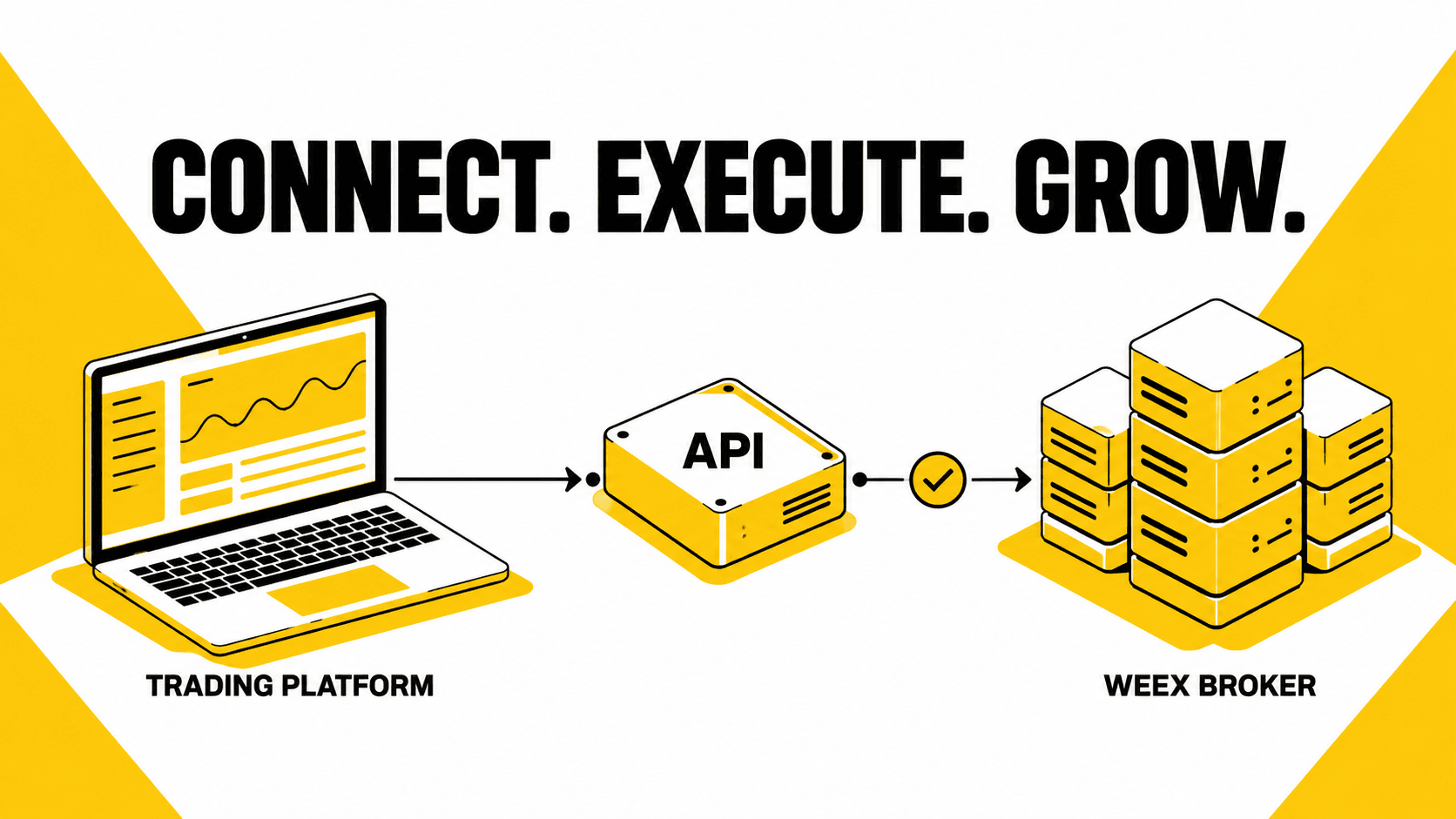
How Trading Platforms and Terminals Can Connect to WEEX Broker

How to Use an APR Boost on WEEX Auto Earn Without Wasting It

How to Buy Presale Crypto: Step by Step Guide for Beginners
Ethereum Glamsterdam Hits 200M Gas on Sepolia: What Changes After the Upgrade?

ENA Token Price Drops After October 5 Unlock: What Happened to Ethena?
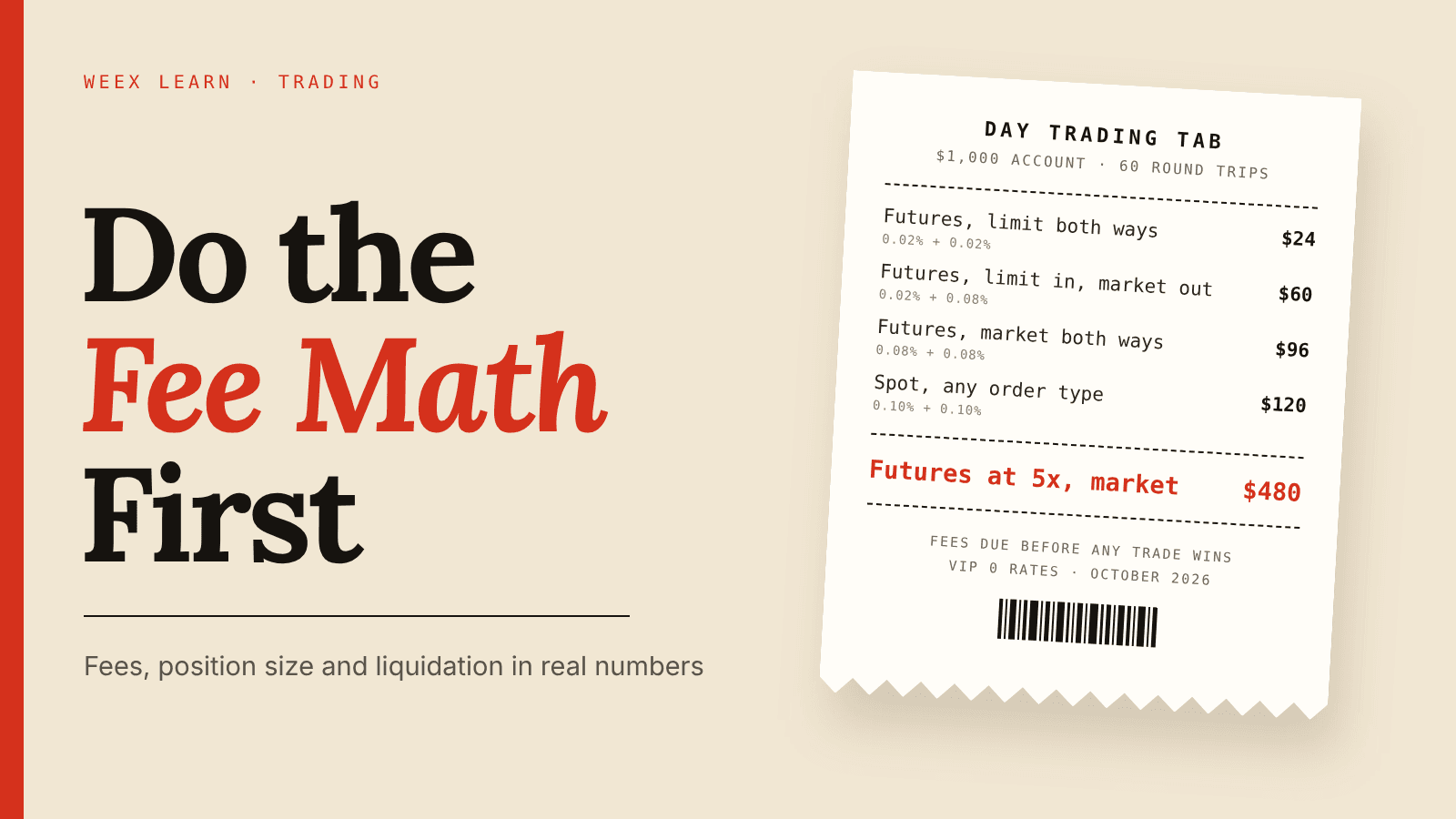
How to Day Trade Crypto for Beginners: Do the Fee Math First
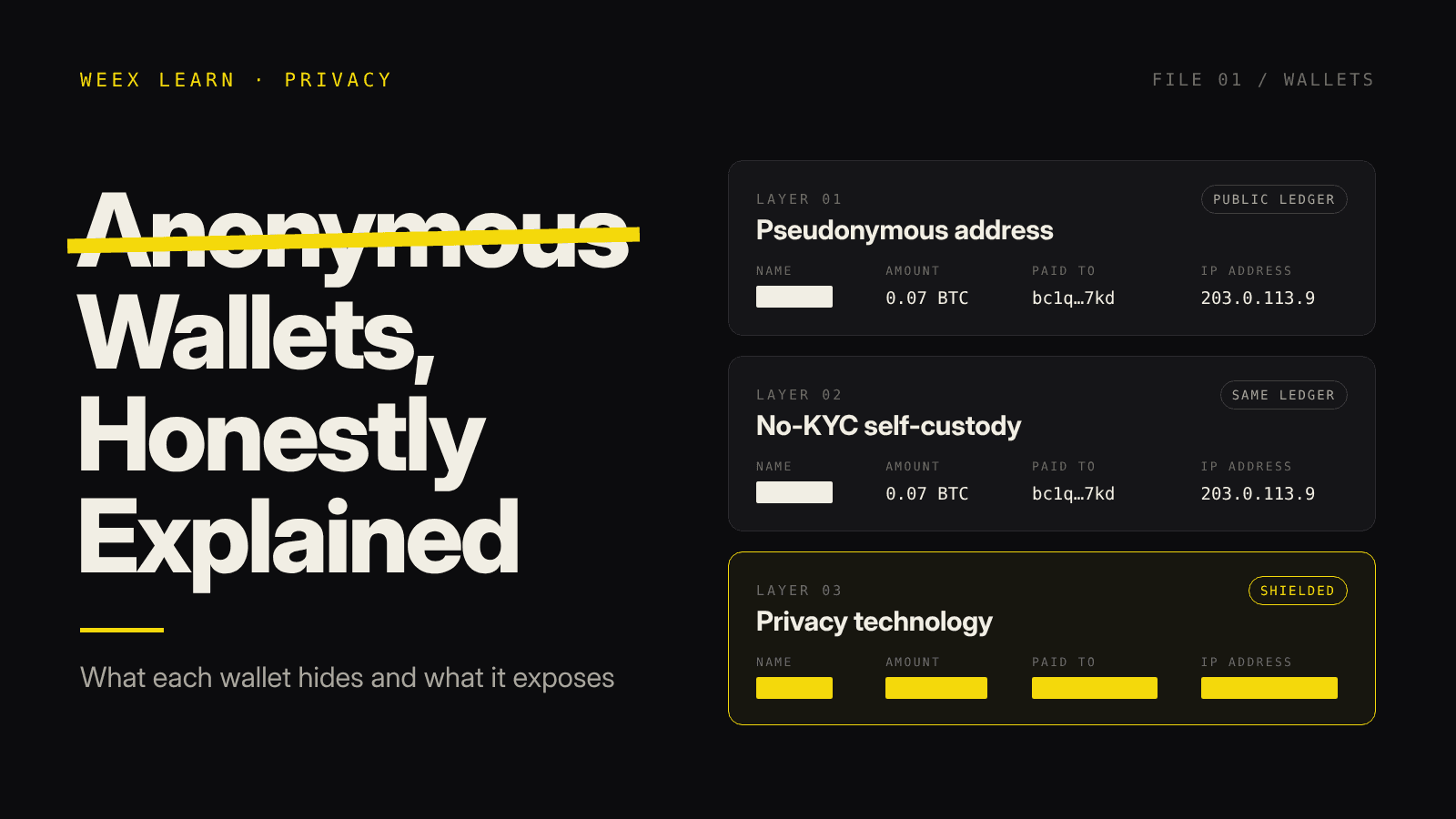
Anonymous Crypto Wallet: What Each One Hides and Where It Fails
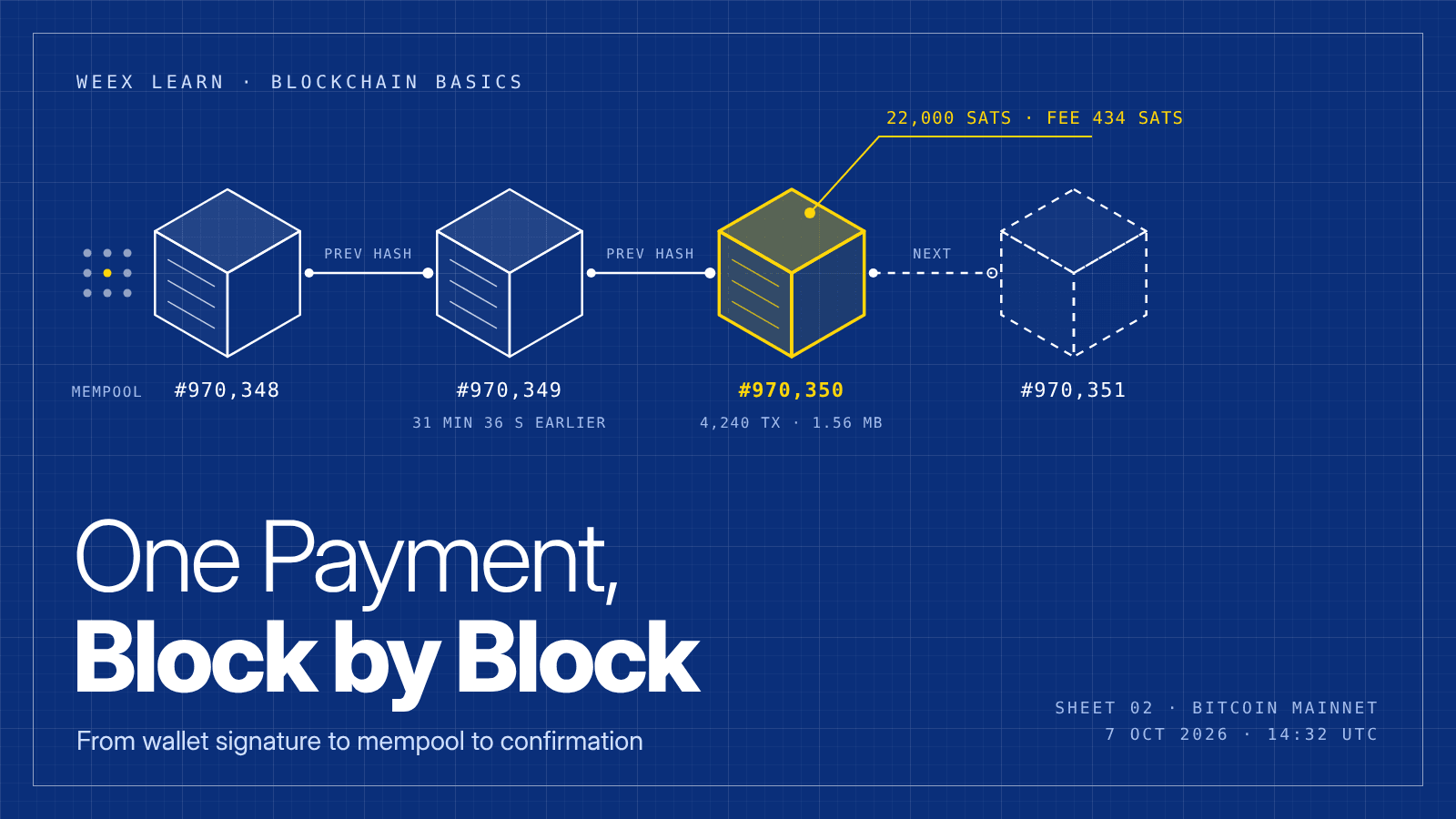
What Is Blockchain and How Does It Work? One Real Payment Traced
What Is a Blockchain Node? Types, 2026 Counts, and Real Costs

How to Buy New Crypto Before Listing: 5 Routes and Their Traps

What Is Staking? 4 Myths to Clear Up Before You Stake Crypto
TSMC Stock Outlook Ahead of Q3 Earnings: Can AI Demand Push Shares Higher?
Taiwan Stock Market Nears 50,000: Can the TAIEX Break the Milestone After the Holiday?

How to Buy USDT in Thailand: Payment Methods, Fees and Transfer Checks

What Is RLC Crypto? How iExec (RLC) Powers Confidential Computing
What Is Blockchain Interoperability? How Cross-Chain Bridges and Messaging Work
How to Buy Crypto With a Prepaid Card: Step-by-Step Guide

What Is WEEX Fast Connect? How OAuth Connects Third-Party Trading Platforms
How Do WEEX Broker Commissions Work? Direct vs Indirect Commission Explained
Crypto Leverage Trading: What 400x Leverage Actually Costs You
NEAR Futures Take-Profit and Stop-Loss: Managing a Parabolic Move
HYPE Token Unlock and Leverage: What the $1.2B Number Hides
SpaceX Stock Futures: Where to Put Stops on a 115% Range
SanDisk Stock Perpetuals: Trading SNDK While Nasdaq Sleeps
Filecoin Futures: What Funding Costs to Ride the AI Bid


